New Lex Fridman Insight: Max Tegmark: AI and Physics
Sent June 11, 2026
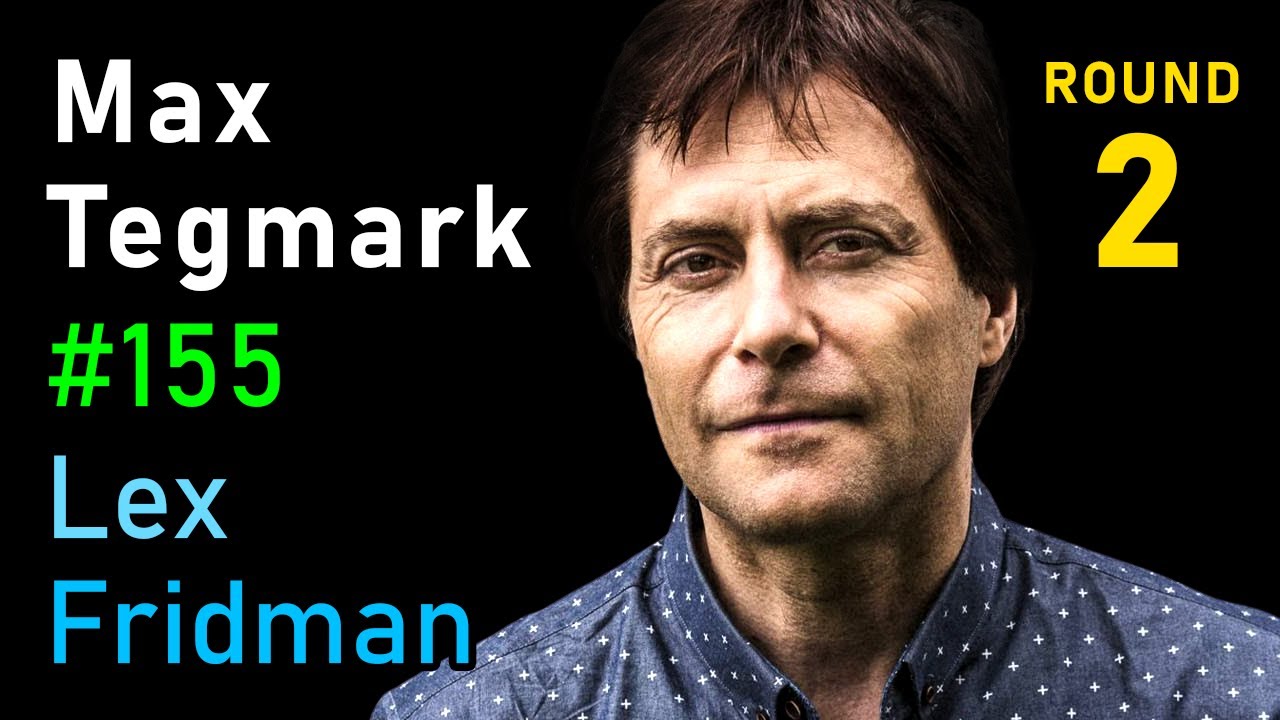
Key Insights
- The NSF Center for AI and Fundamental Interactions received $20 million to explore AI's role in physics.
- Max Tegmark shifted from physics to machine learning five years ago, facing initial skepticism.
- Autonomous weapons proved decisive in 2020 conflicts, raising concerns about proliferation.
- AI's risk lies in competence, not malice, potentially leading to human extinction if misaligned.
- Consciousness is viewed as the subjective experience of information processing, with scientific study potential.
How the conversation moved
The episode begins with Lex Fridman framing the conversation around the intersection of AI and physics, highlighting the NSF Center for AI and Fundamental Interactions' $20 million funding. Max Tegmark introduces his perspective on AI's potential to revolutionize physics by improving methodologies and hardware, such as optical chips. He shares his journey from physics to machine learning, initially facing skepticism from colleagues. Tegmark argues that AI and physics can mutually benefit each other, with AI enhancing physics' capabilities and physics providing better hardware for AI.
Tegmark's main argument centers on the transformative potential of AI in various fields, including physics and global security. He discusses the role of machine learning in discovering complex formulas and its implications for media bias and news consumption. Tegmark highlights the AI Feynman project, which can automatically discover complex formulas from data, achieving results similar to historical figures like Kepler and Planck. He also touches on the potential of AI to empower individuals against powerful players, reversing the current trend of narrative control by big tech.
Despite the compelling arguments, Lex Fridman does not explicitly challenge Tegmark's views, though the conversation naturally raises questions about the ethical implications of AI's growing influence. The discussion on autonomous weapons highlights their decisive role in 2020 conflicts, raising concerns about proliferation and a potential arms race. Tegmark suggests that international agreements could limit the development of autonomous weapons, but this solution remains speculative. The conversation lacks direct pushback, but the ethical and security concerns are evident.
The conversation concludes with Tegmark emphasizing the importance of aligning AI with human values to prevent existential threats. He argues that AI's risk lies in its competence, not malice, potentially leading to human extinction if misaligned. Tegmark introduces the concept of 'intelligible intelligence,' advocating for AI systems that are understandable and align with human intentions. The discussion also explores consciousness as the subjective experience of information processing, suggesting it can be scientifically studied to inform ethical AI development. The episode ends with a call for more funding and focus on AI safety research.
Surprising moments
In-depth
AI and Physics
- NSF Center for AI and Fundamental Interactions received $20 million for AI in physics.
- Tegmark shifted focus from physics to machine learning, facing skepticism.
- AI can improve physics methodologies and hardware, like optical chips.
Autonomous Weapons and Global Security
- Autonomous weapons were decisive in 2020 conflicts, raising proliferation concerns.
- A potential arms race could destabilize global security.
- International agreements could limit autonomous weapon development.
AI Alignment and Existential Risk
- AI's risk lies in competence, not malice, potentially leading to human extinction.
- Aligning AI with human values is crucial to prevent existential threats.
- Funding for AI safety research is lacking compared to AI development.
Consciousness and AI Ethics
- Consciousness is the subjective experience of information processing.
- Scientific study of consciousness could inform ethical AI development.
- Understanding consciousness could prevent creating machines that suffer.
Notable Quotes
I believe that already the algorithms that drive our interaction on social media have an intelligence and power that far outstrip the intelligence and power of any one human being.
Still open
- Lex asked whether international agreements could effectively limit autonomous weapon development; Tegmark suggested it was speculative.