New Lex Fridman Insight: Michael Saylor: Bitcoin, Inflation, and the Future of Money
Sent May 30, 2026
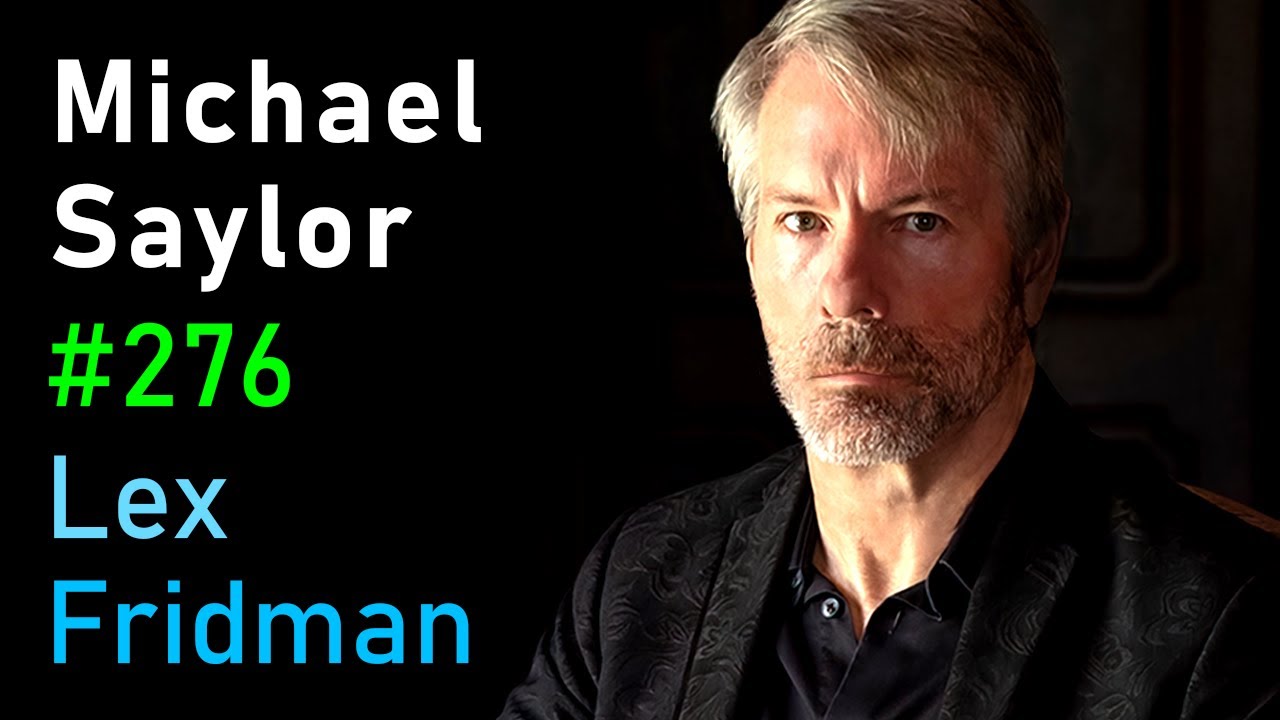
Key Insights
- Michael Saylor argues that inflation is a multi-dimensional vector, not a single scalar, challenging traditional economic models.
- Saylor claims Bitcoin is the most difficult property to confiscate, emphasizing its security and independence from governmental control.
- Saylor believes digital education can democratize knowledge, reducing the need for traditional educational structures.
- He predicts Bitcoin's market cap could reach $10 to $20 trillion, modeling it as digital gold.
- Saylor critiques government policies as inherently inflationary, leading to inefficiencies and economic distortion.
How the conversation moved
Lex Fridman introduced the episode by framing it around the complexities of modern economics and the role of digital assets like Bitcoin. Michael Saylor immediately challenged the conventional understanding of inflation, describing it as a multi-dimensional vector rather than a simple scalar. He criticized traditional economic models for failing to capture the true nature of inflation and its impact on the economy. Saylor's initial framing set the stage for a broader critique of economic policy and the role of digital assets in addressing these issues.
Saylor's main argument centered around the inadequacy of current economic metrics in representing inflation's true impact. He presented evidence that inflation is significantly understated by official metrics, which fail to account for the complexity of economic interactions. Saylor used historical data and current economic trends to illustrate his point, arguing that the expansion of the money supply leads to inefficiencies and economic distortion. He also positioned Bitcoin as a solution, describing it as a secure, decentralized asset that offers a hedge against inflation.
Despite the strength of Saylor's arguments, Lex did not challenge the framing here, though the obvious counter-position would be that traditional metrics provide a necessary simplification for policy-making. The lack of pushback left Saylor's claims largely untested, particularly his assertion that Bitcoin is the most secure form of property. This absence of counterarguments left room for debate on whether Bitcoin's volatility undermines its role as a stable store of value or inflation hedge.
The conversation concluded with Saylor expanding on the potential for digital education to democratize knowledge, reducing the need for traditional educational structures. He drew parallels between the transformative impacts of digital assets and digital education, suggesting that both could fundamentally alter societal structures. The discussion left open questions about the scalability of these solutions and the potential resistance from established institutions. The episode ended with Saylor's optimistic view of Bitcoin's future market potential, predicting significant growth as it becomes more widely adopted.
Surprising moments
In-depth
Inflation and Economic Models
- Inflation is a complex vector, not a single scalar.
- Traditional economic models fail to capture the true nature of inflation.
- Government inflation metrics may understate the impact on the working class.
Bitcoin as a Secure Asset
- Bitcoin is the most difficult property to confiscate.
- Its decentralized nature offers unique security advantages.
- Bitcoin's potential as a digital property is unprecedented.
Digital Education and Accessibility
- Digital transformation can democratize education.
- Traditional educational structures may become obsolete.
- Saylor Academy demonstrates the potential of free digital education.
Bitcoin's Market Growth
- Bitcoin's market cap could reach $10 to $20 trillion.
- It is modeled as digital gold.
- Institutional adoption is increasing.
Government Policy and Inflation
- Government policies are inherently inflationary.
- These policies lead to economic inefficiencies.
- A reevaluation of fiscal strategies may be necessary.
Notable Quotes
So when you’re actually inflating the money supply at 7%, but you’re calling it 2% because you want to help the economy, you’re literally bleeding the free market to death.
Still open
- Saylor questioned whether traditional economic metrics can ever fully capture the complexity of inflation.
- He wondered if digital education could truly replace traditional models without resistance from established institutions.
References & Resources
- The Bitcoin Standard by Saifedean Ammous — Search