New Lex Fridman Insight: Michael Stevens: Vsauce
Sent June 11, 2026
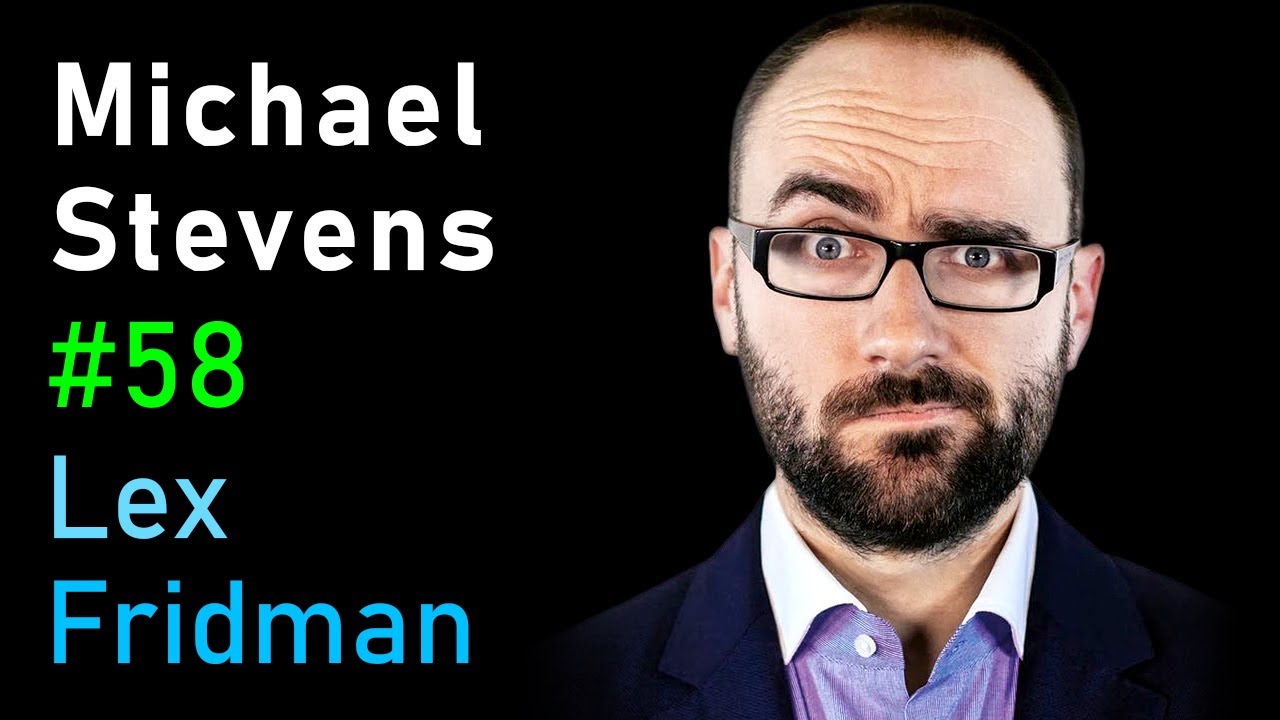
Key Insights
- Vsauce has amassed over 15 million subscribers and 1.7 billion views, illustrating its massive influence.
- Michael Stevens suggests consciousness might be fully explainable through physics, challenging traditional views.
- Flat Earth theory serves as a thought experiment to explore scientific concepts like gravity and relativity.
- Stevens argues that technological progress shouldn't be hindered by fears, citing historical concerns over new technologies.
- YouTube's algorithm reflects societal desires, impacting how educational content is consumed and perceived.
How the conversation moved
The conversation begins with a discussion on the vast reach and influence of Vsauce, a YouTube channel with over 15 million subscribers and 1.7 billion views. Michael Stevens, the creator of Vsauce, is framed as a pivotal figure in educational content, using his platform to engage audiences with complex scientific and philosophical ideas. The host sets the stage by highlighting Vsauce's role in making science accessible and entertaining, which Stevens supports by discussing his approach to content creation and the impact of his work on viewers worldwide.
Stevens then delves into the intersection of psychology and physics, proposing that consciousness might be fully explainable through the laws of physics. He argues that understanding the physical foundations of emotions and behaviors could demystify consciousness, a view that challenges traditional philosophical perspectives. Stevens supports his argument by suggesting that consciousness and memory might be states of the universe, contributing to our perception of time. This perspective is presented as a scientific approach to questions often left to philosophy, with Stevens emphasizing the importance of scientific inquiry in exploring such topics.
The host does not explicitly challenge Stevens' views on consciousness, but the conversation naturally raises questions about the implications of a deterministic universe. Stevens acknowledges the deterministic nature of the universe but admits he chooses not to live as if it is deterministic. This moment highlights a tension between scientific understanding and personal belief, illustrating the complexity of reconciling scientific theories with everyday life. The lack of direct pushback from the host leaves this tension unresolved, inviting listeners to ponder the practical implications of such scientific theories.
The discussion shifts to the role of thought experiments, such as Flat Earth theory, in enhancing scientific understanding. Stevens argues that these controversial ideas can serve as tools to explore and clarify scientific principles like gravity and relativity. The conversation then moves to the balance between technological progress and societal fears, with Stevens cautioning against letting fear stifle innovation. He references historical concerns over new technologies, such as Plato's worries about the written word, to illustrate that such fears are not new. The episode concludes with reflections on YouTube's algorithm and its impact on educational content, emphasizing the platform's role in shaping public discourse.
Surprising moments
In-depth
Vsauce's Influence
- Vsauce has over 15 million subscribers and 1.7 billion views.
- The channel's success highlights the power of educational content.
Consciousness and Physics
- Consciousness might be fully explainable through physics.
- This challenges traditional views on consciousness.
Flat Earth Theory
- Flat Earth serves as a thought experiment for scientific concepts.
- It helps explore gravity and relativity.
Technological Progress and Fear
- Fears shouldn't hinder technological progress.
- Historical concerns over new technologies are cited.
YouTube's Algorithm
- YouTube's algorithm reflects societal desires.
- It impacts how educational content is consumed.
Notable Quotes
I think that consciousness is probably something that can be fully explained within the laws of physics.
Still open
- Stevens questions whether consciousness can truly be explained within the laws of physics, leaving this as an open inquiry.