New Lex Fridman Insight: Michio Kaku: Future of Humans, Aliens, Space Travel & Physics
Sent June 11, 2026
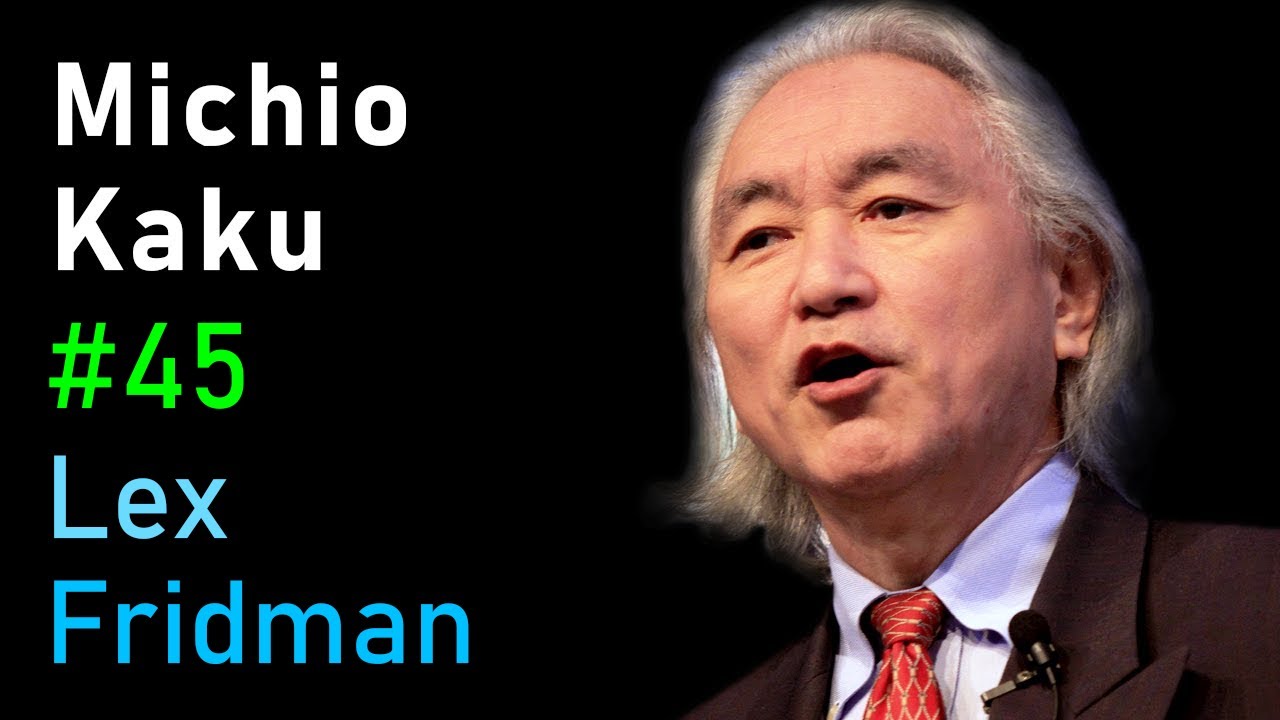
Key Insights
- Michio Kaku predicts humanity will detect extraterrestrial signals within this century, leveraging the vast number of galaxies and stars.
- Kaku suggests that future human-robot integration through 'brain net' could revolutionize communication by transmitting emotions and sensations.
- Kaku argues that aging could be reversed by targeting genetic errors in mitochondria using CRISPR, potentially achieving immortality.
- Quantum mechanics challenges the simulation hypothesis due to infinite possibilities, yet a finite universe could theoretically be simulated.
- Terraforming Mars to support human life requires a 6-degree temperature increase to melt polar ice caps and release water vapor.
How the conversation moved
The host introduces the conversation by framing the vastness of the universe and the potential for extraterrestrial life, prompting Michio Kaku to discuss the likelihood of detecting alien signals within this century. Kaku uses the Kardashev scale to explain the potential energy harnessing capabilities of advanced civilizations, suggesting that humanity is on the cusp of becoming a type one civilization. This sets the stage for a broader discussion on the future of human civilization in the context of space exploration and technological advancement.
Kaku's main argument centers around the transformative potential of future technologies, including brain-machine interfaces and genetic engineering. He introduces the concept of 'brain net', which could allow humans to share emotions and sensations directly, and discusses the potential for reversing aging through genetic manipulation. Kaku supports these claims with examples of current technological advancements, such as the Connectome Project, which aims to map the human brain's connections.
Despite the ambitious nature of Kaku's predictions, there is a noticeable lack of pushback from the host, who does not challenge the feasibility or ethical implications of these technologies. The conversation could have benefited from exploring potential downsides, such as privacy concerns with brain net or the societal impact of immortality. Lex doesn't challenge the framing here, though the obvious counter-position would be the ethical and practical challenges of implementing such transformative technologies.
The conversation concludes with Kaku's thoughts on humanity's future in space, specifically the potential for terraforming Mars and harnessing fusion energy. While the discussion touches on the technical challenges of these endeavors, it leaves open questions about the timeline and feasibility of achieving them. Kaku's vision is optimistic, suggesting that humanity is on the brink of a new era of exploration and technological integration, but the conversation ends without resolving the practical hurdles that remain. This leaves the audience to ponder the balance between ambition and reality in the pursuit of these futuristic goals.
Surprising moments
In-depth
Extraterrestrial Life and Civilizations
- Kaku predicts signals from extraterrestrial civilizations within this century.
- The Kardashev scale classifies civilizations by their energy use, with type one harnessing planetary power.
Human-Robot Integration
- 'Brain net' could allow sharing of emotions and sensations, altering human communication.
- Robots may achieve monkey-like intelligence by century's end, raising ethical concerns.
Genetic Engineering and Immortality
- CRISPR could target mitochondrial errors to reverse aging.
- Future generations might stop aging at 30, maintaining youth indefinitely.
Quantum Mechanics and Simulation
- Quantum mechanics complicates the simulation hypothesis due to infinite possibilities.
- A finite universe could theoretically be simulated, but practical constraints exist.
Terraforming Mars and Fusion Energy
- Mars requires a 6-degree temperature increase for terraforming.
- Fusion energy could provide unlimited power, essential for a type one civilization.
Notable Quotes
I think in this century, we'll probably pick up signals, signals from an extraterrestrial civilization.
Still open
- Kaku wonders about the practical timeline for achieving a type one civilization status, given current technological and societal constraints.
- The feasibility and ethical implications of 'brain net' technology remain unresolved, particularly concerning privacy and consent.
- The conversation leaves open the question of how humanity will address the societal impacts of potential immortality through genetic engineering.