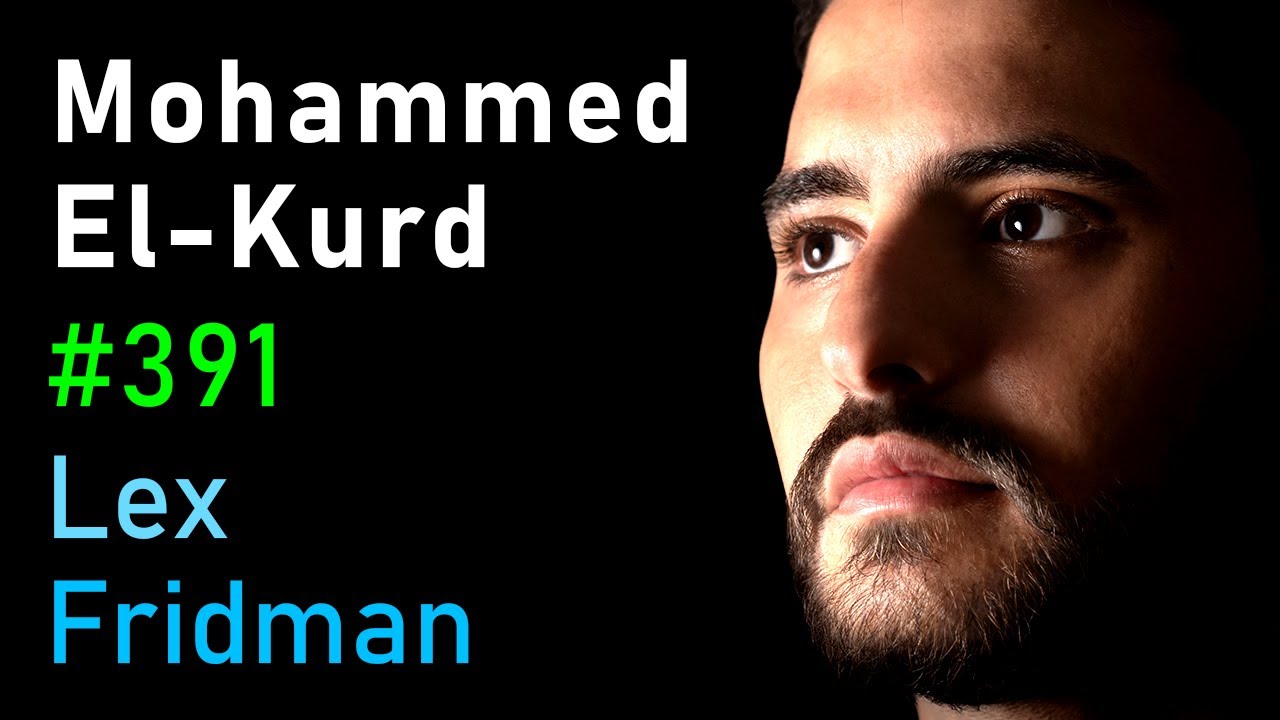
New Lex Fridman Insight: Mohammed El-Kurd: Palestine
Sent May 30, 2026
Key Insights
- The Israeli Supreme Court's 2020 decision to cancel eviction orders in Sheikh Jarrah was driven by international pressure, highlighting the political nature of these legal battles.
- Mohammed el-Kurd argues that over 60 Israeli laws explicitly discriminate against Palestinians with Israeli citizenship, undermining claims of equality.
- El-Kurd critiques the framing of the Israeli-Palestinian conflict as religious, noting that many early Zionist leaders were atheists.
- The Israeli government's classification of 90% of historic Palestine as state-owned land severely impacts Palestinian farmers.
- El-Kurd asserts that the U.S. provides $3.8 billion in military aid to Israel annually, perpetuating the Israeli-Palestinian conflict.
How the conversation moved
The episode begins with Mohammed el-Kurd discussing the historical and ongoing displacement of Palestinians in Sheikh Jarrah, a neighborhood in East Jerusalem. He explains that the area has faced threats of colonialism and forced expulsion since the early 1970s, with families like his own being expelled during the Nakba in 1948. El-Kurd highlights the systemic discrimination faced by Palestinians, noting that Israeli courts often favor settler documents over Palestinian ones, indicating a political rather than legal battle. This sets the stage for a broader discussion on the legal and judicial systems in Israel, which el-Kurd argues are biased against Palestinians.
El-Kurd presents evidence of legal discrimination, citing over 60 laws in Israel that explicitly discriminate against Palestinians with Israeli citizenship. He also critiques the judicial system, pointing out that the judge ruling on evictions in the West Bank is a settler living illegally in an illegal settlement. This undermines claims of a fair judiciary and highlights the systemic bias within Israeli legal structures. El-Kurd further discusses the historical impact of the Nakba on Palestinians, emphasizing the destruction of over 500 villages and the mass exodus that followed, which continues to affect Palestinian identity and rights today.
The conversation takes a turn when el-Kurd challenges the framing of the Israeli-Palestinian conflict as a religious issue. He argues that many early Zionist leaders were atheists, which contradicts the notion that the conflict is purely religious. This framing, he suggests, simplifies the conflict and obscures its colonial and political roots. El-Kurd also critiques the Israeli regime's alliances with anti-Semites when it serves their interests, pointing out the hypocrisy in such actions. Lex Fridman does not challenge this framing, although a counter-position could argue that religious elements do play a significant role in the conflict.
The episode concludes with el-Kurd discussing the impact of Israeli occupation on Palestinian identity and the cycle of violence. He argues that the Israeli government's classification of 90% of historic Palestine as state-owned land severely impacts Palestinian farmers and their economic sustainability. El-Kurd also addresses the role of U.S. military aid in perpetuating the conflict, noting that the U.S. provides $3.8 billion annually to Israel. This aid supports Israeli policies that contribute to Palestinian displacement and conflict, highlighting the geopolitical dynamics at play. The conversation leaves open questions about the future of Palestinian resistance and the potential for peace.
Surprising moments
In-depth
Displacement and Evictions
- Sheikh Jarrah has faced eviction threats since the 1970s, with international pressure influencing legal outcomes.
- Israeli courts often favor settler documents over Palestinian ones, highlighting systemic bias.
Legal Discrimination
- Over 60 Israeli laws explicitly discriminate against Palestinians.
- The judge ruling on West Bank evictions lives in an illegal settlement, questioning judicial fairness.
Religious vs. Political Conflict
- Early Zionist leaders' atheism challenges the religious framing of the conflict.
- The Israeli regime's alliances with anti-Semites when convenient show political motivations.
Land and Identity
- 90% of historic Palestine is classified as state-owned, affecting Palestinian farmers.
- New settlements and checkpoints in the West Bank fragment Palestinian living conditions.
U.S. Military Aid
- The U.S. provides $3.8 billion annually in military aid to Israel, influencing the conflict.
- This aid supports policies that perpetuate Palestinian displacement and conflict.
Notable Quotes
No one has a right to go on slaughtering people, removing them from their homes and then continuing to live in their homes, continuing to drink coffee on their balconies decades and decades later, with no shame, with no introspection, with no reflection.
Still open
- El-Kurd questions whether the Israeli legal system can ever be fair to Palestinians given the systemic biases.
- El-Kurd wonders if the U.S. will continue its military aid to Israel despite international criticism.