New Lex Fridman Insight: Nationalism Debate: Yaron Brook and Yoram Hazony
Sent June 11, 2026
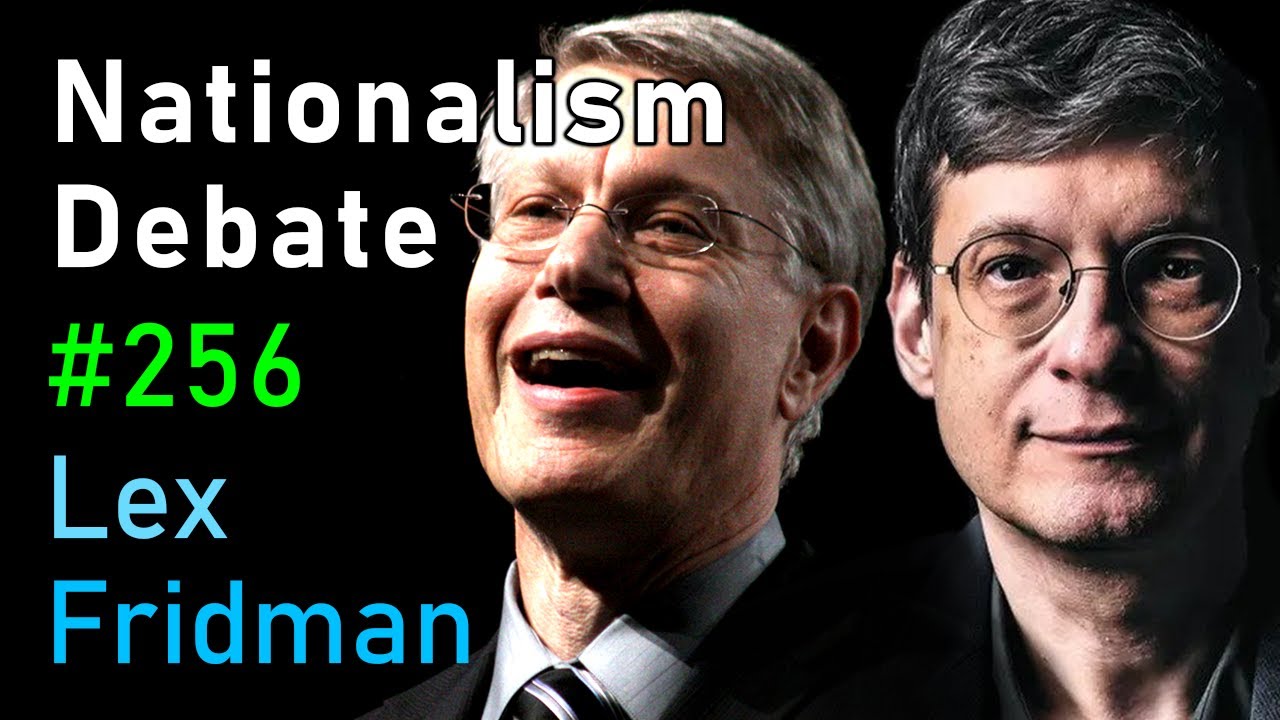
Key Insights
- Yoram Hazony argues that nationalism allows for independent nations to experiment with governance, contrasting with imperialist ideologies.
- Yaron Brook criticizes Kant's philosophy as detaching reason from reality, advocating for a rationalist approach grounded in empirical evidence.
- The American Revolution is framed as a rejection of Rousseau's philosophy, emphasizing individual rights over collective governance.
- Brook and Hazony debate the role of tradition and history in shaping political and moral understanding, with Hazony emphasizing conservatism's reliance on historical context.
How the conversation moved
The conversation begins with Yaron Brook and Yoram Hazony debating the definitions and implications of conservatism versus individualism. Hazony frames conservatism as the recovery and restoration of tradition, emphasizing the importance of historical context in shaping political and moral understanding. In contrast, Brook leans towards individualism, challenging the necessity of tradition in defining a nation's identity. This sets the stage for a broader discussion on the philosophical underpinnings of their respective views, particularly focusing on how historical context influences modern political ideologies.
Brook criticizes Kant's philosophy, arguing that it detaches reason from reality and history, which he sees as detrimental to deriving universal principles for human flourishing. He posits that a rationalist approach, grounded in empirical evidence, is essential for understanding and improving societal structures. Hazony, on the other hand, emphasizes the role of tradition and historical experience in informing political decisions, suggesting that conservatism provides a framework for understanding reality through the lens of historical continuity.
The tension between the two perspectives becomes apparent when discussing the American and French Revolutions. Brook frames the American Revolution as a rejection of Rousseau's philosophy, emphasizing individual rights and rationalist principles. Hazony counters by highlighting the importance of tradition and historical context in shaping the American Constitution, suggesting that the Founding Fathers' reliance on British systems reflects a conservative approach. This debate underscores the fundamental differences in how each views the role of history and tradition in political theory.
The conversation concludes with a discussion on nationalism and global governance, where Hazony argues that nationalism allows for independent nations to experiment with governance, contrasting with imperialist ideologies. Brook and Hazony both acknowledge the complexities of balancing individual freedom with collective identity, but they diverge on the mechanisms for achieving human flourishing. While Brook advocates for a rationalist, individualist approach, Hazony emphasizes the importance of tradition and community in preserving societal values.
Surprising moments
In-depth
Conservatism vs. Individualism
- Conservatism is about recovering and restoring tradition to maintain a nation.
- Liberalism and Marxism are universal theories, while conservatism varies by nation.
- The essential idea of conservatism involves the importance of time and history.
Rationalism vs. Empiricism
- Kant is viewed as the anti-Enlightenment philosopher.
- Reason should integrate facts from history to derive universal principles.
- Trial and error in politics can lead to significant human costs.
American vs. French Revolutions
- Burke supports the Polish Revolution but opposes the French Revolution.
- The American Constitution was influenced by traditional British systems.
- Jefferson and Paine represented a rationalist revolutionary perspective.
Nationalism and Global Governance
- Nationalism allows independent nations to experiment with governance.
- The Bible presents a conception of independent nations resisting empires.
- Hitler's ideology was imperialist, detesting independent nation-states.
Notable Quotes
Conservatism is not like liberalism or Marxism. Liberalism and Marxism are both kind of universal theories, and they claim to be able to tell you what's good for human beings at all times and all places.
Still open
- What are the implications of nationalism on global governance and international relations, as discussed by Yoram Hazony?
- How does Yaron Brook reconcile individualism with the need for societal cohesion and governance?
References & Resources
- The Virtue of Nationalism by Yoram Hazony — Search
- Free Market Revolution by Yaron Brook — Search
- Equal is Unfair by Yaron Brook — Search
- Conservatism, A Rediscovery by Yoram Hazony — Search
- The Republic by Plato — Search
- The Science of Man by David Hume — Search
- Atlas Shrugged by Ayn Rand — Search
- The Conservative Mind by Russell Kirk — Search
- Reflections on the Revolution in France by Edmund Burke — Search
- The Age of Reason by Thomas Paine — Search
- The Social Contract by Jean-Jacques Rousseau — Search
- Federalist Papers by Alexander Hamilton, James Madison, John Jay — Search
- Mein Kampf by Adolf Hitler — Search