New Lex Fridman Insight: Neal Stephenson: Sci-Fi, Space, Aliens, AI, VR & the Future of Humanity
Sent June 11, 2026
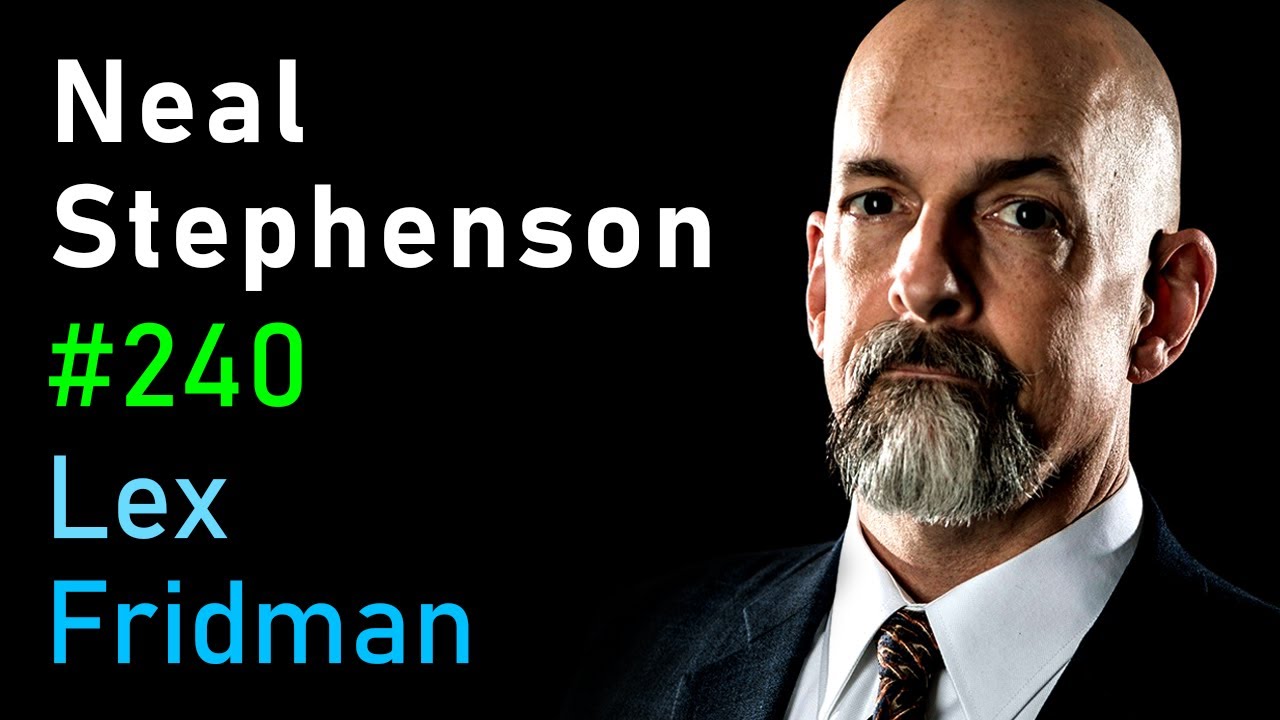
Key Insights
- Neal Stephenson argues that human nature's duality persists, as seen in historical patterns like WWII's societal descent into monstrosity.
- Space exploration faces daunting technical and economic hurdles, with interstellar travel requiring non-tangible motivations due to lack of economic viability.
- Stephenson suggests solar geoengineering may be initiated by non-Western entities or individuals, challenging the assumption of Western democratic leadership in climate action.
- Augmented reality (AR) could surpass virtual reality (VR) in popularity due to its integration with physical reality, despite engineering challenges like real-time SLAM.
- Cryptocurrency's potential for societal change lies more in cryptographically enforceable contracts than in the currency itself.
How the conversation moved
The conversation begins with Neal Stephenson discussing the persistent patterns of human nature, drawing parallels to historical events like World War II. He argues that despite technological advancements, human behavior remains unchanged, with a duality that can lead to both good and evil. This sets the stage for exploring how historical lessons can inform present-day societal challenges, emphasizing the need for vigilance against repeating past mistakes.
Stephenson then shifts to the challenges of space exploration, highlighting the immense energy required for interstellar travel and the lack of viable economic models for such endeavors. He suggests that motivations for space exploration may need to be spiritual or non-tangible, as current economic incentives are insufficient. This perspective challenges traditional views on space travel, suggesting a need for new frameworks to drive exploration efforts.
The discussion moves to climate action, where Stephenson provocatively suggests that solar geoengineering might be initiated by non-Western entities or individuals, rather than Western democracies. This idea contrasts with the common assumption that global climate solutions will emerge from Western leadership, introducing a potential shift in geopolitical dynamics. Lex does not challenge this view, though it raises questions about the future of international climate policy.
Finally, the conversation explores emerging technologies like augmented reality (AR) and virtual reality (VR), with Stephenson predicting that AR could surpass VR due to its integration with physical reality. He discusses the engineering challenges of AR, such as real-time SLAM, and the potential for AR to enhance real-world interactions. This leads to a broader reflection on how technology can shape human experiences, concluding with the potential of cryptographically enforceable contracts to drive societal change.
Surprising moments
In-depth
Human Nature and Historical Patterns
- Human nature's duality is evident in historical events like WWII.
- Technological advancements have improved living standards but not human behavior.
- The economic collapse of the Weimar Republic is a historical lesson on societal anger.
Space Exploration Challenges
- Interstellar travel requires immense energy and non-tangible motivations.
- Mars colonization faces technical challenges like radiation and perchlorates.
- Economic models for space travel are currently unviable.
Solar Geoengineering and Climate Action
- Non-Western entities might lead solar geoengineering efforts.
- Elon Musk's ambitious projects highlight individual-driven innovation.
- China's CO2 goals contrast with the need for atmospheric CO2 reduction.
Augmented Reality vs. Virtual Reality
- AR's real-time SLAM is a significant engineering challenge.
- AR could surpass VR due to its connection to physical reality.
- Magic Leap's AR device development highlights market potential.
Cryptocurrency and Societal Change
- Cryptographically enforceable contracts offer societal change potential.
- Blockchain eliminates the need for physical safe spaces for servers.
- Dogecoin reflects a shift towards humor in cryptocurrency.
Notable Quotes
I think human nature kind of is what it is. And so we tend to see similar behavior patterns emerging again and again.
Still open
- Stephenson questions whether non-Western entities might lead solar geoengineering efforts, challenging conventional assumptions about climate leadership.