New Lex Fridman Insight: Neil Gershenfeld: Self-Replicating Robots and the Future of Fabrication
Sent June 11, 2026
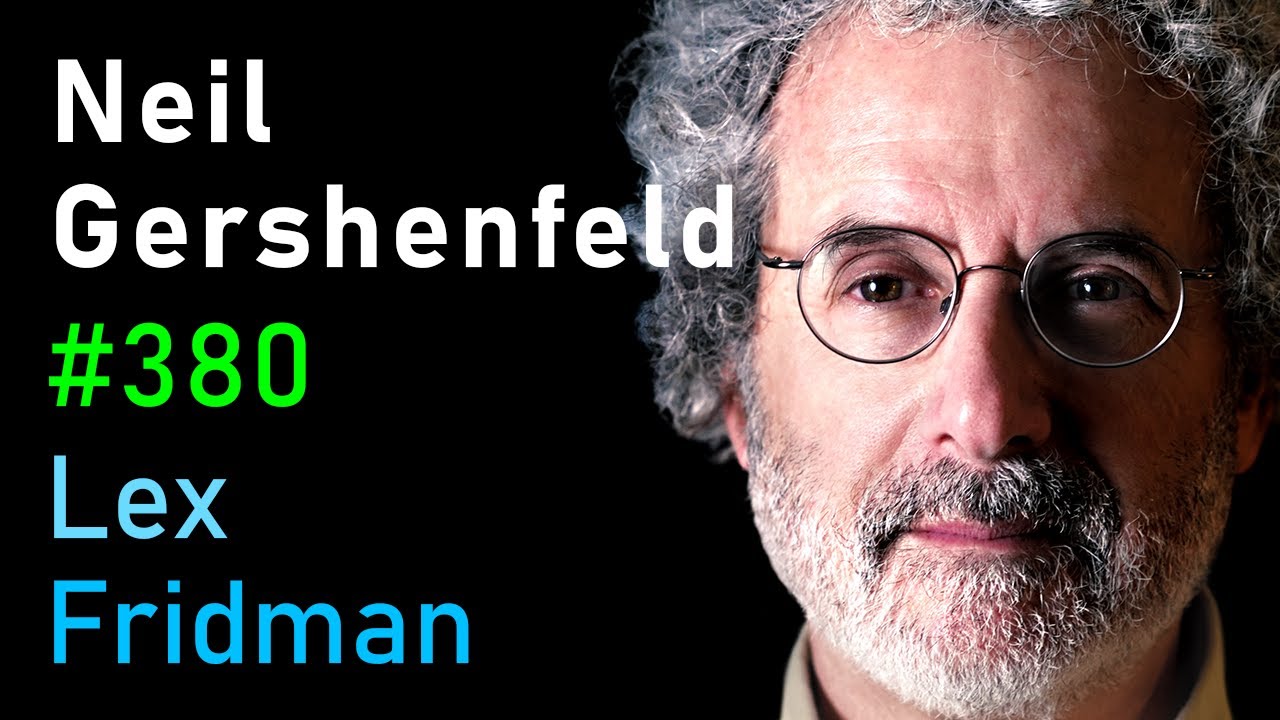
Key Insights
- Neil Gershenfeld argues that traditional computing models by Turing and von Neumann overlook the physicality of computation, causing scaling issues.
- Digital materials, like Lego bricks, allow for reversible assembly and are transforming aerospace with lightweight, high modulus structures.
- Self-replicating robots, inspired by biological systems like ribosomes, could revolutionize manufacturing by creating complex structures efficiently.
- The Fab Lab network, now 2,500 labs strong, democratizes fabrication technology and is doubling every 18 months, known as Lassa's Law.
- Self-replicating assemblers could lead to creating life-like systems from non-living materials, bridging manufacturing and biology.
How the conversation moved
Lex Fridman opens the conversation by questioning the limits of traditional computing models, prompting Neil Gershenfeld to critique the foundational concepts laid out by Turing and von Neumann. Gershenfeld argues that these models fail to account for the physicality of computation, leading to inefficiencies and scaling issues. He suggests that computation should be understood as a physical process, where information persistence and interaction are inherently linked to physical constraints. This sets the stage for exploring how digital materials and self-replicating robots can address these limitations.
Gershenfeld introduces the concept of digital materials, likening them to Lego bricks that can be assembled and disassembled with ease. These materials are already transforming industries like aerospace by providing lightweight, high-strength structures. He further discusses the potential of self-replicating robots, inspired by biological systems like ribosomes, to revolutionize manufacturing. These robots could drastically reduce costs and time by efficiently creating complex structures, highlighting a shift towards more sustainable and scalable manufacturing processes.
Despite the compelling vision, Lex Fridman does not challenge Gershenfeld's assumptions or predictions, leaving some potential counterarguments unexplored. For instance, the feasibility of implementing these technologies on a large scale, or the potential ethical implications of self-replicating robots, remain unaddressed. The conversation could have benefited from a deeper exploration of these challenges, as well as the societal impacts of democratizing fabrication technology through Fab Labs.
The discussion concludes with a focus on the Fab Lab network, which has grown to 2,500 labs worldwide and is doubling every 18 months, a phenomenon Gershenfeld terms Lassa's Law. This rapid expansion is democratizing fabrication technology, allowing communities to engage in local manufacturing and innovation. Gershenfeld envisions a future where self-replicating assemblers could create life-like systems from non-living materials, bridging the gap between manufacturing and biological processes. While the conversation leaves some questions open, it highlights the transformative potential of these technologies.
Surprising moments
In-depth
Physicality of Computation
- Gershenfeld argues that Turing and von Neumann's models ignore the physical constraints of computation.
- He suggests that computation should consider the interaction and persistence of information as physical processes.
Digital Materials
- Digital materials can be assembled and disassembled like Lego bricks.
- These materials are used in aerospace for creating lightweight, high modulus structures.
Self-Replicating Robots
- Inspired by biological systems like ribosomes, these robots could efficiently create complex structures.
- This method could drastically reduce manufacturing costs and time.
Fab Labs
- The network of Fab Labs has grown to 2,500 labs, doubling every 18 months.
- Fab Labs democratize fabrication technology, allowing local manufacturing.
Self-Replicating Assemblers
- Assemblers could create life-like systems from non-living materials.
- This could bridge the gap between manufacturing and biological processes.
Notable Quotes
I learned why von Neumann and Turing made fundamental mistakes. I learned the secret of life.
Still open
- Gershenfeld questions how self-replicating assemblers could impact the ethical landscape of manufacturing and biotechnology.
References & Resources
- The best master's thesis ever by Claude Shannon — Search
- The differential analyzer by Vannevar Bush — Search
- The Martian by Andy Weir — Search
- How to Make Almost Anything by MIT — Search
- DICE by Neil Gershenfeld — Search
- The Endless Frontier by Vannevar Bush — Search
- Maxwell's Demon by James Clerk Maxwell — Search
- Information Theory by Claude Shannon — Search
- Quantum Computation and Quantum Information by Michael A. Nielsen and Isaac L. Chuang — Search
- Fab Foundation by Sherry Lasseter — Search