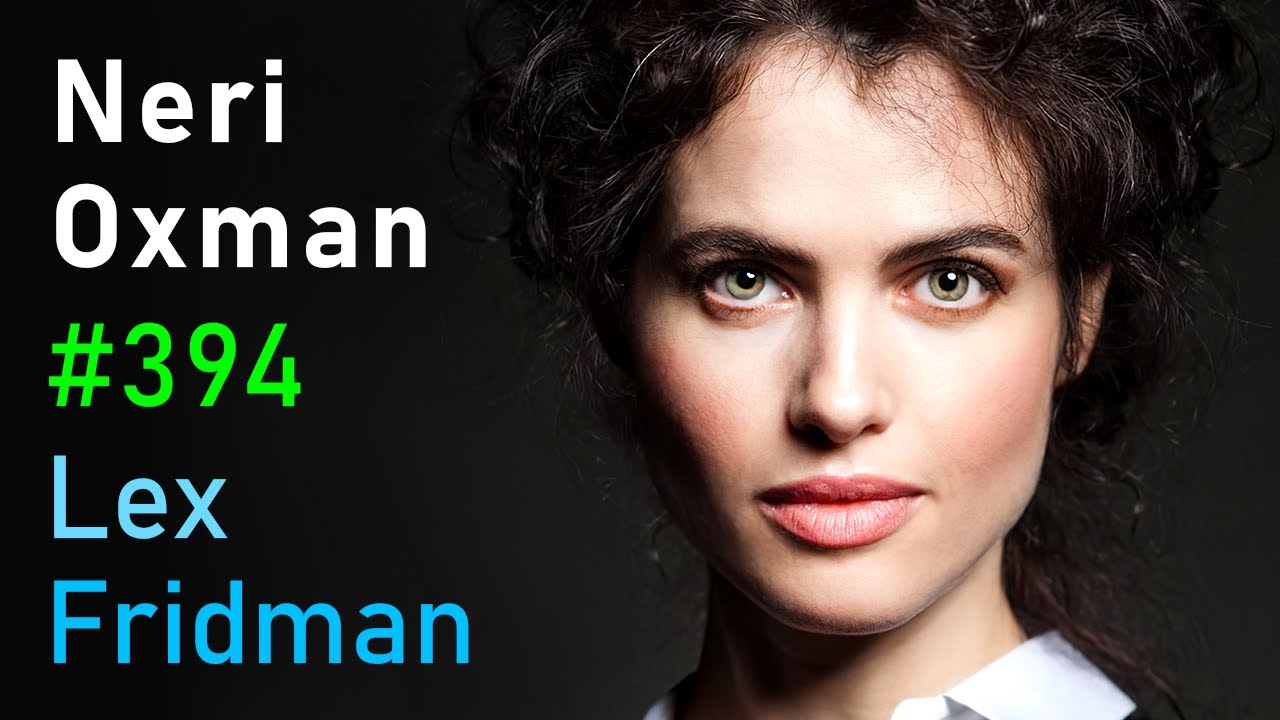
New Lex Fridman Insight: Neri Oxman: Biology, Art, and Science of Design & Engineering with Nature
Sent May 30, 2026
Key Insights
- In 2020, anthropomass surpassed biomass, highlighting the dominance of human-made materials over natural ones.
- Neri Oxman's 'material ecology' integrates synthetic biology and computational design to create eco-friendly products.
- The Silk Pavilion project used 17,532 silkworm threads, showcasing bio-based design's potential.
- High-throughput directed evolution can revolutionize synthetic biology by producing diverse biomaterials.
- Oxman emphasizes the role of imperfection and discomfort in fostering creativity and growth.
How the conversation moved
The conversation begins with Neri Oxman introducing the concept of 'material ecology,' a design philosophy she coined in 2005 that integrates synthetic biology, robotics, and computational design to create products that harmonize with nature. Oxman highlights a pivotal moment in 2020 when anthropomass exceeded biomass, emphasizing the urgent need for sustainable design practices. She envisions a future where human-made products positively impact ecology, starting from CO2 and ending as biodegradable, biocompatible, and bio-renewable items, effectively recycling carbon into consumable goods.
Oxman elaborates on her work with the Silk Pavilion at the Museum of Modern Art, which involved bio-based design using silkworms. This project used 17,532 silkworm threads, guided by computational templates, to create architectural structures. The silkworms' natural processes were harnessed for innovative design, showcasing the potential of integrating biology with architecture. She explains how silkworms, unlike social insects, do not communicate, yet computational templating allowed for a form of collaboration among them, illustrating a new frontier in bio-based design.
Despite the groundbreaking nature of Oxman's work, Lex Fridman did not provide significant pushback or challenge her ideas during the conversation. The discussion flowed smoothly, with Oxman presenting her vision and projects without interruption or contention. This lack of pushback leaves some questions about the scalability and practicality of these innovations unaddressed, such as the economic feasibility of mass-producing bio-based designs or the potential ecological impacts of deploying these technologies at scale.
The episode concludes with Oxman reflecting on broader themes of creativity, imperfection, and growth. She emphasizes the importance of embracing imperfection and discomfort as essential components of creativity and personal development. Oxman argues that change is the only permanence and that flaws in humans present vulnerability, which is crucial for connection and community building. She advocates for a multidisciplinary approach, combining novelty across fields like synthetic biology, robotics, and material science to drive innovation. The conversation leaves open the question of how these ideas will be practically implemented and scaled in the real world.
Surprising moments
In-depth
Material Ecology and Sustainable Design
- Anthropomass now exceeds biomass, indicating a critical shift in material dominance.
- Material ecology aims to create products that harmonize with nature.
- Synthetic biology and computational design are key to Oxman's eco-friendly approach.
Bio-Based Design and the Silk Pavilion
- The Silk Pavilion used 17,532 silkworm threads, guided by computational templates.
- Silkworms' natural processes were harnessed for architectural innovation.
- The project illustrates the potential of integrating biology with design.
Directed Evolution in Synthetic Biology
- High-throughput directed evolution can produce diverse biomaterials.
- This approach allows for top-down environmental control and bottom-up genetic regulation.
- The biodiversity chamber concept helps understand future food and product development.
Creativity and the Role of Imperfection
- Imperfection and discomfort are crucial for creativity and growth.
- Oxman emphasizes the need for creative solitude and community building.
- Combining novelty across disciplines leads to innovative outcomes.
Notable Quotes
I think of nature as everything that isn’t anthropomass, everything that is not produced by humankind, the birds and the rocks and everything in between, fungi, elephants, whales.
Still open
- What are the economic and ecological implications of scaling bio-based design technologies?
- How can Oxman's multidisciplinary approach be practically implemented in mainstream industries?