New Lex Fridman Insight: Norman Naimark: Genocide, Stalin, Hitler, Mao, and Absolute Power
Sent June 11, 2026
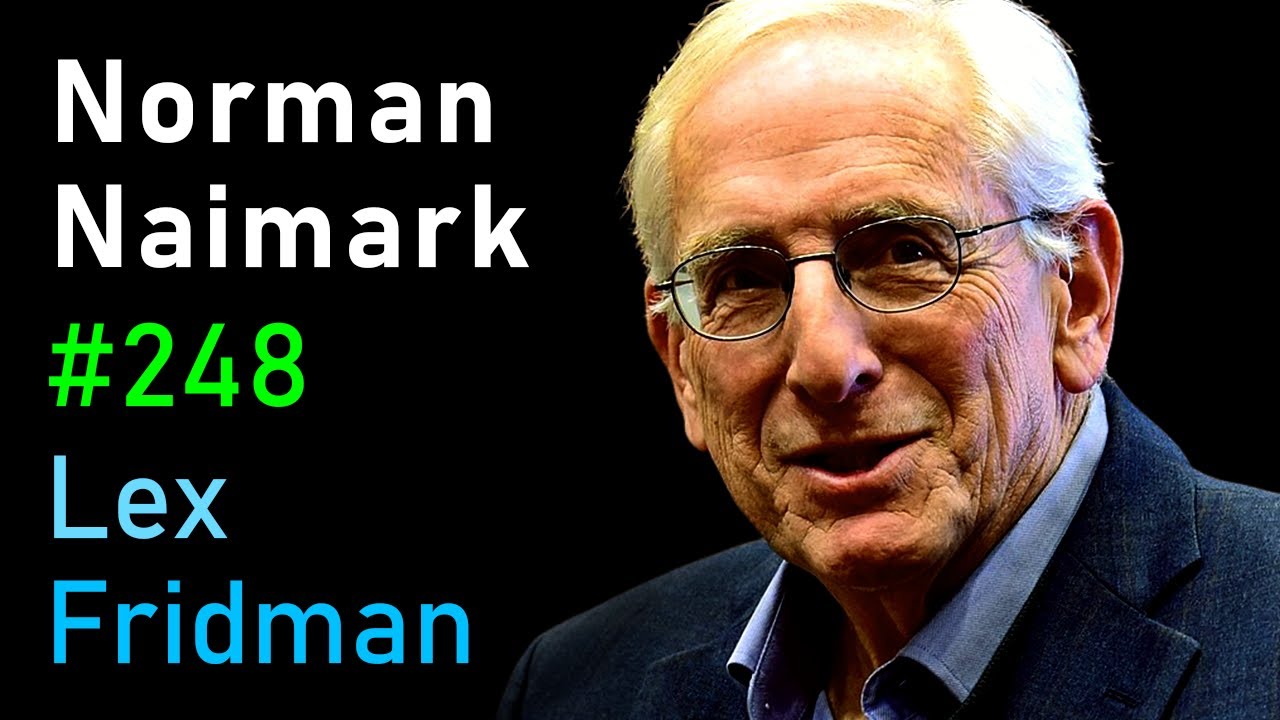
Key Insights
- Stalin's policies during the Holodomor were driven by political motives and resulted in millions of deaths.
- The ideology of communism alone doesn't dictate genocide; individual leaders and historical circumstances play crucial roles.
- Mao's Great Leap Forward led to the deaths of tens of millions, illustrating a disregard for human life.
- The UN Genocide Convention excludes social and political groups, complicating the classification of certain atrocities.
- Technology's impact is neutral, shaped by human choices, with potential for both empowerment and harm.
How the conversation moved
The conversation began with an exploration of Stalin's character and his rise to power, framed by Norman Naimark's analysis of Stalin as both delusional and competent. Naimark argued that Stalin's belief in socialism and his political astuteness were key to his rise, despite his paranoid tendencies. The discussion highlighted Stalin's indifference to human suffering, particularly during the Holodomor, a man-made famine resulting from his collectivization policies. The host set the stage by questioning the nature of Stalin's evil and the role of ideology in his actions.
Naimark's main argument centered on the idea that ideology alone does not dictate genocide; rather, it is the combination of ideology, individual leaders, and historical circumstances that leads to such atrocities. He cited examples from Stalin, Mao, and other leaders to illustrate how personal motives and political contexts shaped their genocidal actions. The conversation delved into the complexities of defining genocide, referencing the UN Genocide Convention and its limitations in classifying certain atrocities, such as those committed under Mao's regime.
Pushback emerged when discussing the role of ideology in genocide, with the host questioning whether the murderousness of regimes like Stalin's and Mao's could be solely attributed to their ideological beliefs. Naimark countered by emphasizing the importance of individual leaders and historical contexts, arguing that ideology is only one part of the equation. The discussion also touched on the limitations of international conventions in addressing these complex issues, highlighting the need for a broader understanding of genocide beyond ideological frameworks.
The conversation concluded by exploring the dual nature of technology and its potential for both empowerment and harm. Naimark and the host discussed how technology's impact is shaped by human choices and political systems, with examples ranging from cryptocurrencies to nuclear weapons. The discussion emphasized the importance of human agency in shaping technology's role in society, arguing that while technology can empower individuals, it requires responsible innovation and policy-making to ensure its positive impact. The conversation ended with an acknowledgment of the complexities of human nature and the challenges of addressing historical and contemporary atrocities.
Surprising moments
In-depth
Stalin's Policies and the Holodomor
- Stalin's policies led to the Holodomor, a man-made famine in Ukraine.
- Political motives and resistance to collectivization fueled Stalin's harsh measures.
Role of Ideology in Genocide
- Communism as an ideology doesn't inherently lead to genocide.
- Individual leaders and historical contexts are significant in determining genocidal actions.
Mao's Great Leap Forward
- Mao's policies during the Great Leap Forward resulted in massive loss of life.
- The disregard for human life during this period highlights the dangers of absolute power.
Limitations of the UN Genocide Convention
- The Genocide Convention excludes social and political groups from its definition.
- This exclusion complicates the classification of certain historical atrocities.
Technology's Impact
- Technology is neutral and its impact depends on human choices.
- It can empower individuals or contribute to harm, depending on its use.
Notable Quotes
I think he was delusional.
Still open
- Naimark questioned whether the Genocide Convention's exclusion of social and political groups limits its effectiveness in preventing atrocities.
- The host wondered if technology alone can solve societal problems without human intervention.