New Lex Fridman Insight: OpenClaw: The Viral AI Agent that Broke the Internet - Peter Steinberger | Lex F
Sent May 30, 2026
Key Insights
- OpenClaw reached 180,000 GitHub stars in days, marking a major AI milestone.
- Steinberger built OpenClaw's prototype in an hour, highlighting rapid innovation.
- Legal and community pressures forced OpenClaw's renaming from ClaudeBot to Mod Bot.
- Steinberger's AI agents perform complex tasks without explicit programming.
- Steinberger argues personal agents could render 80% of apps obsolete.
How the conversation moved
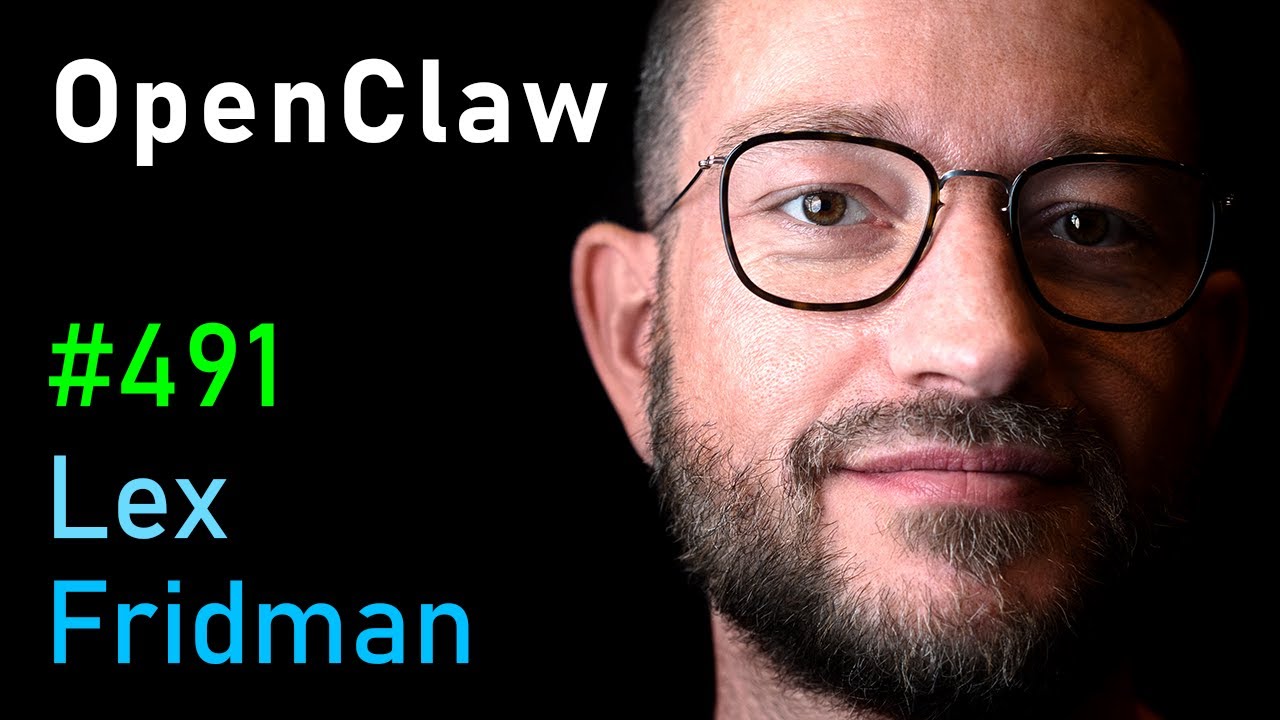
Lex Fridman introduced Peter Steinberger, focusing on the viral success of OpenClaw, an AI agent that quickly gained traction in the tech community. Steinberger recounted the rapid development of OpenClaw, highlighting its prototype creation in just one hour and the subsequent explosion of interest, with over 180,000 GitHub stars. This set the stage for a discussion on the implications of such rapid innovation in AI, marking a significant moment since the launch of ChatGPT.
Steinberger detailed the capabilities of his AI agents, which can autonomously handle complex tasks like file conversion and API interaction without explicit programming. He emphasized the playful nature of his development approach, contrasting it with competitors who take themselves too seriously. Steinberger's work exemplifies how AI can integrate into everyday life, performing tasks that traditionally required human intervention, thus pushing the boundaries of what AI can achieve autonomously.
Despite the successes, Steinberger faced challenges, particularly with the renaming of his project from ClaudeBot to Mod Bot due to legal pressures and harassment from the crypto community. This highlighted the difficulties of branding in the tech world, where securing online identities and dealing with community backlash can be as challenging as the technical aspects of development. Lex did not push back strongly on these points, though the tension around branding and community interaction was palpable.
Ultimately, the conversation turned to the future of software development, with Steinberger arguing that personal agents could render 80% of apps obsolete, reshaping the software landscape. This bold claim suggests a significant shift in how software is developed and used, with personal agents potentially taking over many functions currently performed by traditional apps. The discussion concluded with reflections on the evolving role of AI in technology and its potential to transform industries.
Surprising moments
In-depth
OpenClaw's Viral Impact
- OpenClaw quickly gained 180,000 stars on GitHub, indicating massive interest.
- Steinberger built OpenClaw's prototype in just one hour.
- The project is considered a major moment in AI since ChatGPT's launch.
AI Agent Capabilities
- Steinberger's agents perform complex tasks autonomously.
- He operates multiple agents simultaneously based on task complexity.
- The playful approach to AI development contributes to its success.
Branding and Legal Challenges
- OpenClaw was renamed from ClaudeBot to Mod Bot due to legal issues.
- The renaming process was complicated by online identity challenges.
- Steinberger faced harassment from the crypto community during this period.
AI's Future in Software Development
- Steinberger argues personal agents could replace 80% of apps.
- He suggests this shift will transform the software development landscape.
- AI models' evolution improves their security and problem-solving capabilities.
Notable Quotes
I made the agent very aware. Like, it knows what his source code is.
Still open
- Steinberger questioned whether personal agents could truly replace 80% of traditional apps, leaving room for debate on the future of software development.