New Lex Fridman Insight: Peter Norvig: Artificial Intelligence: A Modern Approach
Sent June 11, 2026
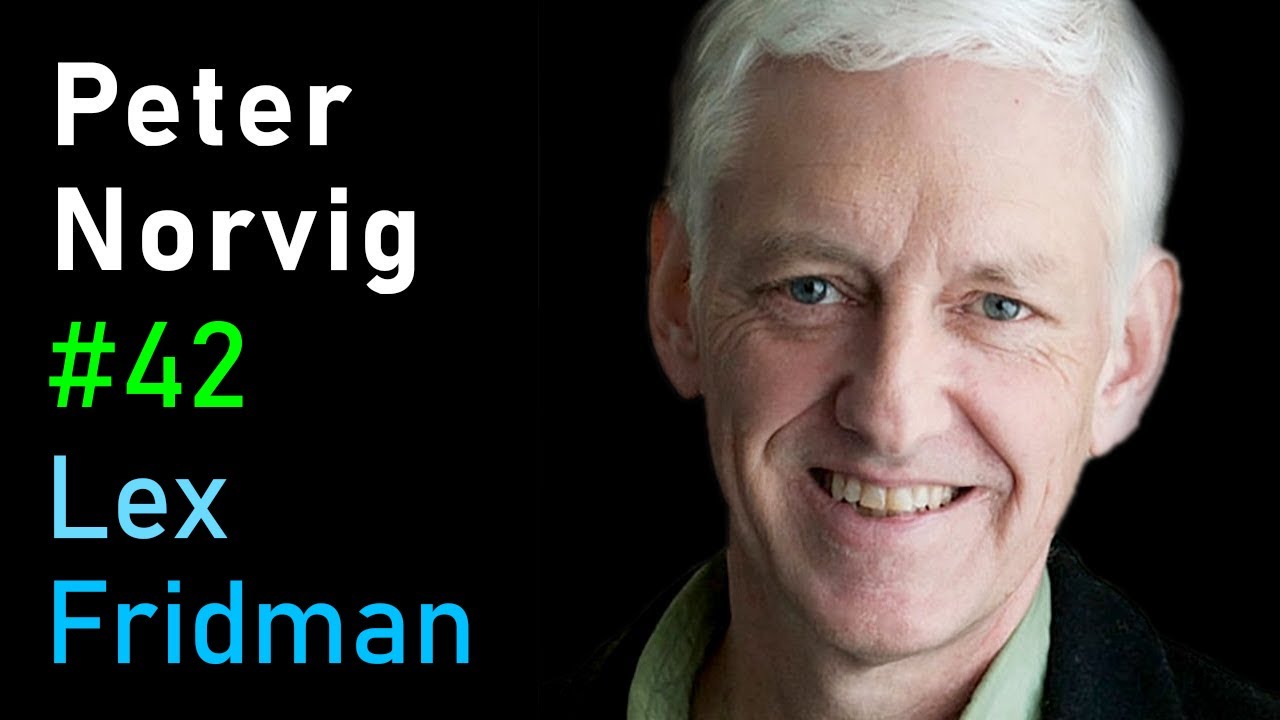
Key Insights
- Peter Norvig highlights that achieving equal error rates across protected classes in AI systems is theoretically impossible, necessitating trade-offs.
- Inverse reinforcement learning can infer utility functions from observed actions but struggles with potential self-destructive actions.
- Norvig notes that AI's evolution has shifted from Boolean logic to probability and machine learning, with deep learning and big data as key drivers.
- Programming education now emphasizes problem-solving and modeling over syntax mastery, reflecting a broader application beyond professional software engineering.
How the conversation moved
The conversation begins with Peter Norvig reflecting on the evolution of AI as captured through the editions of 'Artificial Intelligence, A Modern Approach'. Norvig emphasizes the philosophical implications of defining utility functions in AI, noting the shift from predicate logic to first-order logic driven by increased computing power. This sets the stage for discussing how AI's goals are framed and the challenges in achieving them, such as balancing error rates across different groups.
Norvig argues that AI has evolved significantly, moving away from Boolean logic towards probabilistic models and machine learning. He cites the rise of deep learning and big data as transformative forces not anticipated in earlier editions of his textbook. Inverse reinforcement learning is introduced as a method to infer utility functions, though it faces challenges due to potential self-destructive actions, highlighting a critical limitation in AI's ability to safely emulate human decision-making.
Lex does not directly challenge Norvig's claims about AI's evolution or the impossibility of achieving equal error rates across protected classes. However, the conversation touches on the broader implications of AI's limitations and the ethical trade-offs involved in designing these systems. The absence of pushback on these points leaves open questions about how these challenges will be addressed in practice.
The discussion pivots to the broader implications of AI in education and programming. Norvig highlights the shift in programming education towards problem-solving and modeling, reflecting a democratization of coding skills. The conversation closes with a forward-looking view on how AI can enhance the coding experience, suggesting a future where AI assists in real-time code corrections and suggestions, potentially transforming how programming is taught and practiced.
Surprising moments
In-depth
AI evolution
- AI has moved from Boolean logic to probability and machine learning.
- Deep learning and big data were not foreseen in early AI textbooks.
- Inverse reinforcement learning faces challenges with self-destructive actions.
Programming education
- Programming is now about problem-solving, not just syntax.
- Mastery involves higher abstraction levels, not deep internals.
- Programming applies across fields, not just software engineering.
Notable Quotes
So you'd like to say, well, I want to achieve both those goals. And then it turns out you do the analysis and it's theoretically impossible to achieve both those goals.
Still open
- Norvig highlights the challenge of defining utility functions in AI, questioning how these will be framed ethically and practically.