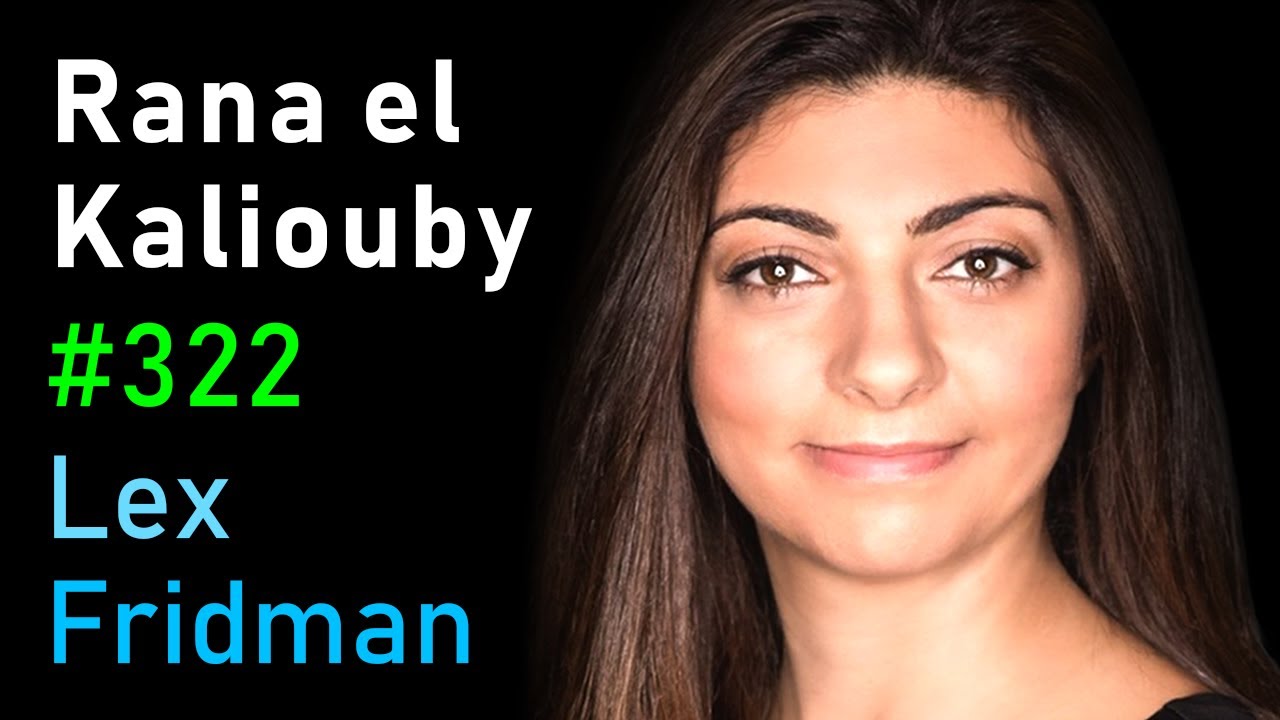
New Lex Fridman Insight: Rana el Kaliouby: Emotion AI, Social Robots, and Self-Driving Cars
Sent June 11, 2026
Key Insights
- Emotion AI can reveal societal biases as it reflects the data it's trained on, posing ethical challenges.
- SmartEye's driver monitoring systems are adopted by 14 leading car manufacturers for 94 models, showing industry reliance.
- Tesla's software updates are a cultural shift in automotive, challenging traditional manufacturers.
- Home robots like Roomba foster emotional connections, evidenced by users naming them and expressing attachment.
- AI's role in dating apps could shift focus from engagement metrics to meaningful connections.
How the conversation moved
The conversation begins with Rana el Kaliouby discussing her personal background, emphasizing the cultural and familial influences that shaped her career in technology and emotional intelligence. She reflects on her early experiences with computers and coding, which laid the foundation for her interest in AI and emotion detection. The host, Lex Fridman, frames the discussion around the intersection of technology and human emotion, setting the stage for a deeper exploration of how AI can impact human interaction and societal norms.
Rana argues that emotional intelligence is critical in technology, particularly in AI systems designed to interpret human emotions. She provides evidence of how biases in training data can lead to flawed emotion detection, which can perpetuate societal biases. The conversation covers the technical challenges of accurately interpreting emotions from facial expressions, emphasizing the need for a nuanced approach that considers contextual signals beyond simplistic models of emotion detection.
Lex challenges the notion that AI can effectively replicate human emotional understanding, citing criticisms from experts like Lisa Feldman Barrett. Rana acknowledges these critiques, agreeing that emotion detection is complex and requires more sophisticated models. However, she maintains that AI can still play a significant role in enhancing human-machine interaction if developed responsibly. The tension lies in balancing technological advancement with ethical considerations to avoid reinforcing harmful stereotypes.
The discussion pivots to the application of AI in various industries, including automotive and home robotics. Rana highlights SmartEye's success in driver monitoring systems and the emotional connections people form with home robots like Roomba. The conversation concludes with a focus on AI's potential to transform dating apps by prioritizing meaningful connections over engagement metrics. This shift could redefine how technology fosters human relationships, leaving open questions about the ethical implications and future directions of AI development.
Surprising moments
In-depth
Emotion AI and Bias
- Emotion AI can perpetuate biases from training data.
- Simplistic emotion detection is criticized for missing contextual cues.
AI in Automotive Industry
- SmartEye's systems are widely adopted in the auto industry.
- Tesla's software updates challenge traditional car manufacturing.
Home Robotics and Emotional Connections
- Users form emotional bonds with robots like Roomba.
- Privacy concerns arise with robots collecting home data.
AI in Dating Apps
- AI could shift dating apps from engagement to meaningful connections.
- Humor styles as a basis for matching in dating apps.
Notable Quotes
I am who I am because I was raised by a particular set of parents, both modern and conservative, forward thinking, yet locked in tradition.
Still open
- Rana el Kaliouby questioned how AI can be developed to avoid perpetuating societal biases while still advancing technology.