New Lex Fridman Insight: Ray Dalio: Money, Power, and the Collapse of Empires
Sent June 11, 2026
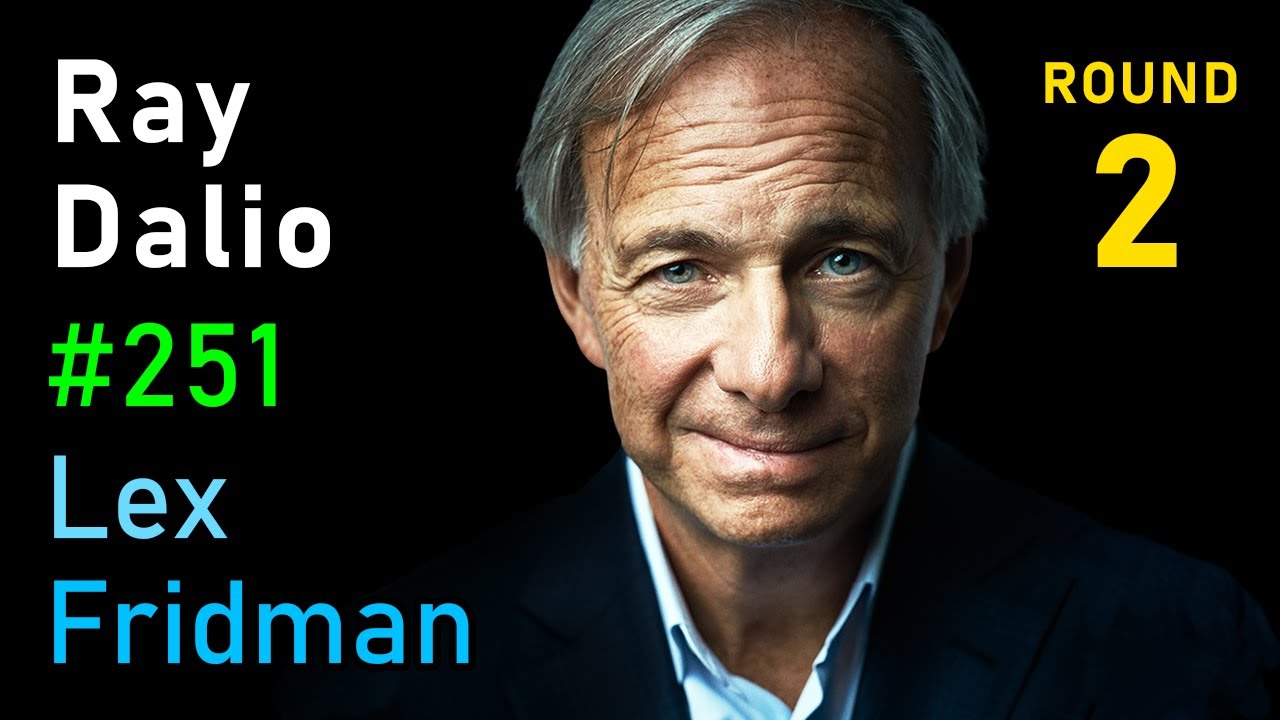
Key Insights
- Ray Dalio identifies three critical cycles affecting empires: debt, internal order, and external order.
- The U.S. faces risks as its educational advantage declines, impacting future global competitiveness.
- China has become the largest trading nation but lacks a reserve currency, affecting its global influence.
- Bitcoin's value is estimated at 20% of gold's, with potential as an alternative currency.
- Dalio's five-step process for growth emphasizes self-awareness and adaptation.
How the conversation moved
The episode begins with Ray Dalio outlining the historical interplay between money and power, emphasizing how financial resources have historically influenced political authority. Dalio frames the discussion around the concept of cycles, particularly focusing on the rise and fall of empires and how these cycles impact global currencies and markets. He introduces the idea of three critical cycles—long-term debt, internal order, and external order—that govern the dynamics of empires.
Dalio argues that the U.S. is currently at risk due to declining education quality, which he identifies as a leading indicator of a nation's future success. He contrasts this with China's rise as the largest trading nation, noting that while China lacks a reserve currency, its economic influence is growing. Dalio uses historical data to support his claims, highlighting the cyclical nature of empire dynamics and the importance of maintaining competitive educational standards.
Despite the depth of Dalio's analysis, Lex Fridman does not provide significant pushback, allowing Dalio's narrative to unfold without direct challenge. However, a potential point of contention could be Dalio's assertion about the inevitability of these cycles, which might be critiqued for underestimating the potential for human agency and innovation to alter historical patterns. The lack of pushback leaves some of Dalio's claims open to interpretation and further scrutiny.
The conversation concludes with Dalio discussing the evolution of alternative currencies like Bitcoin and the importance of principles in decision-making. He emphasizes the need for adaptability and self-awareness in both personal and professional contexts, tying these themes back to the broader cycles of history and the dynamics of power. While Dalio provides a comprehensive framework, the discussion leaves open questions about the future trajectory of these cycles and the role of emerging technologies.
Surprising moments
In-depth
Cycles of History
- Three critical cycles affect empires: debt, internal order, and external order.
- Empires rise and fall based on these cycles, impacting global markets and currencies.
U.S.-China Relations
- The U.S. risks losing its global status due to declining education quality.
- China's economic growth is significant but limited by the lack of a reserve currency.
Alternative Currencies
- Bitcoin is valued at about 20% of gold's worth, indicating its potential role as an alternative currency.
- The competition of monies is driven by fiat currency devaluation.
Personal Growth
- Dalio's five-step process emphasizes self-awareness and adaptation for growth.
- The principle 'pain plus reflection equals progress' is central to Dalio's approach.
Notable Quotes
Those who have money have power, a certain type of power.
Still open
- Dalio questions whether the U.S. can regain its educational advantage to maintain global leadership.
- The future role of Bitcoin and other alternative currencies in the global financial system remains uncertain.