New Lex Fridman Insight: Ray Kurzweil: Singularity, Superintelligence, and Immortality
Sent June 11, 2026
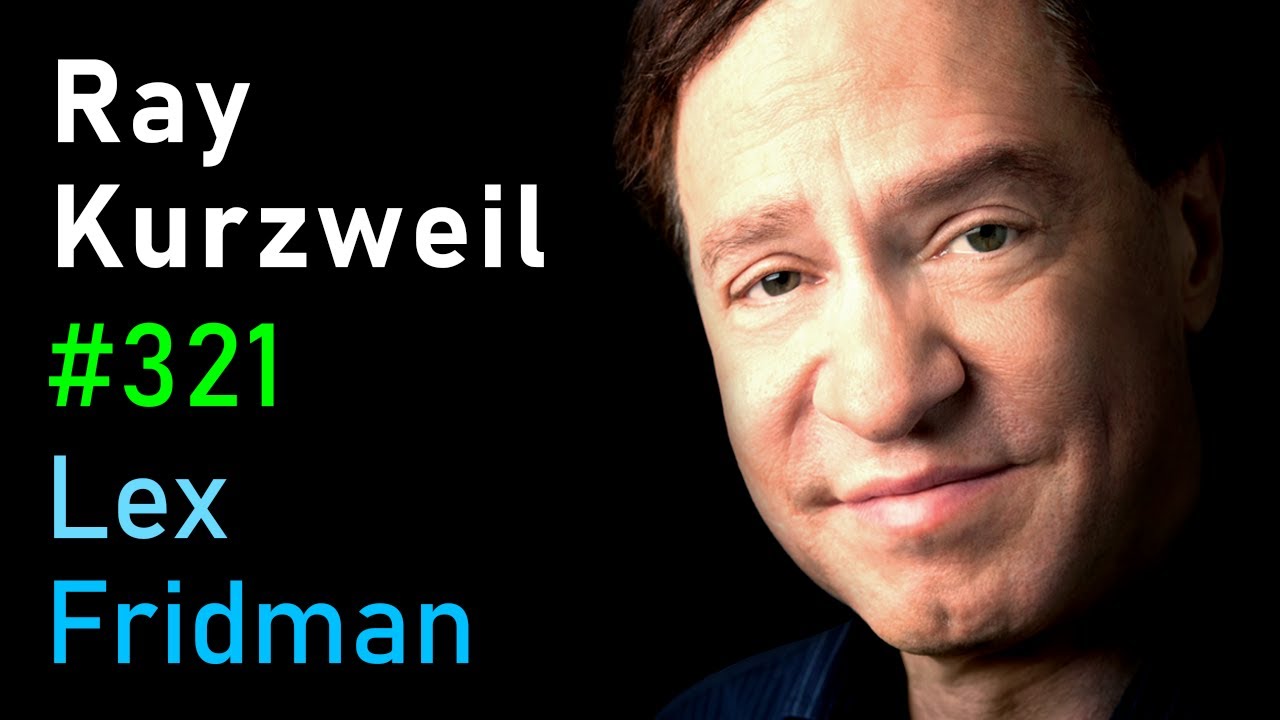
Key Insights
- Kurzweil predicts the singularity by 2045, with AI passing the Turing test by 2029, challenging earlier expert predictions.
- Brain-computer interfaces could connect human brains to the cloud by the 2030s, significantly enhancing communication.
- Kurzweil believes longevity escape velocity will be achieved by the end of the decade, extending human life expectancy.
- Exponential growth in computing power continues to accelerate AI capabilities, independent of Moore's law.
- Automation historically increases employment, contradicting fears of mass unemployment due to technological advances.
How the conversation moved
The host introduces the episode by framing the conversation around the technological singularity, superintelligence, and immortality, setting the stage for Ray Kurzweil's insights. Kurzweil begins by discussing his long-standing prediction that the singularity will occur by 2045, with AI surpassing human intelligence. He emphasizes the importance of exponential growth in computing power and how it has consistently driven technological advancements, independent of Moore's law. Kurzweil also revisits his prediction that AI will pass the Turing test by 2029, challenging both past and current expert consensus on AI timelines.
Kurzweil's main argument revolves around the accelerating pace of technological change, particularly in AI and computing. He provides evidence of exponential growth in computing power, citing the rapid increase in the capabilities of large language models and the development of technologies like AlphaFold. Kurzweil also highlights the potential for brain-computer interfaces to revolutionize human communication and cognition by the 2030s. His belief in achieving longevity escape velocity by the end of the decade suggests a transformative shift in human health and lifespan, supported by advancements in biotechnology and AI.
Despite the bold predictions, the conversation lacks significant pushback or tension from the host. Kurzweil's timelines for the singularity and AI consciousness challenge the prevailing consensus, yet the host does not critically engage with these claims or explore potential risks and ethical considerations. The absence of pushback leaves questions about the feasibility and societal implications of Kurzweil's vision largely unexplored. This gap highlights an opportunity for deeper examination of the assumptions underlying Kurzweil's predictions and their potential impact on society.
The conversation concludes with Kurzweil reflecting on the broader implications of technological evolution for humanity. He discusses the historical context of job displacement due to automation, arguing that technological advancements have historically increased employment and improved quality of life. Kurzweil also touches on the importance of love and human connection, suggesting that these elements remain central even as technology transforms our world. The episode ends without resolving the tensions between Kurzweil's optimistic vision and the potential challenges posed by rapid technological change.
Surprising moments
In-depth
Technological Singularity
- Kurzweil predicts singularity by 2045, with AI surpassing human intelligence.
- AI expected to pass Turing test by 2029, challenging previous predictions.
- Exponential growth in computing power accelerates AI development.
Brain-Computer Interfaces
- Future brain-cloud connections could redefine communication.
- Neuralink's current limitations highlight challenges in achieving full brain-computer integration.
Human Longevity
- Kurzweil believes longevity escape velocity will be reached soon.
- This could transform societal views on aging and mortality.
Impact of Automation
- Automation historically increases employment, contrary to popular belief.
- Technological advancements have improved life expectancy and reduced poverty.
Notable Quotes
I believe 2029, that's six, seven years from now, we'll have something that passes the Turing test and a valid Turing test, meaning it goes for hours, not just a few minutes.
Still open
- Kurzweil's prediction of AI passing the Turing test by 2029 challenges the consensus timeline, suggesting a faster trajectory for AI consciousness.