New Lex Fridman Insight: Richard Karp: Algorithms and Computational Complexity
Sent June 11, 2026
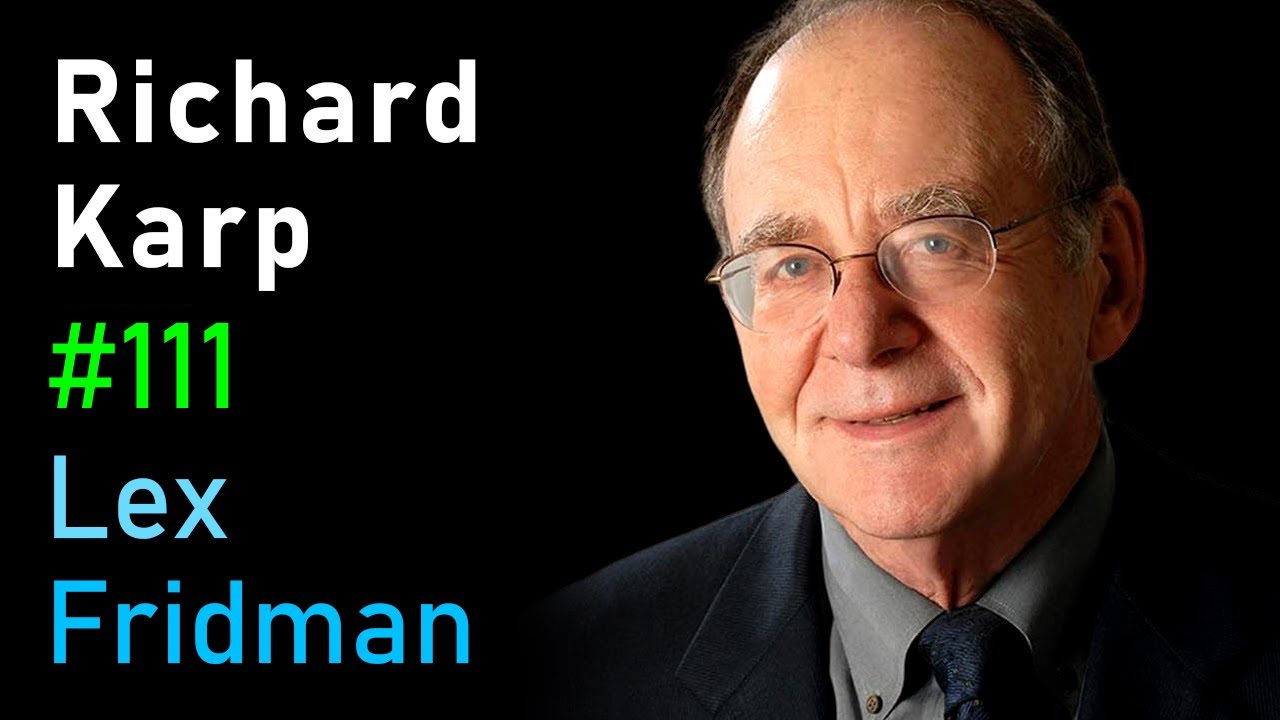
Key Insights
- Richard Karp received the Turing Award in 1985 for his foundational work on algorithms, including proving 21 problems to be NP complete.
- The P vs NP problem asks if every problem whose solution can be quickly verified can also be quickly solved, with Karp betting P is not equal to NP.
- Randomized algorithms, like the Rabin Karp algorithm, use randomness to efficiently solve problems, demonstrating the power of probabilistic methods in computer science.
- Karp argues that current AI cannot surpass a six-month-old child's comprehension, doubting human-level intelligence can be achieved through algorithms alone.
- Despite the theoretical complexity of NP complete problems, practical applications like SAT solvers can handle them efficiently.
How the conversation moved
The episode begins with Richard Karp reflecting on the elegance of geometry and its influence on his work in combinatorial algorithms. Karp, a Turing Award recipient, is celebrated for his contributions to algorithm design, notably proving 21 problems to be NP complete. He shares his fascination with numbers, recounting how he would multiply four-digit numbers in his head for amusement. This sets the stage for a deeper exploration of computational complexity and the foundational questions that continue to drive the field.
The conversation then shifts to the P vs NP problem, a central question in computer science that asks whether every problem whose solution can be quickly verified can also be quickly solved. Karp discusses the implications of this problem, noting that if P is not equal to NP, many combinatorial problems will remain unsolvable by efficient algorithms. He highlights the significance of Cook's paper, which established the satisfiability problem as a universal combinatorial problem, linking it to other NP complete problems.
Despite the weight of these theoretical challenges, Karp emphasizes the practical power of randomized algorithms, such as the Rabin Karp algorithm, which uses probabilistic methods to solve complex problems efficiently. Lex Fridman notes the "magical" ability of these algorithms to simplify problem-solving, even in cases where deterministic methods struggle. Karp also touches on the practical success of SAT solvers, which can handle NP complete problems in real-world applications, bridging the gap between theory and practice.
The episode concludes with Karp expressing skepticism about the potential for AI to achieve human-level intelligence, citing the complexity of human cognition and emotions as significant barriers. He argues that merely increasing computational speed will not suffice without a deeper understanding of the brain's organizational principles. This perspective highlights a critical tension in AI research: the gap between current capabilities and the nuanced understanding required to replicate human intelligence. The conversation leaves open questions about the future of AI and the ongoing quest to solve P vs NP.
Surprising moments
In-depth
Algorithm Design and Complexity
- Richard Karp's Turing Award-winning work on NP completeness set a benchmark in computational theory.
- The P vs NP problem remains one of the most significant open questions in computer science.
- Randomized algorithms provide efficient solutions to complex problems, exemplified by the Rabin Karp algorithm.
AI and Human Intelligence
- Karp doubts AI can achieve human-level intelligence due to the complexity of cognition.
- Current AI systems fall short of even a six-month-old child's understanding of the world.
Notable Quotes
I am doubtful that this will ever be achieved.
Still open
- Karp questions whether human-level intelligence can be achieved through algorithms, given the complexity of cognition and emotions.