New Lex Fridman Insight: Richard Wolff: Marxism and Communism
Sent June 11, 2026
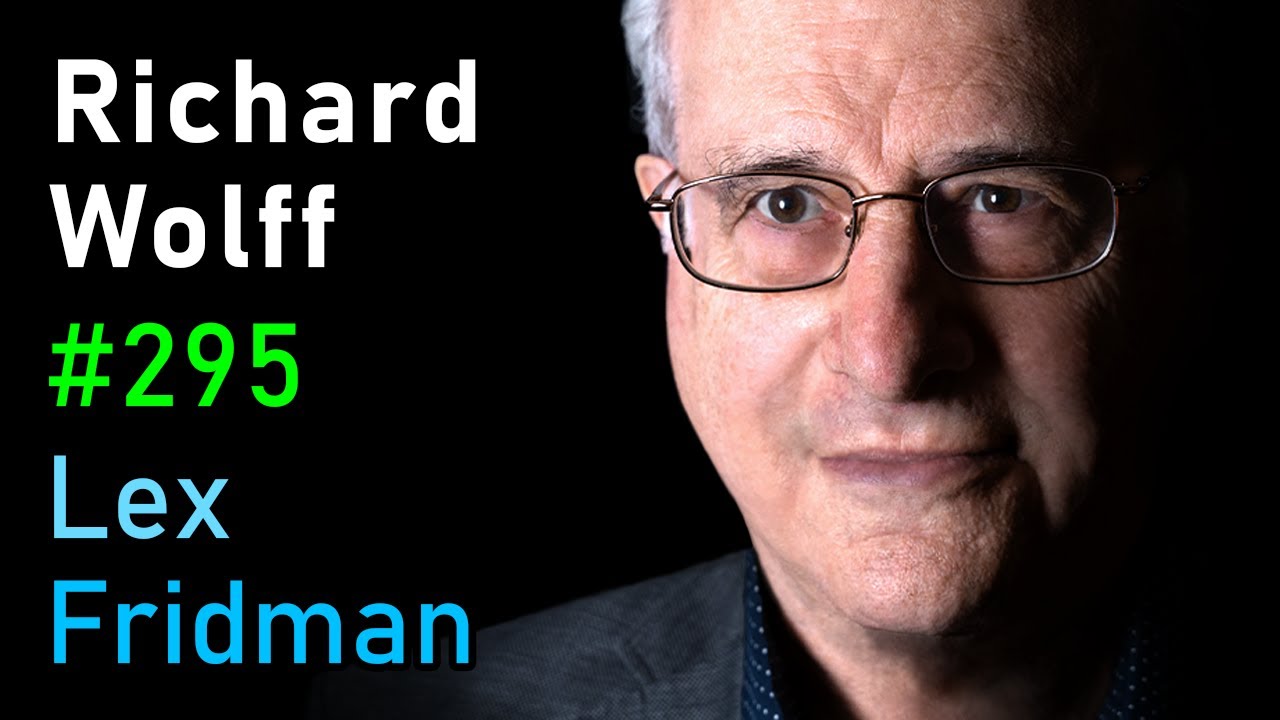
Key Insights
- Richard Wolff argues Marxism evolved from critiquing capitalism to proposing alternative societal models.
- Wolff claims capitalism could have eradicated hunger and disease, but its focus on profit prevented this.
- The average CEO earns 300 times more than the average worker, highlighting income inequality.
- Mass transportation could address climate issues more effectively than current capitalist solutions.
- Stalin's 'socialism in one country' contradicted Marx's internationalist ideas.
How the conversation moved
The conversation begins with Richard Wolff outlining the historical evolution of Marxism, emphasizing its origins as a critique of capitalism rather than a detailed plan for socialism or communism. Wolff discusses how Marxism evolved through historical events like the Paris Commune and the Russian Revolution, which shaped its application and interpretation. He highlights how figures like Lenin and Trotsky diverged from Marx's original critiques to implement Marxist ideas practically, leading to a split in Marxist thought between critiquing capitalism and proposing alternative societal models.
Wolff's main argument centers on capitalism's moral failures, particularly its inability to address fundamental human needs despite technological advancements. He provides concrete examples, such as the stagnation of the U.S. minimum wage since 2009 and the historical opposition of capitalists to worker rights improvements. Wolff argues that capitalism could have eradicated hunger and disease but chose profit over human welfare, framing this as a moral condemnation of the system's priorities.
Lex Fridman did not challenge Wolff's framing directly, though a potential counterargument could be that capitalism has indeed improved living standards globally through technological innovation and economic growth. However, Wolff preemptively addresses this by arguing that any improvements have been despite capitalist resistance, not because of it. He also critiques the narrative that capitalism naturally leads to a rising standard of living, calling it "factually nuts."
The conversation pivots to discussing potential solutions, with Wolff advocating for mass transportation as a more sustainable alternative to current capitalist practices. He critiques the accountability of both corporations and governments, suggesting that systemic changes are necessary to address climate issues effectively. The discussion concludes with Wolff reflecting on the historical context of Soviet Marxism and the contradictions inherent in Stalin's 'socialism in one country' approach, which diverged from Marx's internationalist vision.
Surprising moments
In-depth
Marxism's Evolution
- Marxism began as a critique of capitalism, not a blueprint for socialism.
- The Russian Revolution transformed Marxism into a practical ideology.
- Marxism now includes both critiques of capitalism and alternative societal models.
Capitalism's Limitations
- Capitalism could have eradicated hunger and disease but didn't.
- The last U.S. minimum wage increase was in 2009, highlighting stagnation.
- Capitalists historically opposed improvements for workers.
Income Inequality
- CEO pay is 300 times that of the average worker.
- Capitalist competition leads to monopolies, not accountability.
Environmental Solutions
- Mass transportation could reduce pollution and energy consumption.
- Current capitalist systems fail to address climate crises effectively.
Soviet Marxism and Stalinism
- Stalin's socialism contradicted Marx's internationalism.
- Economic isolation impacted Soviet hardships post-revolution.
Notable Quotes
The greatest practitioners of central planning are corporations.
Still open
- Wolff questions whether capitalism can ever align with human nature given its contradictions, leaving the issue unresolved.
- The conversation leaves open whether mass transportation can realistically replace current capitalist-driven transportation systems.