New Lex Fridman Insight: Roger Penrose: Physics of Consciousness and the Infinite Universe
Sent June 11, 2026
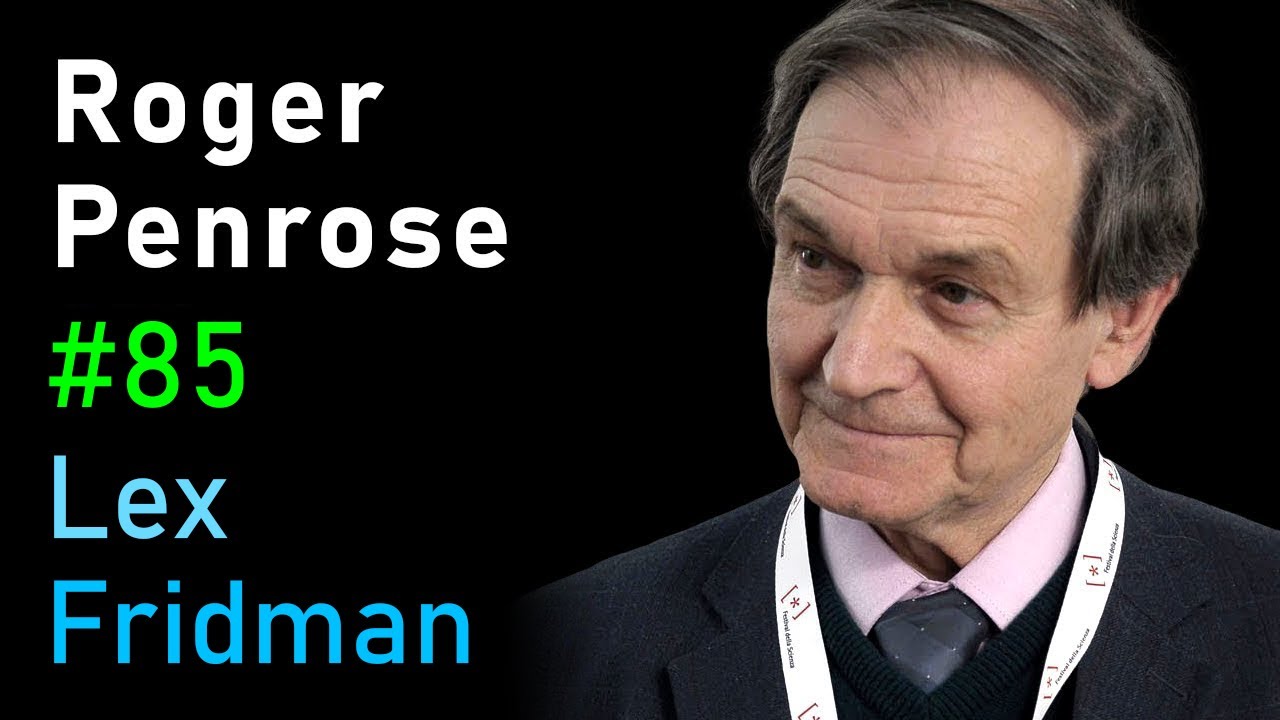
Key Insights
- Roger Penrose argues that consciousness cannot be fully explained by computational models, citing the cerebellum's unconscious nature despite its high neuron count.
- G 6del's Incompleteness Theorem implies limitations in computational systems, suggesting that consciousness involves noncomputable processes.
- Penrose proposes that consciousness may involve quantum mechanics and gravity, challenging conventional quantum theory's ability to explain it.
- The universe's exponential expansion and eventual fate involving black holes and Hawking radiation suggest a cyclical nature, connecting the Big Bang to the distant future.
- Microtubules may play a role in consciousness, with anesthetics affecting them, indicating a quantum basis for consciousness.
How the conversation moved
The conversation begins with Roger Penrose challenging the computational view of consciousness, citing the cerebellum's unconscious nature despite its high neuron count. He posits that the assumption that computational power will naturally lead to consciousness is flawed, as the cerebellum, with its computational capacity, remains unconscious. This sets the stage for exploring the limitations of current AI models in replicating human consciousness.
Penrose further delves into the implications of G 6del's Incompleteness Theorem, which suggests that there are truths in mathematical systems that cannot be proven, indicating that consciousness may involve noncomputable processes. He argues that this challenges the notion that consciousness can be fully captured by computational models, suggesting the need for new frameworks to understand consciousness beyond current computational theories.
Lex Fridman does not directly challenge Penrose's assertions about the limitations of computation in explaining consciousness, although the discussion naturally raises questions about the potential for AI to achieve consciousness. The conversation touches on the intersection of quantum mechanics and consciousness, where Penrose proposes that consciousness may involve quantum processes that current theories cannot fully explain, hinting at a need for a revised understanding of quantum mechanics.
The discussion concludes with Penrose's exploration of the universe's cyclical nature, suggesting a connection between the Big Bang and the distant future through conformal scaling. He also introduces the role of microtubules in consciousness, influenced by quantum mechanics, and the potential impact of anesthetics on these structures. This exploration of consciousness and the universe's structure leaves open questions about the fundamental nature of consciousness and its connection to the physical universe.
Surprising moments
In-depth
Consciousness and Computation
- Penrose argues that consciousness cannot be reduced to computational processes.
- The cerebellum's unconscious nature challenges the link between neuron count and consciousness.
Quantum Mechanics and Consciousness
- Penrose suggests consciousness involves quantum mechanics and gravity.
- Conventional quantum theory may need modification to explain consciousness.
Cyclical Universe
- The universe's expansion and black holes suggest a cyclical nature.
- The Big Bang and future universe may be connected through conformal scaling.
Microtubules and Consciousness
- Microtubules may be linked to consciousness, influenced by anesthetics.
- Quantum processes like photosynthesis suggest quantum mechanics in neuronal behavior.
Still open
- Penrose questions whether current deterministic computational models can ever encompass consciousness, suggesting a need for new forms of computation.