New Lex Fridman Insight: Rohit Prasad: Amazon Alexa and Conversational AI
Sent June 11, 2026
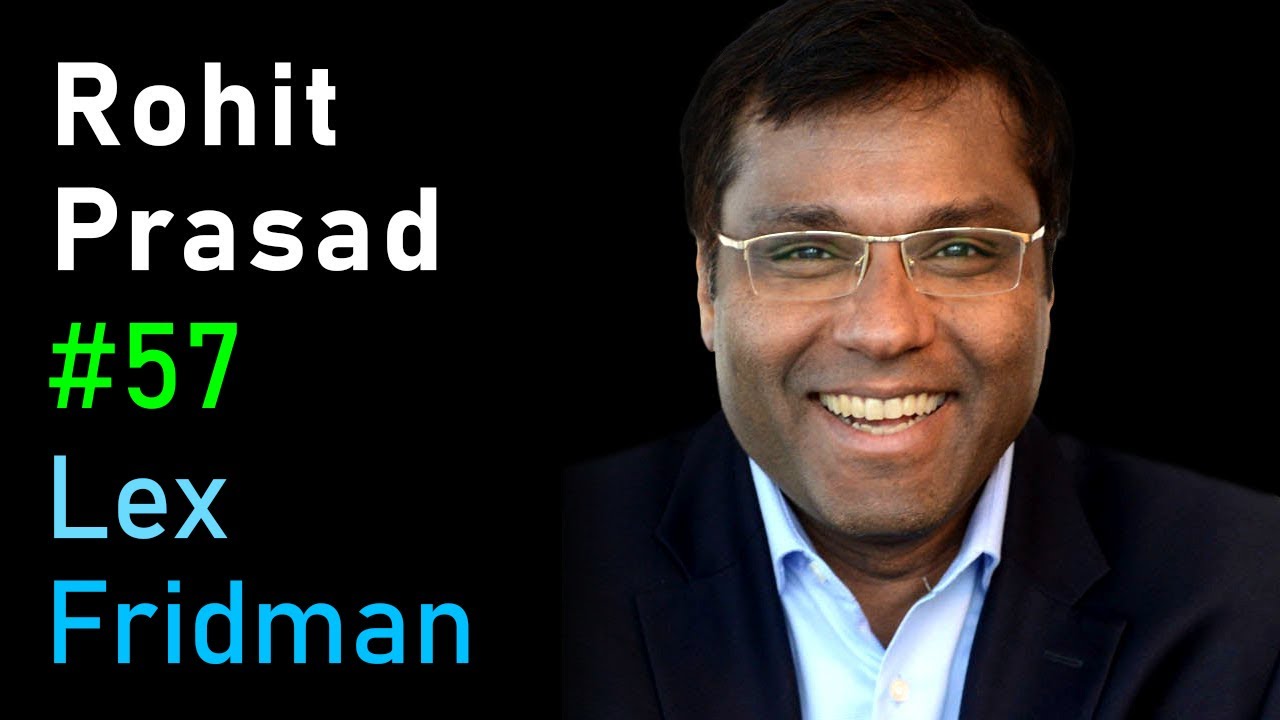
Key Insights
- AI assistants like Alexa can be in multiple places simultaneously, offering superhuman capabilities compared to humans.
- The Alexa Prize challenges teams to create social bots capable of engaging in coherent 20-minute conversations, a task still 5-10 years from being fully realized.
- Alexa's integration into diverse devices highlights the challenge of voice recognition across various environments and cultures.
- User trust is crucial for AI, with expectations for AI accuracy often surpassing those for human interactions.
- Alexa's development in speech recognition saw a fivefold reduction in error rates within six months due to large-scale data and deep learning.
How the conversation moved
The host opened the conversation by framing the central question around the evolution and capabilities of AI assistants, particularly focusing on Amazon Alexa's role in this space. Rohit Prasad, the guest, initially framed the discussion by highlighting the superhuman capabilities of AI assistants, which can operate in multiple locations simultaneously, unlike humans who are limited to one place. This setup led to an exploration of the broader implications of such capabilities for AI development and user interaction.
Rohit Prasad's main argument centered on the challenges and advancements in conversational AI, particularly through the Alexa Prize. He provided concrete evidence of the progress made, such as the successful completion of the first two years of the competition and the role of humor as a high bar for AI intelligence. Prasad also emphasized the gap between current capabilities and the goal of achieving a coherent 20-minute conversation, estimating it to be 5-10 years away.
Despite the compelling case for the advancements in AI, there was a notable lack of pushback from the host on the feasibility of these timelines and the inherent challenges in achieving such conversational depth. The conversation lacked explicit tension or contradiction, as Lex Fridman did not challenge the guest's assertions or provide counterpoints to Prasad's optimistic projections. This absence of pushback left some questions about the realistic pace of AI development unaddressed.
The discussion concluded with a pivot towards the future potential of AI, focusing on the continuous improvement of AI agents through customer interaction. Prasad expressed optimism about the future of AI, highlighting the exponential growth of research topics and the imminent launch of more advanced AI agents. The conversation left open questions about the long-term implications of AI's integration into daily life and the ethical considerations surrounding its development.
Surprising moments
In-depth
AI Assistants and Superhuman Capabilities
- AI assistants can operate in multiple locations simultaneously.
- This capability provides advantages over human limitations.
Alexa Prize and Conversational AI
- The Alexa Prize aims to create social bots for 20-minute conversations.
- Achieving this is estimated to be 5-10 years away.
- Humor in AI is a high bar for intelligence.
Trust and Accuracy in AI
- User trust is crucial for AI adoption.
- Expectations for AI accuracy are higher than for humans.
Speech Recognition Advancements
- Significant improvements were made in Alexa's speech recognition.
- Deep learning and large-scale data were pivotal in reducing error rates.
Notable Quotes
I do think the ability to converse is a sign of an ultimate intelligence. I think that is no question about it.
Still open
- The feasibility of achieving a coherent 20-minute conversation with AI remains uncertain, as noted by Prasad.
- The long-term implications of AI's integration into daily life and its ethical considerations were left open.