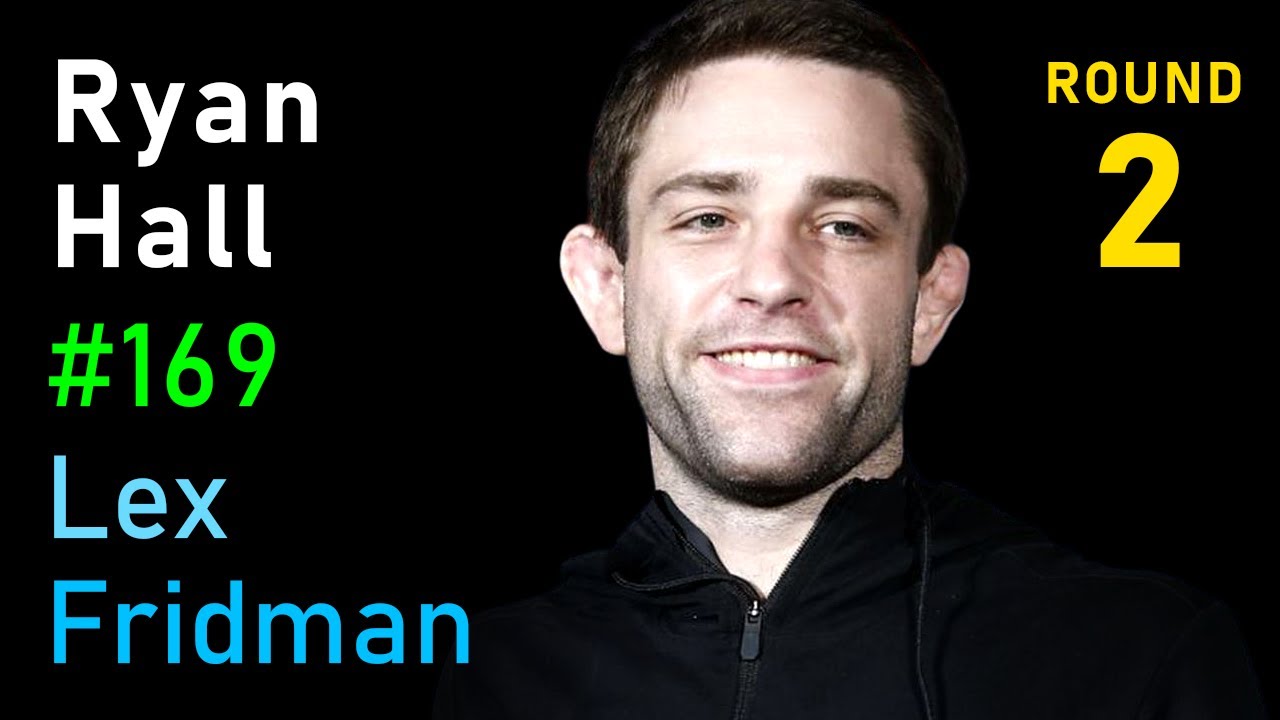
New Lex Fridman Insight: Ryan Hall: Solving Martial Arts from First Principles
Sent June 11, 2026
Key Insights
- Ryan Hall uses systems thinking to transcend traditional martial arts strategies, likening it to understanding technology beyond being an end user.
- Game theory and mechanism design illustrate how perceived choices in martial arts can be illusions, affecting strategy and outcomes.
- Social media's dopamine-driven dynamics prioritize divisive content, suggesting a need for incentive restructuring to foster empathy.
- Ryan Hall critiques superficial innovations in jiu-jitsu, urging a reevaluation of foundational techniques like the guard position.
- Hall argues greatness often requires crisis to manifest, challenging the perception of figures like Teddy Roosevelt.
How the conversation moved
The episode begins with Lex Fridman framing the discussion around martial arts through first principles, inviting Ryan Hall to share his unique perspective on transcending traditional systems. Hall introduces his systems thinking approach, emphasizing the importance of understanding historical lessons from texts like 'The Book of Five Rings' and 'The Art of War'. He argues that many martial artists operate within predictable systems, making them vulnerable if their opponents understand these systems. Hall compares this understanding to being more like the NSA, where deeper comprehension of systems allows one to transcend them, rather than being an end user who lacks insight into the mechanics.
Hall elaborates on his main argument by introducing game theory and mechanism design as frameworks for understanding martial arts strategy. He explains how these concepts illustrate the illusion of choice, where practitioners believe they have options, but their decisions are often predictable and constrained by the system they operate within. Hall uses examples from games like rock, paper, scissors to demonstrate how understanding these dynamics can help martial artists anticipate and counter their opponents' moves. He also touches on the importance of perceived free will in protecting individual rights against group dynamics, a theme that resonates throughout the conversation.
Despite the depth of Hall's insights, Lex doesn't challenge the framing here, though the obvious counter-position would be that not all martial arts practitioners are constrained by predictable systems, and some may already employ a systems thinking approach intuitively. The conversation could have explored how Hall's approach differs from other martial artists who also claim to operate beyond traditional frameworks. Additionally, the discussion on game theory and mechanism design could have been contrasted with real-world examples of martial artists who defy these constraints through creativity or unpredictability.
The conversation pivots to broader societal implications, including the impact of social media dynamics on empathy and discourse. Hall critiques the superficial nature of many jiu-jitsu innovations, urging a reevaluation of foundational techniques like the guard position. The discussion concludes with Hall's reflections on greatness, arguing that it often requires a crisis to manifest, challenging perceptions of historical figures like Teddy Roosevelt. This exploration of martial arts through first principles ultimately ties back to the importance of questioning assumptions and striving for deeper understanding in both personal and societal contexts.
Surprising moments
In-depth
Systems Thinking in Martial Arts
- Ryan Hall uses systems thinking to transcend traditional strategies.
- He compares martial arts systems to technology understanding beyond end-user level.
- Hall emphasizes understanding historical lessons from texts like 'The Book of Five Rings'.
- He illustrates the illusion of choice using games like rock, paper, scissors.
Game Theory and Martial Arts
- Game theory models interactions and predicts outcomes based on incentives.
- Mechanism design creates systems with perceived choices that may be illusory.
- A million-person bracket scenario illustrates randomness in outcomes.
- Belief in free will is crucial for protecting individual rights against group dynamics.
Social Media and Empathy
- Social media amplifies discussions on massive social problems.
- Likes and shares incentivize divisive content over constructive discourse.
- Changing social media incentives could lead to healthier discourse.
- Empathy requires understanding others' lives and stresses.
Critiquing Jiu-Jitsu Innovations
- Ryan critiques superficial innovations in jiu-jitsu techniques.
- He suggests many innovations do not challenge foundational assumptions.
- Ryan questions the effectiveness of the guard position.
- Successful fighters avoid damage, which takes years to master.
Greatness and Crisis
- Hall argues greatness requires a crisis to manifest true capabilities.
- He contrasts Teddy Roosevelt's presidency with Muhammad Ali's achievements.
- Hall reflects on personal challenges and psychological resilience.
- He emphasizes the importance of seeing humanity in others.
Still open
- Ryan Hall questions whether the focus on certain jiu-jitsu techniques, like the guard position, is disproportionate to their effectiveness.
- Lex Fridman and Ryan Hall discuss whether perceived free will is essential for individual rights and societal function, leaving the question open.