New Lex Fridman Insight: Saifedean Ammous: Bitcoin, Anarchy, and Austrian Economics
Sent June 11, 2026
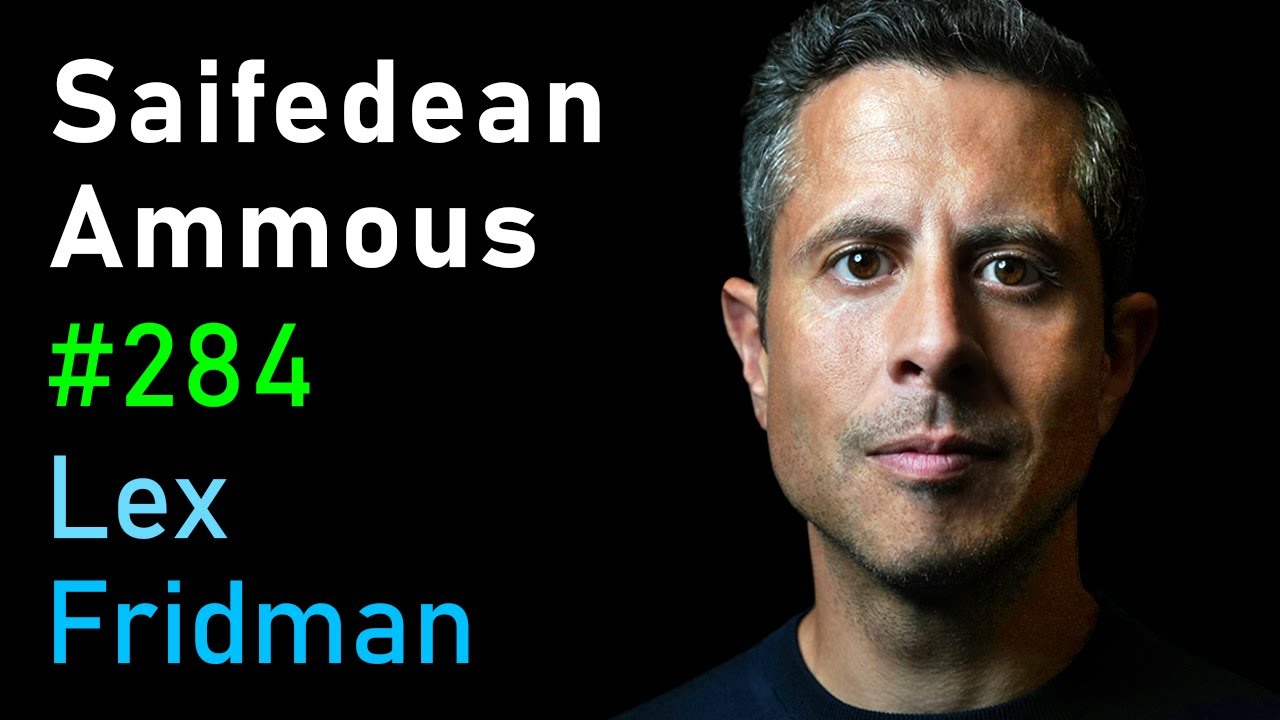
Key Insights
- Saifedean Ammous argues that fiat currency enables perpetual warfare and economic manipulation.
- Bitcoin's fixed supply of 21 million coins makes it the 'hardest money' ever, resisting inflation.
- Ammous claims that proof of stake systems are fundamentally flawed, likening them to centralized political systems.
- The global monetary system is effectively a dollar system, with other currencies being 'dollar plus country risk.'
- Bitcoin's energy consumption is justified by its benefits, similar to how airplanes justify their energy use.
How the conversation moved
Lex Fridman opens the conversation by framing the discussion around the nature of money, its historical context, and its role in human civilization. Saifedean Ammous begins by distinguishing between hard and soft money, arguing that money's primary function is as a medium of exchange that facilitates the division of labor. He emphasizes that fiat currency enables governments to finance wars through economic manipulation, a point that sets the stage for discussing Bitcoin as an alternative.
Ammous argues that Bitcoin, with its fixed supply of 21 million coins, represents the hardest form of money ever invented, resistant to inflation and government control. He contrasts this with the fiat system, which he claims is inherently inflationary and prone to manipulation. He provides historical examples, such as the British government's financing of World War I, to illustrate how fiat currency has been used to support perpetual warfare and economic instability.
Despite the compelling argument for Bitcoin, Lex Fridman does not challenge Ammous's claims about fiat currency's role in war financing or the superiority of Bitcoin's fixed supply. However, Ammous does push back against the notion that proof of stake systems offer a viable alternative to Bitcoin's proof of work, arguing that they are fundamentally flawed and liken them to centralized political systems. This tension highlights the ongoing debate within the cryptocurrency community about the best consensus mechanisms.
The conversation concludes with Ammous defending Bitcoin's energy consumption by comparing it to other technological advancements like airplanes, arguing that its benefits justify the energy use. The discussion leaves open questions about the future of the global monetary system and Bitcoin's role within it, particularly in light of geopolitical tensions and the potential rise of alternative systems. The episode ends without a definitive resolution, reflecting the complex and evolving nature of these topics.
Surprising moments
In-depth
Fiat Currency and War
- Fiat currency enables perpetual warfare through economic manipulation.
- The British government's financing of WWI set a precedent for fiat-based war funding.
Bitcoin's Unique Properties
- Bitcoin's fixed supply makes it resistant to inflation.
- Bitcoin operates without a central authority, ensuring decentralized transactions.
Critique of Proof of Stake
- Proof of stake is likened to centralized political systems, undermining decentralization.
- Proof of stake systems are seen as susceptible to coercion and corruption.
Global Monetary System
- The global monetary system is dominated by the dollar.
- Other currencies are viewed as 'dollar plus country risk,' highlighting geopolitical dependencies.
Bitcoin's Energy Consumption
- Bitcoin's energy use is justified by its decentralized security benefits.
- Comparisons are made to the energy demands of technological advancements like airplanes.
Notable Quotes
You can't have permanent war without fiat. And I also think there's a case to be made that you can't really have fiat without war.
Still open
- Ammous questioned the viability of proof of stake systems compared to Bitcoin's proof of work, leaving the debate unresolved.
- The potential geopolitical impact of a shift away from dollar dominance in the global monetary system was flagged as an open question.