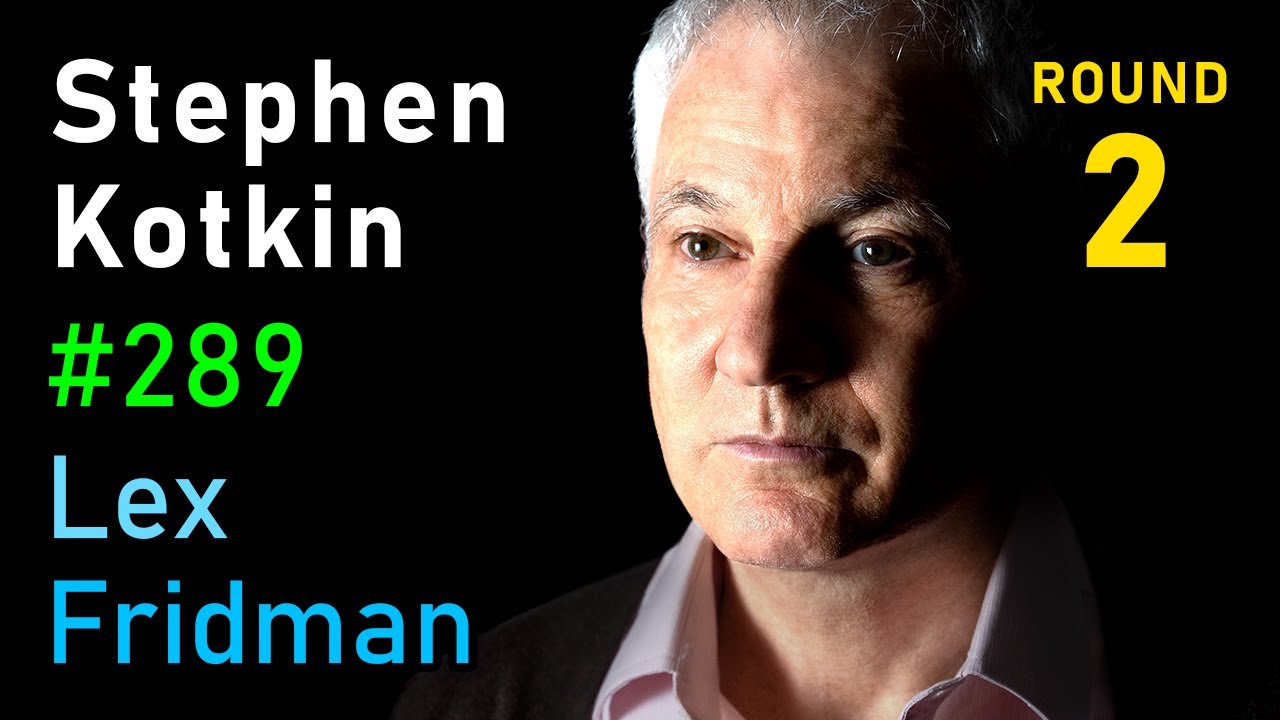
New Lex Fridman Insight: Stephen Kotkin: Putin, Stalin, Hitler, Zelenskyy, and War in Ukraine
Sent June 11, 2026
Key Insights
- Stephen Kotkin argues that Putin's geopolitical strategy mirrors Stalin's, focusing on maintaining Russian influence despite internal weaknesses.
- Zelensky's leadership during the Ukraine conflict saw his approval rating surge from 25% to over 90%, showcasing his resilience.
- Kotkin critiques the narrative that NATO expansion provoked Russia, highlighting historical patterns of Russian aggression predating NATO.
- Russia's military struggles in Ukraine, with significant casualties and logistical issues, reflect deeper systemic weaknesses.
- Ukraine's cyber capabilities, honed over years, are a crucial element in its defense against Russian aggression.
How the conversation moved
Lex Fridman sets the stage by questioning the historical parallels between current Russian actions and past Soviet leaders, particularly Stalin. Stephen Kotkin responds by drawing direct comparisons between Putin and Stalin, highlighting the continuity in Russian geopolitical strategies despite the country's internal weaknesses. He notes that both leaders operate from the same Kremlin offices, facing similar dilemmas of managing Russian power from a position of relative weakness compared to the West.
Kotkin's main argument is that Russia's aggressive actions are not inherent cultural tendencies but rather strategic decisions made repeatedly throughout history. He emphasizes that the quest to build a strong state in Russia has resulted in personalist rule and autocracy, which in turn exacerbate its geopolitical dilemmas. Kotkin uses historical examples to illustrate how these strategic choices have consistently put Russia in a worse position, despite attempts to consolidate power.
Lex doesn't challenge Kotkin's framing directly but highlights potential counterarguments, such as the narrative that NATO expansion provoked Russian aggression. Kotkin pushes back against this notion, arguing that historical patterns of Russian imperialism predate NATO's existence and that the narrative of NATO provocation is a strategic choice rather than a necessity. This tension underscores the complexity of interpreting Russian actions and the narratives that surround them.
The conversation pivots to the current geopolitical landscape, focusing on Ukraine's resilience and the role of leadership in conflict. Kotkin discusses Zelensky's leadership during the war, noting the surge in his approval ratings as a testament to his effective crisis management. The discussion concludes with an exploration of Ukraine's cyber capabilities as a critical component of its defense strategy, emphasizing the importance of human capital and technological preparedness in modern warfare.
Surprising moments
In-depth
Geopolitical Strategy
- Putin's strategy is influenced by historical figures like Stalin, focusing on Russian influence despite weaknesses.
- Russia's aggressive actions are strategic choices, not cultural tendencies.
Leadership and Public Support
- Zelensky's leadership during the Ukraine conflict boosted his approval ratings significantly.
- His decision to stay in the capital during the invasion was pivotal for Ukrainian morale.
NATO Expansion and Russian Aggression
- Kotkin argues that NATO expansion is not the root cause of Russian aggression.
- Historical patterns of Russian imperialism predate NATO's existence.
Military and Cyber Capabilities
- Russia's military faces significant challenges in Ukraine, with high casualties and logistical issues.
- Ukraine's cyber capabilities are a key element of its defense strategy.
Notable Quotes
If he's not comparable to Stalin, he still works, as I said, in those same buildings, those same offices, partly.
Still open
- Lex questioned whether the Kremlin's leaders truly understand the dynamics of Western influence, leaving room for further exploration of Russian strategic thinking.
References & Resources
- Nizavisimaya Gazeta by Unknown — Search
- The Orange Revolution by Unknown — Search
- Maidan by Unknown — Search
- The Great War for Civilisation by Robert Fisk — Search
- Washington Post Op-Ed by Henry Kissinger by Henry Kissinger — Search
- Likholetya by Nikolai Leonov — Search
- The UN Charter by United Nations — Search
- The 1975 Helsinki Agreement by United Nations — Search
- The 1990 Charter of Paris for a New Europe by United Nations — Search
- The 1997 NATO Russia Founding Act by NATO — Search