New Lex Fridman Insight: Stephen Kotkin: Stalin, Putin, and the Nature of Power
Sent June 11, 2026
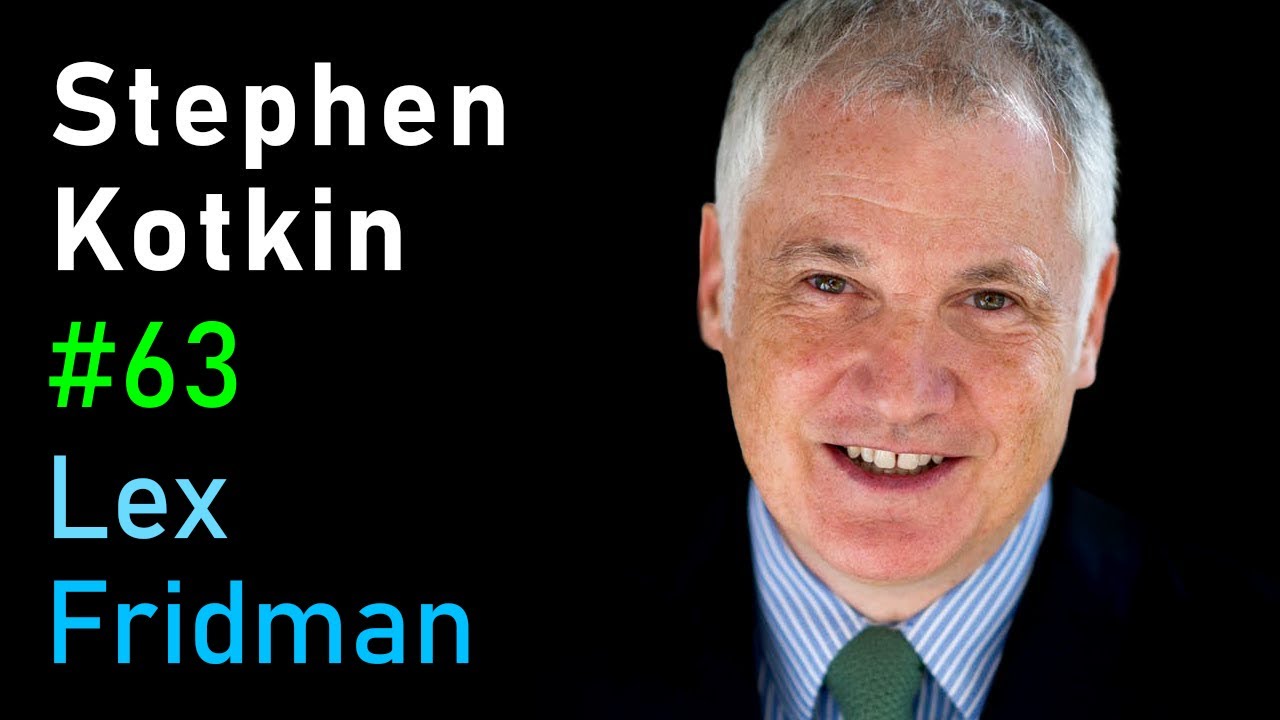
Key Insights
- Stalin's power was facilitated by Lenin's creation of the general secretary position, tailored for Stalin's skills.
- Putin's popularity in Russia is partly due to a lack of viable alternatives and economic growth during his early terms.
- The American system's constraints on executive power prevent the kind of unchecked authority seen in authoritarian regimes.
- Stalin's appeal was driven by his commitment to communism and Russian state interests, not just personal power.
- The potential casualties in a hypothetical World War III could reach 555 million, far surpassing World War II's toll.
How the conversation moved
The conversation begins with Kotkin framing the central question around the nature of power and leadership, contrasting the American and Russian systems. He highlights how Stalin's rise to power was facilitated by Lenin's creation of the general secretary position, which was specifically designed for Stalin's organizational skills. This institutional design allowed Stalin to consolidate power effectively, contrasting with the American system where power is intentionally constrained to prevent authoritarianism.
Kotkin argues that Putin's popularity in Russia is not solely due to his personal appeal but also because of the lack of viable political alternatives and the economic growth during his early terms. He provides concrete evidence of Russia's economic revival, noting the average economic growth of 7% per year during Putin's first two terms, which was supported by China's demand for Soviet-era products. This discussion highlights the socio-economic dynamics that reinforce Putin's position.
Lex doesn't challenge Kotkin's framing directly, but the conversation implicitly raises the question of whether Russia could develop a system with similar constraints to the American model. The absence of pushback moments suggests a consensus on the need for institutional reform in Russia to prevent the concentration of power. However, the conversation does not delve into how such reforms could be realistically implemented given the current political climate.
The discussion concludes with an exploration of the catastrophic potential of great power conflicts, emphasizing the importance of managing international interests to avoid war. Kotkin notes that a hypothetical World War III could result in 555 million casualties, far surpassing World War II's toll. The conversation ends on a note of caution, underscoring the need for careful international management to prevent such a humanitarian catastrophe.
Surprising moments
In-depth
Stalin's Rise to Power
- Stalin's power was enabled by Lenin's creation of the general secretary position.
- His organizational skills were crucial for his rise.
- Stalin's appeal was due to his ideological commitment and state interests.
Putin's Popularity and Economic Growth
- Putin's popularity is partly due to economic growth during his early terms.
- The lack of viable political alternatives reinforces his position.
- Russia's economic revival was aided by China's demand for Soviet-era products.
American vs. Russian Power Structures
- American system's constraints prevent unchecked power.
- Many Americans express a desire for authoritarian leadership despite democratic norms.
- Institutional constraints are fundamental to preventing extremism in leadership.
Potential for Great Power Conflict
- World War II resulted in 55 million deaths.
- A hypothetical World War III could result in 555 million casualties.
Notable Quotes
Absolute power corrupts absolutely.
Still open
- What realistic steps could Russia take to implement institutional reforms similar to the American model?
References & Resources
- The Communist Manifesto by Karl Marx — Search