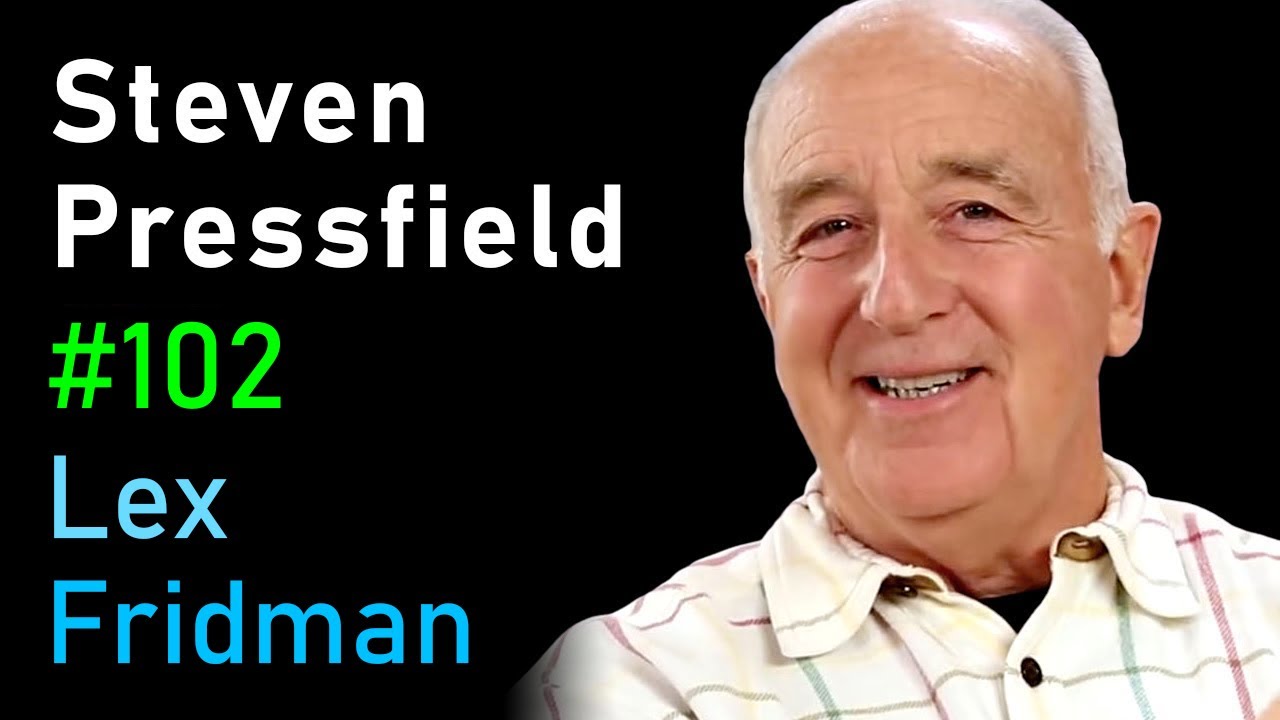
New Lex Fridman Insight: Steven Pressfield: The War of Art
Sent June 11, 2026
Key Insights
- Steven Pressfield views war as a metaphor for personal struggle, seeing it as an expression of the human need to conquer.
- The creative process is likened to a battle against resistance, with success requiring mental and physical preparation.
- Pressfield emphasizes that writing effectiveness is limited to a few hours daily, contrasting with other professions.
- Fear is seen as a guide to what we must pursue, with greater fear indicating greater importance.
- The ego's resistance is a major barrier to creativity, which must be overcome to achieve success.
How the conversation moved
The host opens the conversation by framing war as a central theme, not just in terms of global conflict, but as a metaphor for personal struggle. Steven Pressfield quickly aligns with this view, suggesting that war, in its essence, is an expression of the human condition, particularly the male drive for conquest and competition. He emphasizes that this drive has been a constant throughout history, shaping civilizations through cultural mixing and transformation. The conversation uses historical examples like the Roman Empire and Alexander the Great to illustrate how war has been both destructive and creatively transformative.
Pressfield's main argument revolves around the idea that personal battles mirror military conflicts, with the Six Day War serving as a metaphor for overcoming personal resistance. He extends this metaphor to the creative process, likening it to a battle against internal resistance that requires mental and physical preparation. The discussion highlights the importance of viewing the creative journey as an ongoing process without a fixed endpoint, contrasting it with the goal-oriented nature of athletic pursuits. Pressfield also stresses the necessity of extreme confidence in one's abilities to overcome self-doubt and succeed in creative endeavors.
The conversation lacks explicit pushback from the host, but there are moments where Pressfield's views could be challenged. For instance, the idea that fear indicates what we must pursue could be seen as overly simplistic, ignoring the complexities of fear and its potential to paralyze rather than motivate. Additionally, the notion that the ego is solely responsible for resistance might be contested by those who view resistance as a multifaceted phenomenon influenced by various psychological and environmental factors. However, these counterpoints are not directly addressed in the discussion, leaving room for further exploration.
The episode concludes with a focus on the internal battle between the ego and the greater self, emphasizing the need to overcome ego-driven resistance to unlock creative potential. Pressfield reiterates the importance of balancing health and productivity, noting that effective writing is limited to a few hours a day. The conversation ends on a reflective note, with Pressfield encouraging listeners to view fear as a guide and to embrace the creative process as a partnership with an external muse. This leaves the audience with a sense of the ongoing nature of creativity and the personal battles that accompany it.
Surprising moments
In-depth
War and Personal Struggle
- War is seen as a metaphor for personal challenges.
- The human drive to conquer is a constant throughout history.
- The Six Day War is used as a metaphor for internal battles.
Creative Process and Resistance
- Resistance is a constant challenge in the creative process.
- Mental and physical preparation are essential for overcoming creative resistance.
- The creative journey is ongoing, without a fixed endpoint.
Balancing Writing and Health
- Effective writing is limited to a few hours per day.
- Balancing work with self-care is important for productivity.
- Writing requires more muse time compared to engineering.
Fear and Creativity
- Fear indicates what we must pursue.
- Greater fear suggests greater importance of the pursuit.
- Fear of death drives many of our actions.
Ego and Resistance
- Resistance is the ego's voice, driven by fear.
- Overcoming ego's resistance is key to creative success.
- The ego represents fear, while the self represents love.
Notable Quotes
I think we're basically the same creatures internally that we were in the cave, right?
Still open
- How does one effectively balance the demands of the ego with the creative self to minimize resistance?
- What role does fear play in both motivating and inhibiting creative pursuits?
References & Resources
- The War of Art by Steven Pressfield — Search
- Turning Pro by Steven Pressfield — Search
- Do the Work by Steven Pressfield — Search
- Nobody Wants to Read Your Shit by Steven Pressfield — Search
- The Warrior Ethos by Steven Pressfield — Search
- The Virtues of War by Steven Pressfield — Search
- The Artist's Journey by the guest — Search
- Denial of Death by Ernest Becker — Search