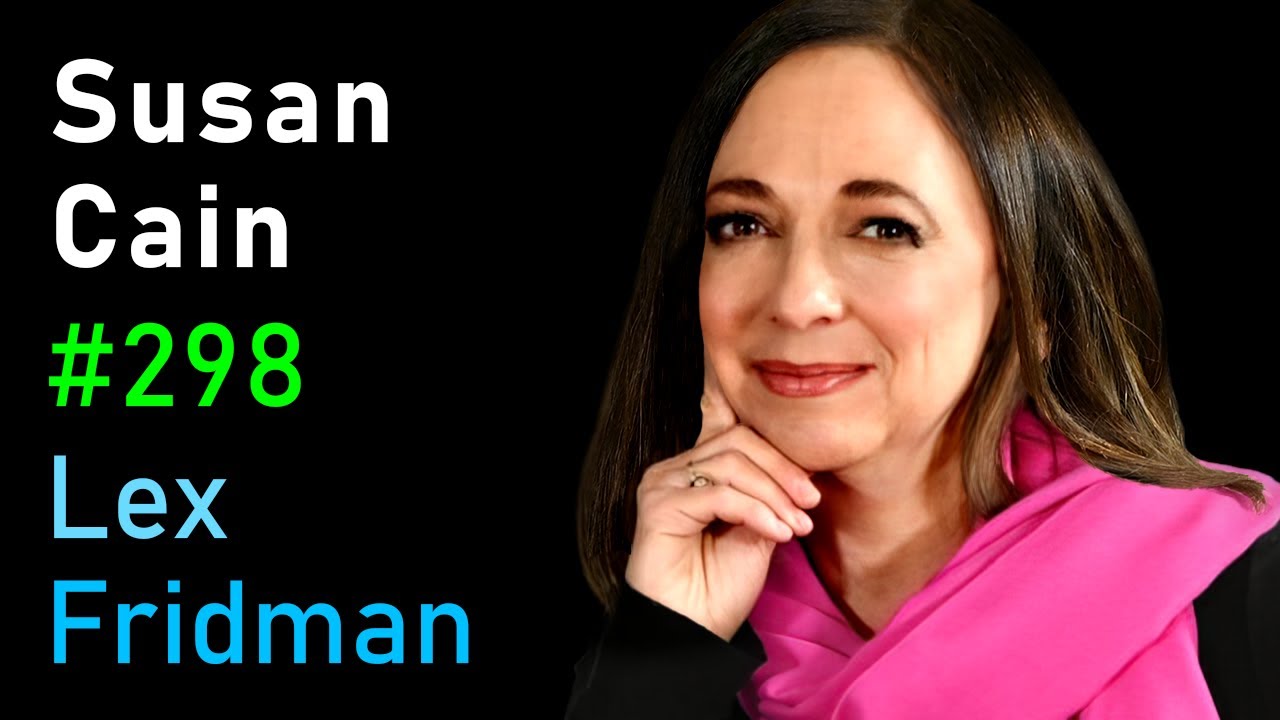
New Lex Fridman Insight: Susan Cain: The Power of Introverts and Loneliness
Sent June 11, 2026
Key Insights
- Introverts require fewer stimuli to feel balanced, while extroverts need more to avoid feeling listless.
- Doug Conant, former CEO of Campbell Soup, wrote 30,000 personal thank-you letters, boosting employee engagement.
- The pandemic highlighted the importance of family and prompted a reevaluation of work-life balance.
- Highly sensitive introverts often have philosophical or spiritual inclinations, deeply affected by beauty and emotions.
- Leonard Cohen's poetry was influenced by personal loss, highlighting the link between creativity and sensitivity.
How the conversation moved
The host began by framing the conversation around the differences between introverts and extroverts, setting the stage for Susan Cain to delve into how these personality types interact with the world differently. Cain introduced the idea that introverts require fewer stimuli to feel balanced, while extroverts need more to avoid feeling listless. This foundational understanding was crucial for discussing the broader implications of personality on personal and professional life, particularly in leadership and social interactions.
Cain's main argument focused on the power of personalized leadership, exemplified by Doug Conant's approach at Campbell Soup, where he wrote 30,000 personal thank-you letters to employees. This strategy significantly boosted employee engagement and morale, illustrating the impact of acknowledging individual contributions. Cain also highlighted how the pandemic has shifted people's focus towards family and work-life balance, emphasizing the need for environments that cater to both introverted and extroverted preferences.
Despite the compelling arguments, there was little pushback from the host, Lex Fridman, who seemed to agree with Cain's insights. However, a potential area of tension could have been the balance between accommodating introverts in predominantly extroverted environments, such as open-plan offices or team-based projects, which were not deeply explored. Cain's discussion on the philosophical and spiritual inclinations of highly sensitive introverts could have sparked debate on how workplaces can integrate these traits into their culture.
The conversation concluded with reflections on creativity and sensitivity, particularly through the lens of Leonard Cohen's life and work. Cain noted that highly sensitive introverts often have a deep connection to beauty and emotions, which can be both a source of inspiration and a challenge in environments that prioritize extroverted traits. The discussion left open the question of how society can better support introverts in various domains, from education to professional settings, ensuring that their unique strengths are recognized and valued.
Surprising moments
In-depth
Introversion vs. Extroversion
- Introverts need fewer stimuli to feel balanced.
- Extroverts require more stimulation to avoid feeling listless.
Leadership and Personalization
- Doug Conant's 30,000 thank-you letters improved employee engagement.
- Personalized leadership can significantly boost workplace morale.
Pandemic's Influence on Priorities
- The pandemic emphasized the importance of family.
- Work-life balance became a focus during the pandemic.
Sensitivity and Creativity
- Highly sensitive introverts are often philosophical or spiritual.
- Leonard Cohen's creativity was shaped by personal loss.
Notable Quotes
The longing for what you lack is the very thing that gives you what you're longing for. So the longing is the cure.
Still open
- Cain questioned how society can better support introverts in various domains, ensuring their strengths are recognized and valued.
References & Resources
- Quiet: The Power of Introverts in a World That Can't Stop Talking by Susan Cain — Search
- Bittersweet: How Sorrow and Longing Make Us Whole by Susan Cain — Search
- Anna Karenina by Leo Tolstoy — Search
- Terror Management Theory by N/A — Search
- On the Road by Jack Kerouac — Search
- A Movable Feast by Ernest Hemingway — Search