New Lex Fridman Insight: Terence Tao: Hardest Problems in Mathematics, Physics & the Future of AI
Sent May 30, 2026
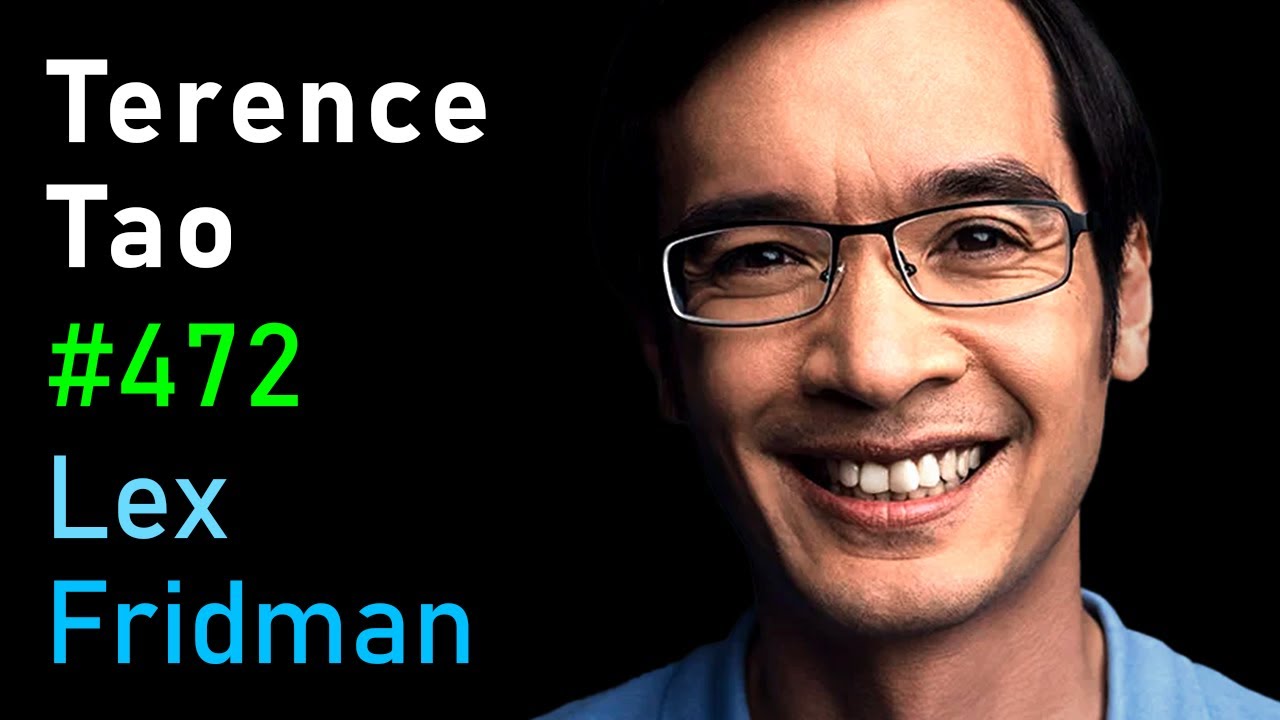
Key Insights
- Terence Tao engineered a blowup in fluid dynamics by altering Navier-Stokes equations, suggesting fluid-based Turing machines.
- The Kakeya Problem reveals that a needle can be turned with arbitrarily small area, challenging intuitive notions of space.
- Tao believes AI can assist in mathematical proofs but struggles with subtle errors and lacks human intuition.
- The twin prime conjecture remains unsolved, requiring breakthroughs in other mathematical areas.
- Lean programming enhances mathematical collaboration, though formalizing proofs takes 10 times longer than traditional methods.
How the conversation moved
Lex framed the episode by introducing Terence Tao and the central question of tackling the hardest problems in mathematics and physics. Tao began by discussing the Kakeya Problem and Navier-Stokes equations, highlighting their implications in understanding space and fluid dynamics. He emphasized the complexity and significance of these problems, particularly the Navier-Stokes equations, which remain unsolved and are part of the Millennium Prize Problems.
Tao's main argument centered around his innovative approach to the Navier-Stokes equations, where he engineered a blowup by altering the equations to direct energy into smaller eddies. This method, he suggested, could lead to the development of fluid-based Turing machines, offering a new perspective on computation. Tao also discussed the potential of AI in assisting with mathematical proofs, though he noted its limitations in handling subtle errors and lacking human intuition.
Despite the depth of Tao's insights, Lex did not challenge the framing of these problems or Tao's approaches. The conversation lacked explicit pushback, though a critical listener might question the feasibility of fluid-based Turing machines or the current limitations of AI in mathematics. Tao's belief in AI's future role in mathematical collaboration was presented without significant counterpoints, leaving room for debate on AI's readiness to tackle complex mathematical challenges.
The conversation concluded with Tao reflecting on the broader implications of his work and the potential for future breakthroughs in mathematics and physics. He highlighted the importance of collaboration, both among humans and between humans and AI, as essential for advancing mathematical understanding. The discussion left open questions about the resolution of the twin prime conjecture and the role of AI in future mathematical discoveries, suggesting areas ripe for further exploration.
Surprising moments
In-depth
Mathematical Problems and Theories
- The Kakeya Problem challenges traditional notions of space with its minimal area requirement.
- Navier-Stokes equations remain a significant challenge in fluid dynamics, with potential singularities.
- The Poincare Conjecture involves understanding three-dimensional spaces and was solved by Perelman.
AI and Mathematics
- AI can assist in proofs but struggles with subtle errors and lacks human intuition.
- AI's potential in discovering new laws of physics is limited by current computational constraints.
- Tao predicts AI-human collaboration in research-level papers by 2026.
Prime Number Conjectures
- The twin prime conjecture remains unsolved, requiring breakthroughs in other areas.
- The Riemann hypothesis suggests primes behave randomly, but proving this is challenging.
- Tao's work on the Collatz conjecture shows most inputs reduce, but exceptions may exist.
Mathematics and Collaboration
- Lean programming enhances collaboration, though formalizing proofs takes significantly longer.
- Mathematical beauty and proof techniques influence Tao's approach to problem-solving.
- Personalized learning and cognitive styles impact mathematical understanding and education.
Notable Quotes
Infinity absorbs a lot of sins.
Still open
- Tao pondered whether AI could eventually discover new laws of physics, acknowledging current limitations.
- The resolution of the twin prime conjecture remains uncertain, requiring breakthroughs in other mathematical areas.
References & Resources
- Finite Time Blowup For An Average Three-Dimensional Navier-Stokes Equation by Terence Tao — Search
- Szemerédi’s Theorem by Endre Szemerédi — Search
- The Poincare Conjecture: In Search of the Shape of the Universe by Donal O'Shea — Search
- AlphaProof by DeepMind — Search
- Hypothetical conversation between a mathematical assistant of the future and Tim Gowers by Tim Gowers — Search