New Lex Fridman Insight: Tim Urban: Tribalism, Marxism, Liberalism, Social Justice, and Politics
Sent June 11, 2026
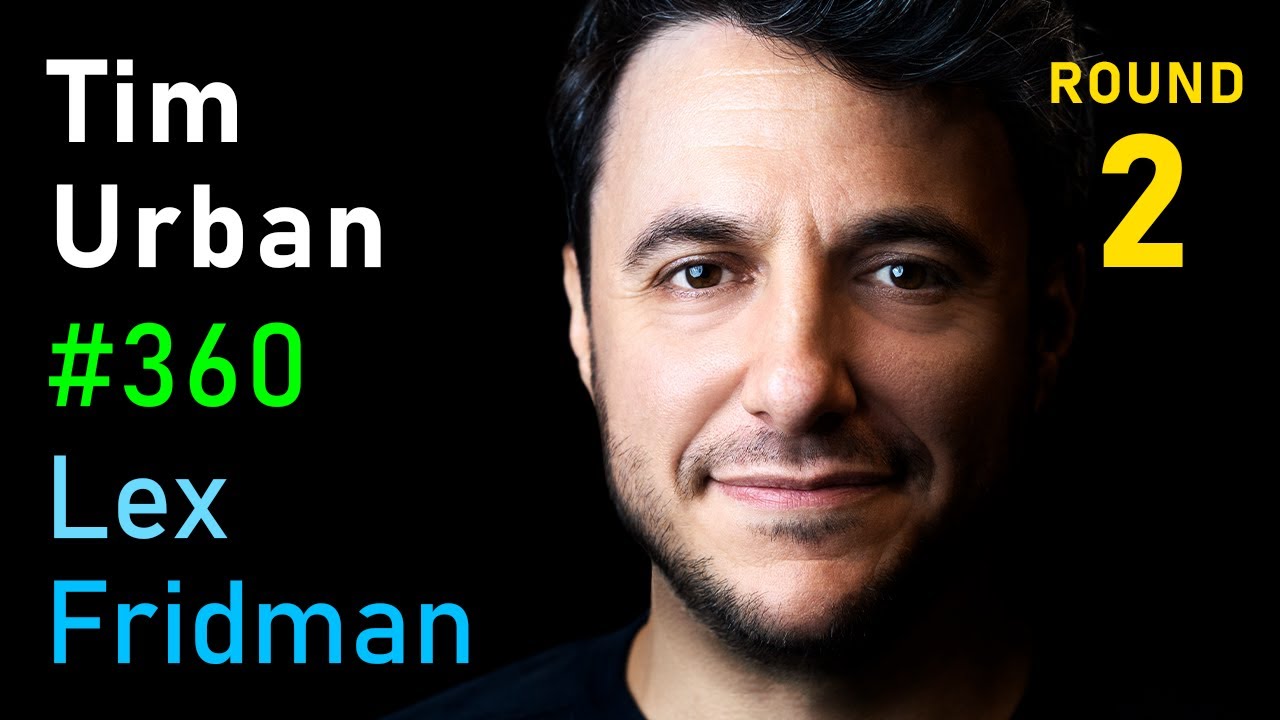
Key Insights
- Tim Urban sees social justice fundamentalism as a radical adaptation of Marxism, infused with postmodernism, opposing liberal social justice.
- Political tribalism in the U.S. is currently stronger than racial tribalism, with political alignment often outweighing racial identity.
- Tim Urban argues that technology could fundamentally change our relationship with death, potentially allowing us to repair the human body indefinitely.
- The Republican Party's shift from a diverse plurality in the 1960s to a more homogenous group today exemplifies the rise of tribalism in politics.
- Urban's 'The Ladder' framework contrasts the primitive mind's survival instincts with the higher mind's rational decision-making.
How the conversation moved
Lex Fridman opens the discussion by framing the vastness of human history as a slow progression, with rapid advancements occurring only in the last few centuries. Tim Urban uses this perspective to highlight the importance of recognizing our place in a long continuum of development. He emphasizes that much of what we take for granted today, such as technology and social structures, are recent phenomena in the grand scheme of human existence. This sets the stage for a deeper exploration of how historical figures and technological advancements have shaped our current world, leading to discussions on gratitude, societal influences, and the potential for future changes.
Urban argues that individual figures have had outsized impacts on history, citing examples like William the Conqueror and Hitler to illustrate how a few people can alter the course of entire civilizations. He extends this argument to modern times, suggesting that leaders in technology and social media hold similar power to shape societal trajectories. Urban posits that true leadership involves changing cultural directions rather than merely riding existing waves of change. This perspective is used to explore the potential for revolutionary figures to emerge in new technological domains, such as virtual reality, which could catalyze significant shifts in how society operates.
Lex doesn't challenge the framing here, though the obvious counter-position would be that systemic forces, rather than individuals, drive historical and technological change. The conversation lacks explicit pushback on Urban's assertion that a small number of people are pulling the big levers of society today, which could be critiqued as an oversimplification. The discussion also touches on the duality of technological progress, balancing optimism with caution about potential dystopian outcomes, but again, there's no substantial challenge to the idea that individuals are the primary drivers of these changes.
The conversation pivots to explore the dynamics of political and social tribalism, with Urban suggesting that political tribalism currently outweighs racial tribalism in the U.S. He introduces 'The Ladder' framework to contrast the primitive mind's survival instincts with the higher mind's rational decision-making. The discussion also critiques social justice fundamentalism as a radical adaptation of Marxism, posing a threat to liberal democracy. The episode concludes with reflections on how technological advancements could change our relationship with mortality, suggesting a future where the human body can be repaired indefinitely, fundamentally altering societal structures. The conversation leaves open questions about the balance between individual agency and systemic forces in shaping history.
Surprising moments
In-depth
Human history and technological progress
- Human history spans over 100,000 years, with recorded history covering just 25 pages.
- 95% of history involved minimal advancements until recorded history began.
- Technological progress has rapidly accelerated societal changes.
Gratitude and societal influences
- Gratitude varies across cultures and life experiences.
- Patriotism can be a form of gratitude but risks xenophobia.
- The greatest generation's economic journey fostered natural gratitude.
Impact of individuals on history
- William the Conqueror and Hitler significantly altered history.
- Social media and AI development influenced by few key figures.
- True leadership changes cultural directions, not just rides waves.
Technological progress and dystopian risks
- Exponential progress could lead to utopian or dystopian futures.
- Technological stakes are higher now than in past civilizations.
- America leads in innovation despite political challenges.
The Ladder framework and cognitive dynamics
- Primitive mind influences modern decision-making.
- The Ladder framework aids in navigating complex problems.
- Confirmation bias stems from desire for tribal agreement.
Conspiracy theories and intellectual discourse
- Ideas should be challenged without personal offense.
- Most conspiracy theories crumble under scrutiny.
- Social pressure can allow some conspiracy theories to persist.
Idea labs versus echo chambers
- Idea labs promote high rung thinking and collaboration.
- Echo chambers foster low rung thinking and discourage change.
- Emergent properties of idea labs can lead to super intelligence.
Online discourse and political beliefs
- High-quality disagreement is often driven away by aggression.
- Social media could incentivize respectful discourse.
- Political beliefs activate different brain regions than non-political ones.
Political and racial tribalism
- Political tribalism is stronger than racial tribalism in the U.S.
- Low rung politics involves predictable opinions and trends.
- Liberal games allow freedom without harm, contrasting power games.
Evolution of the Republican Party
- 1960s Republican Party had diverse factions, unlike today.
- Goldwater's faction demonstrated power dynamics in politics.
- Changing norms in Congress have led to hypercharged tribalism.
Vulnerabilities leading to demagoguery
- Distrust in media was a key indicator of Trump voters.
- Economic despair, not hardcore Republicanism, drove some voters to Trump.
- Media prioritizes clicks over truth, affecting public trust.
Critique of social justice fundamentalism
- Social justice fundamentalism opposes liberal democracy.
- The ideology is anti-science and lacks self-criticism.
- Institutions are hijacked by this movement, threatening democracy.
Censorship and free speech dynamics
- Courage involves speaking against ideological pressures.
- Censorship distorts the relationship between thought and speech.
- Fear of criticism leads to self-censorship.
Cancel culture and criticism culture
- Cancel culture attacks individuals, while criticism culture attacks ideas.
- Dunning-Kruger effect leads to overestimation of knowledge.
- Colleges promote singular ideologies, discouraging diverse viewpoints.
Procrastination and writing process
- A short blog post evolved into a six-year book project.
- Procrastination led to unique motivation strategies.
- The writing process involved significant personal challenges.
Technological advancements and mortality
- Death is compared to a dragon consuming millions annually.
- Technology could repair the human body indefinitely.
- Future societal structures may differ significantly from the past.
Notable Quotes
It's a boring book. So 950 pages, 95% of the book, hunter-gatherers kind of doing their thing.
Still open
- Tim Urban questions whether technological advancements will allow us to repair the human body indefinitely, fundamentally altering our relationship with mortality.
- The conversation leaves open the question of how political tribalism will evolve in the U.S. and its impact on social dynamics.
References & Resources
- Culture Series by Iain M. Banks — Search
- The Fall of Civilizations by Paul M. D'Angelo — Search
- The Idiot by Fyodor Dostoevsky — Search
- The Brothers Karamazov by Fyodor Dostoevsky — Search
- Behind the Curve by Unknown — Search
- Madoff doc by Unknown — Search
- Why We're Polarized by Ezra Klein — Search
- The Coddling of the American Mind by Greg Lukianoff and Jonathan Haidt — Search
- TED Talk on Procrastination by Tim Urban — Search
- The Fable of the Dragon by Nick Bostrom — Search