New Lex Fridman Insight: Tomaso Poggio: Brains, Minds, and Machines
Sent June 11, 2026
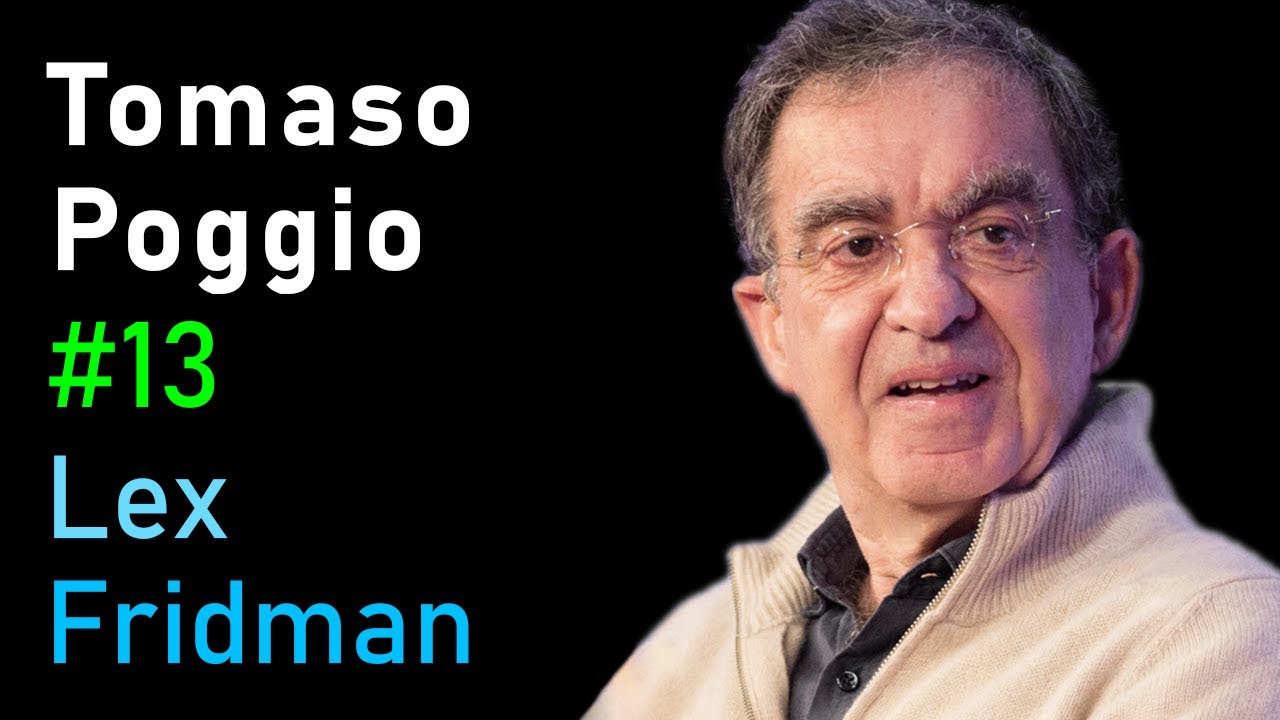
Key Insights
- Poggio suggests that AI advancements, like reinforcement learning, are deeply rooted in neuroscience insights.
- The brain's modularity, such as in face recognition, is learned rather than hardwired, as shown by Marge Livingstone's monkey experiments.
- Neural networks often have more parameters than data, contradicting traditional statistical wisdom, yet still find effective solutions.
- Poggio argues ethics is likely learnable, with specific brain areas involved in ethical judgments, potentially aiding ethical AI design.
- Poggio aligns with Rod Brooks, predicting AGI is 200 years away, contrasting with more optimistic forecasts like Demis Hassabis's.
How the conversation moved
Lex Fridman sets the stage by questioning the nature of intelligence and the role of neuroscience in advancing AI. Tommaso Poggio begins by asserting that recent AI breakthroughs, such as reinforcement learning and deep learning, are deeply rooted in insights from neuroscience. He emphasizes the potential for human-like breakthroughs in AI, suggesting that understanding the human brain will be crucial for future advancements in intelligence systems. Poggio's initial framing sets the tone for a discussion that intertwines biological systems with artificial intelligence, highlighting the importance of neuroscience in the development of AI technologies.
Poggio's main argument revolves around the modularity of the brain and its implications for understanding intelligence. He cites experiments by Marge Livingstone with baby monkeys, which demonstrate that face recognition is not hardwired but learned, depending on exposure during early life. This challenges the notion of innate brain functions and suggests that early exposure is crucial for developing specific cognitive abilities. Poggio also discusses the optimization of neural networks, noting that they often have more parameters than data, yet still find effective solutions, contradicting traditional statistical wisdom. This highlights the need for new theories to understand neural network behavior.
Lex doesn't challenge Poggio's framing on the role of neuroscience in AI, but there is a notable pushback on the perceived modularity of the brain. Poggio suggests that while the brain has specific modules responsible for different functions, the interaction between these modules is more complex than in computers. This complexity challenges the idea of a straightforward modular approach to understanding brain functions. Additionally, Poggio pushes back against the idea that AI is more dangerous than nuclear weapons, arguing that we should prioritize concerns about nuclear weapons instead. This moment of tension underscores differing perspectives on the risks associated with AI.
The conversation concludes with Poggio's thoughts on ethics and artificial intelligence. He argues that ethics is likely learnable, with specific brain areas involved in ethical judgments, potentially aiding in the design of ethical machines. Poggio also discusses predictions for artificial general intelligence (AGI), aligning with Rod Brooks' conservative estimate of 200 years, contrasting with more optimistic forecasts like Demis Hassabis's. This divergence in AGI timelines highlights the uncertainty and differing opinions within the field, leaving open questions about the future of AI and its ethical implications. The discussion ends on a contemplative note, reflecting on the broader implications of intelligence and ethics.
Surprising moments
In-depth
Neuroscience and AI
- Poggio links AI advancements to neuroscience, emphasizing the importance of understanding biological systems.
- Face recognition in the brain is learned, not hardwired, as shown by experiments with monkeys.
Neural Network Optimization
- Neural networks often have more parameters than data, yet still find effective solutions.
- Traditional statistical wisdom doesn't apply to neural networks, indicating a need for new theories.
Ethics in AI
- Ethics is likely learnable, with specific brain areas involved in ethical judgments.
- Understanding neuroscience could aid in designing ethical machines.
AGI Predictions
- Poggio predicts AGI is 200 years away, aligning with Rod Brooks over Demis Hassabis.
- This highlights the uncertainty and differing opinions on AGI timelines.
Still open
- Poggio questions the timeline for achieving AGI, aligning with a 200-year prediction, contrasting with more optimistic forecasts.