New Lex Fridman Insight: Tulsi Gabbard: War, Politics, and the Military Industrial Complex
Sent May 30, 2026
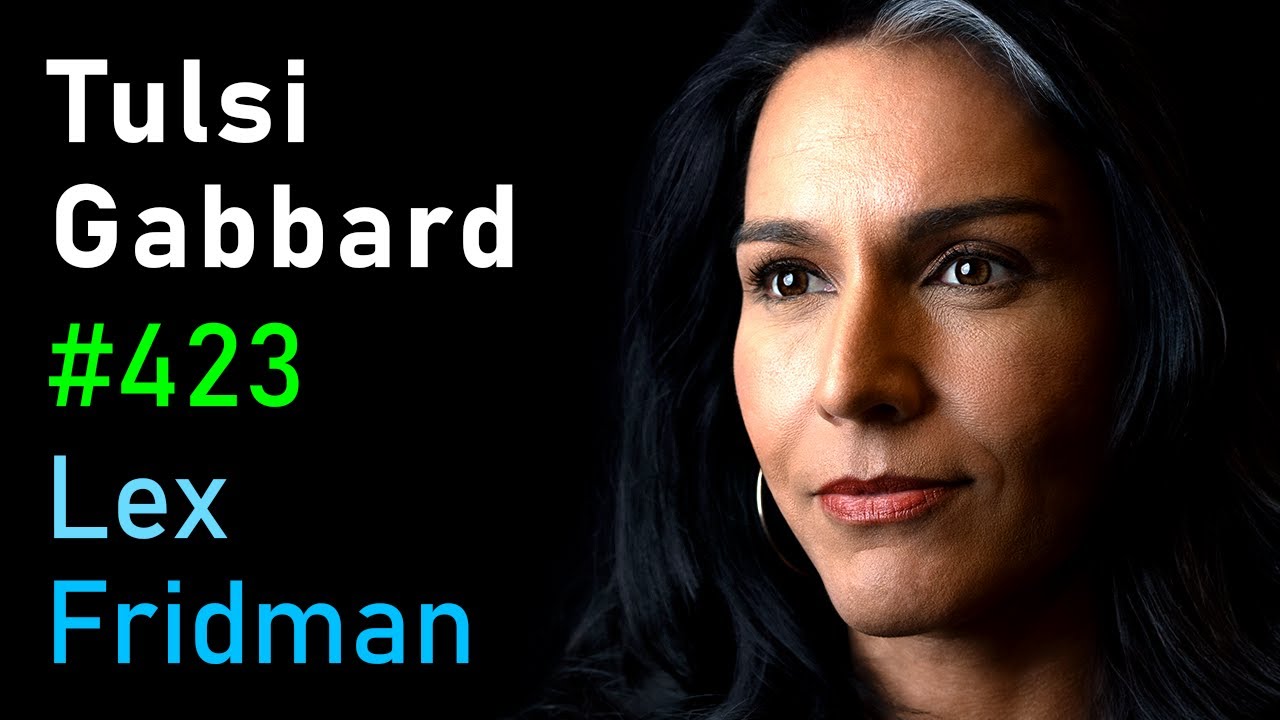
Key Insights
- Tulsi Gabbard criticizes the military-industrial complex for profiting from war, citing KBR Halliburton's $35 per meal charge for soldiers.
- Gabbard argues that U.S. foreign policy failures stem from a lack of understanding of the ideological roots of terrorism.
- She claims that the Democratic Party has shifted away from foundational American principles, controlled by an elitist cabal.
- Gabbard highlights the trivialization of nuclear threats in government messaging, comparing it to natural disasters.
- Gabbard emphasizes the importance of spiritual principles from the Bhagavad Gita in her personal life.
How the conversation moved
The conversation begins with Tulsi Gabbard reflecting on her military experiences and the profound costs of war, both human and financial. She highlights the exorbitant costs charged by contractors like KBR Halliburton, which charged $35 per meal for soldiers, as a symptom of the military-industrial complex's influence. Gabbard references Eisenhower's warning about the military-industrial complex, suggesting it is more relevant today than ever before. This setup frames her broader critique of how war is conducted and funded, questioning the motivations behind military engagements.
Gabbard's main argument centers on the failures of U.S. foreign policy, particularly the lack of understanding of the ideological roots of terrorism. She argues that the shift in focus from al-Qaeda to regime change in Iraq undermined the original mission in Afghanistan. Gabbard asserts that understanding the enemy's ideology is crucial for effective counter-terrorism strategies. She criticizes the Obama administration for its reluctance to identify the ideology driving terrorist groups, which she believes hindered effective policy-making.
Despite the strength of her arguments, there is a notable lack of pushback from the host, Lex Fridman, throughout the conversation. Gabbard's critiques of both major political parties, particularly the Democratic Party's shift away from foundational American principles, are presented without challenge. She claims that both parties are driven by a desire for power, which threatens individual freedoms. The absence of pushback leaves these claims largely unexamined, though they would likely provoke debate in a broader political context.
The conversation concludes with Gabbard discussing the trivialization of nuclear threats in government messaging and the role of spirituality in her life. She critiques a New York City PSA for trivializing nuclear threats by comparing them to natural disasters, arguing it creates a false sense of security. Gabbard also discusses the personal significance of spiritual principles from the Bhagavad Gita, which guide her personal integrity and decision-making. The discussion of spirituality provides a personal insight into Gabbard's motivations and values, rounding out the episode with a focus on personal integrity.
Surprising moments
In-depth
Military Industrial Complex
- Gabbard criticizes KBR Halliburton's profiteering from war.
- Eisenhower's warning about the military-industrial complex is more relevant than ever.
Foreign Policy and Terrorism
- U.S. shifted focus from al-Qaeda to regime change in Iraq, undermining original mission.
- Understanding terrorist ideology is crucial for effective counter-terrorism.
Political Party Critique
- Democratic Party has moved away from foundational principles.
- Gabbard claims both parties are driven by power, threatening freedoms.
Nuclear Threats and Government Messaging
- NYC's nuclear attack PSA trivializes the threat.
- The military-industrial complex influences decision-making, discouraging dissent.
Spirituality and Personal Integrity
- Gabbard discusses the monotheistic nature of Hinduism.
- Bhagavad Gita principles guide her personal integrity.
Notable Quotes
War is justified when it is in the best interest of our national security, and when it is the last resort, when all diplomatic efforts have been completed and exhausted and war is the last possible route that must be taken to ensure the safety, security, and freedom of the American people.
Still open
- Gabbard questions whether the Democratic Party can return to foundational American principles amidst current leadership dynamics.
- She raises concerns about the effectiveness of current U.S. counter-terrorism strategies without a deeper understanding of ideological motivations.