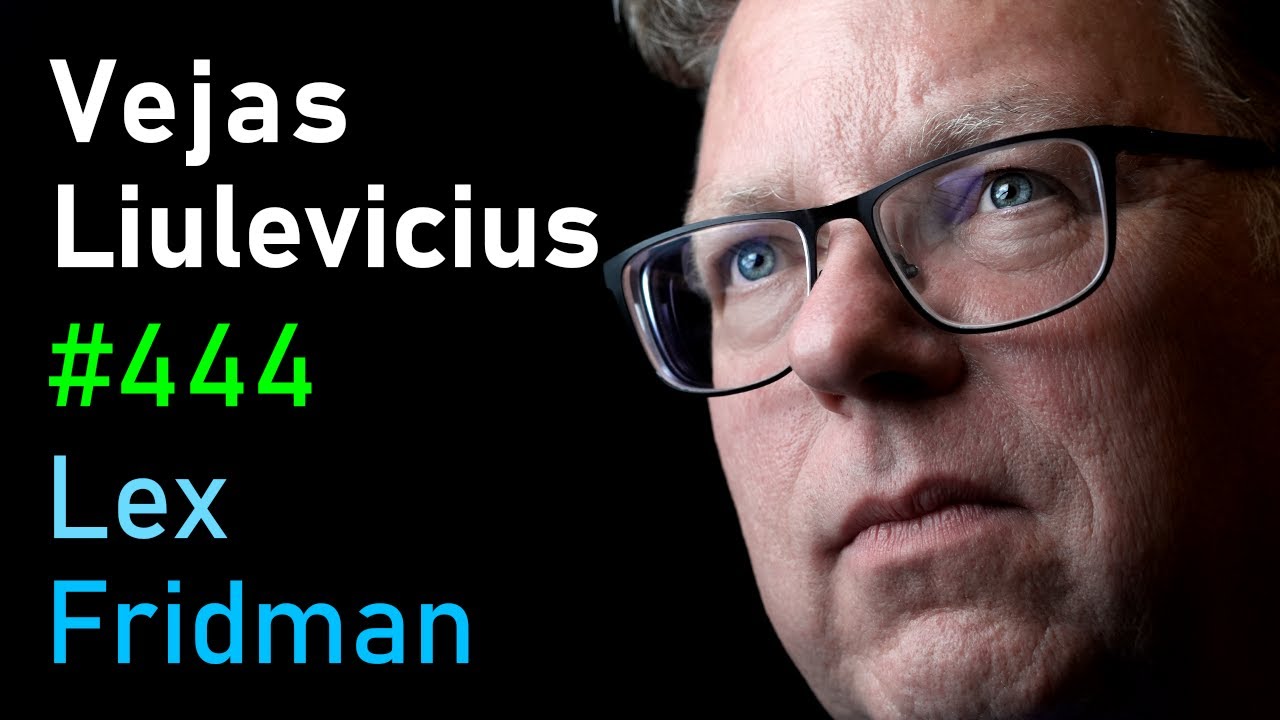
New Lex Fridman Insight: Vejas Liulevicius: Communism, Marxism, Nazism, Stalin, Mao, and Hitler
Sent May 30, 2026
Key Insights
- Marx's historical materialism posits that history follows a purposeful direction towards communism, challenging earlier utopian socialism.
- Bakunin's anarchist vision contrasted with Marx's structured approach, advocating for a decentralized, non-hierarchical revolution.
- The Soviet famine was man-made, driven by state policies rather than natural causes, highlighting the destructive potential of enforced collectivization.
- Stalin's collectivization policies led to vast human suffering and economic failure, culminating in the Soviet Union importing grain despite its vast farmlands.
- Mao's adaptation of Marxism to prioritize peasants over industrial workers resulted in catastrophic policies like the Great Leap Forward, causing millions of deaths.
How the conversation moved
The episode begins with Vejas Liulevicius discussing Marx's ideas on history and revolution, framing history as having a purposeful direction towards communism. This perspective challenges earlier socialist views that were seen as utopian and lacking scientific basis. Marx's insistence on history's directionality underpins his revolutionary ideology, suggesting that the proletariat must become aware of their historical role to achieve liberation. This sets the stage for a deeper exploration of Marx's influence on revolutionary movements and the subsequent ideological developments.
Liulevicius then contrasts Marx's structured revolutionary approach with Bakunin's anarchist vision, which advocated for a decentralized, non-hierarchical movement. Bakunin's ideas highlight the ideological diversity within 19th-century revolutionary thought and underscore the tensions between different schools of socialist and anarchist thought. The discussion also touches on the historical context of Marx and Engels, their relationship, and how Bakunin's ideas diverged from Marx's organized approach to revolution.
The conversation shifts to the Soviet Union's implementation of communism, focusing on the man-made famine caused by state policies rather than natural disasters. Liulevicius emphasizes the destructive potential of enforced collectivization, illustrating the human cost of extreme state intervention in agriculture. This segment underscores the dangers of centralized economic planning and the long-term impact on Soviet agriculture, providing a critical lens on the failures of Soviet policies.
Finally, the discussion turns to Mao's adaptation of Marxism, prioritizing peasants over industrial workers, which led to catastrophic outcomes like the Great Leap Forward. Liulevicius critiques Mao's deviation from Marxist orthodoxy and the resulting human suffering, highlighting the flexibility of communist ideology and its potential for disastrous consequences. The episode concludes by reflecting on the broader implications of these historical events, leaving open questions about the future of revolutionary ideologies and their impact on society.
Surprising moments
In-depth
Marx's Historical Materialism
- Marx believed history has a purposeful direction towards communism.
- This view challenges earlier utopian socialism, claiming scientific legitimacy.
Bakunin vs. Marx
- Bakunin advocated for a decentralized, non-hierarchical revolution.
- His vision contrasts with Marx's structured approach to revolution.
Soviet Famine
- The Soviet famine was man-made due to state policies.
- It highlights the destructive potential of enforced collectivization.
Stalin's Collectivization
- Stalin's policies led to vast human suffering and economic failure.
- The Soviet Union ended up importing grain despite its farmlands.
Mao's Adaptation of Marxism
- Mao prioritized peasants over industrial workers, deviating from Marx.
- The Great Leap Forward resulted in millions of deaths due to policy failures.
Notable Quotes
A deliberate plan to bring class conflict and bring civil war and then heighten it in the countryside does damage, and not least of that is this phenomenon of a negative selection.
Still open
- Liulevicius questioned the true nature of North Korea's regime, whether it's genuinely communist or more akin to a monarchy.
- The episode raises the question of how revolutionary ideologies will evolve in the future, given their historical impacts.
References & Resources
- The International by Karl Marx — Search
- The Atlantic by Reinhold Niebuhr — Search
- What is to Be Done by Nikolai Chernyshevsky — Search
- The Whisperers by Orlando Figes — Search
- Gulag Archipelago by Aleksandr Solzhenitsyn — Search
- Mein Kampf by Adolf Hitler — Search
- The German Myth of the East by Vejas Liulevicius — Search
- Currents of Marxism by Leszek Kolakowski — Search
- Witness by Whitaker Chambers — Search
- Decline of Communism by Vejas Liulevicius — Search
- Deptford Trilogy by Robertson Davies — Search