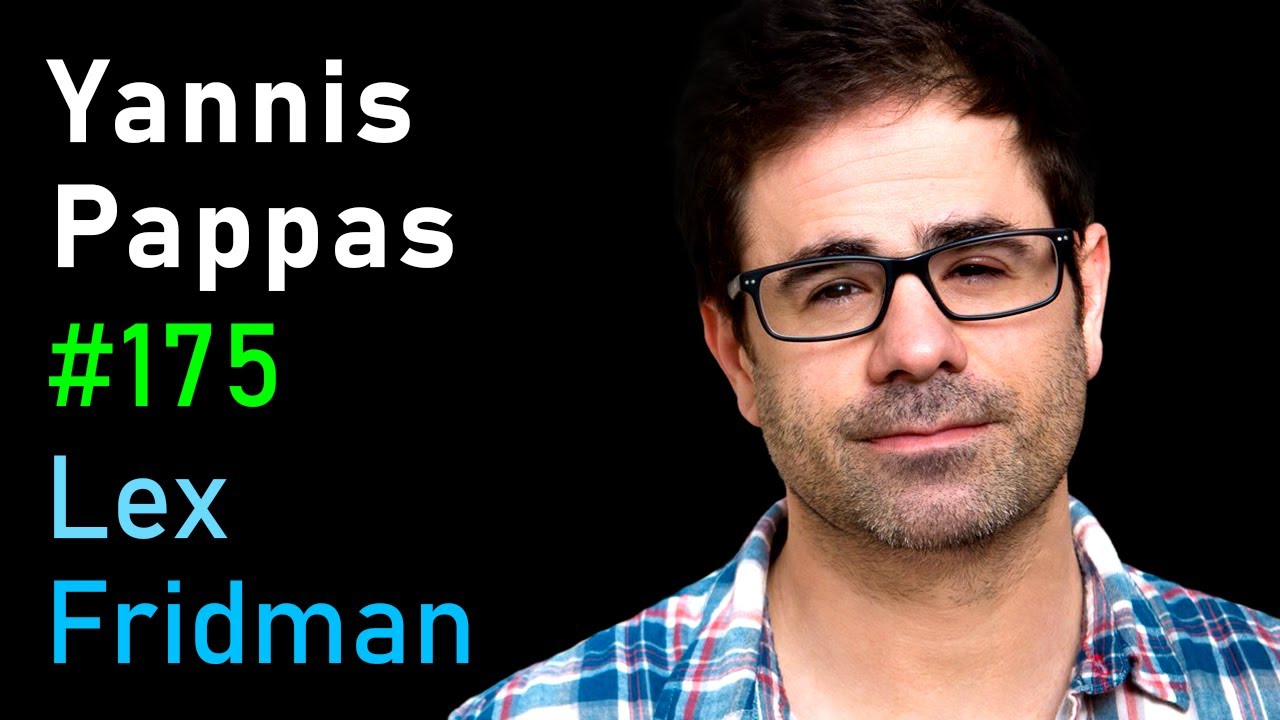
New Lex Fridman Insight: Yannis Pappas: History and Comedy
Sent June 11, 2026
Key Insights
- Yannis Pappas argues that capitalism prioritizes profit over aesthetic beauty, leading to unattractive architecture.
- Pappas believes that the acceptance of mortality is essential for moral behavior and societal contribution.
- Pappas claims that charisma is a key tool for con artists like Bernie Madoff, enabling manipulation and deception.
- Pappas suggests that New York City needs a more capitalist governance approach to thrive economically.
- Pappas posits that future societies will view current animal treatment as a major injustice.
How the conversation moved
Lex Fridman opens the conversation with Yannis Pappas by exploring the nature of power and personal values. Pappas reflects on how power can reveal a person's darkest traits, suggesting that dictators are the most effective leaders. He contrasts this with his own life lessons learned from his father, emphasizing the importance of living authentically, albeit at the cost of financial success. This sets the stage for a broader discussion on societal values and the impact of capitalism on aesthetics, where Pappas critiques the prioritization of profit over beauty in architecture.
Pappas then delves into the philosophical implications of mortality, drawing on Ernest Becker's 'Denial of Death' to argue that accepting mortality is crucial for moral behavior and societal contribution. He suggests that the fear of death drives much of human motivation, aligning with Terror Management Theory. This leads to a discussion on how life would lack meaning if it were eternal, as urgency and the pursuit of experiences are driven by life's finite nature. The conversation highlights the importance of embracing mortality to live a meaningful life.
In a segment on charisma and deception, Pappas discusses how con artists like Bernie Madoff use charisma to manipulate and deceive. He argues that charisma is a blinding tool that can create blind spots in judgment, allowing con artists to exploit their victims' egos. Despite the significant claims about the role of charisma, Lex doesn't challenge Pappas on the broader implications of this perspective, such as how society might better educate individuals to recognize and resist such manipulation.
The conversation pivots to governance and economic strategies, with Pappas suggesting that New York City requires a more capitalist approach to thrive. He critiques progressive policies, arguing that they may hinder economic growth, and suggests that a Republican-style governance could better serve the city's financial needs. This leads to a broader discussion on the ethical considerations of capitalism versus socialism, particularly in areas like healthcare and the prison industrial complex, leaving open questions about the balance between economic growth and social welfare.
Surprising moments
In-depth
Capitalism and Aesthetics
- Capitalism prioritizes profit over beauty, impacting architecture.
- This critique suggests cultural costs in urban environments.
Mortality and Society
- Acceptance of mortality is crucial for moral behavior.
- Fear of death drives much human motivation, according to Ernest Becker.
Charisma and Manipulation
- Charisma is essential for con artists to manipulate victims.
- Bernie Madoff used exclusivity to entice wealthy investors.
Governance and Economics
- New York City needs capitalist governance for economic growth.
- Critique of progressive policies hindering economic success.
Animal Rights and Future Ethics
- Future societies may view current animal treatment as unjust.
- This implies a shift in ethical standards and societal norms.
Still open
- Pappas questions whether the acceptance of mortality is a conscious choice or an instinctual response, leaving this unresolved.