New Lex Fridman Insight: Zev Weinstein: The Next Generation of Big Ideas and Brave Minds
Sent June 11, 2026
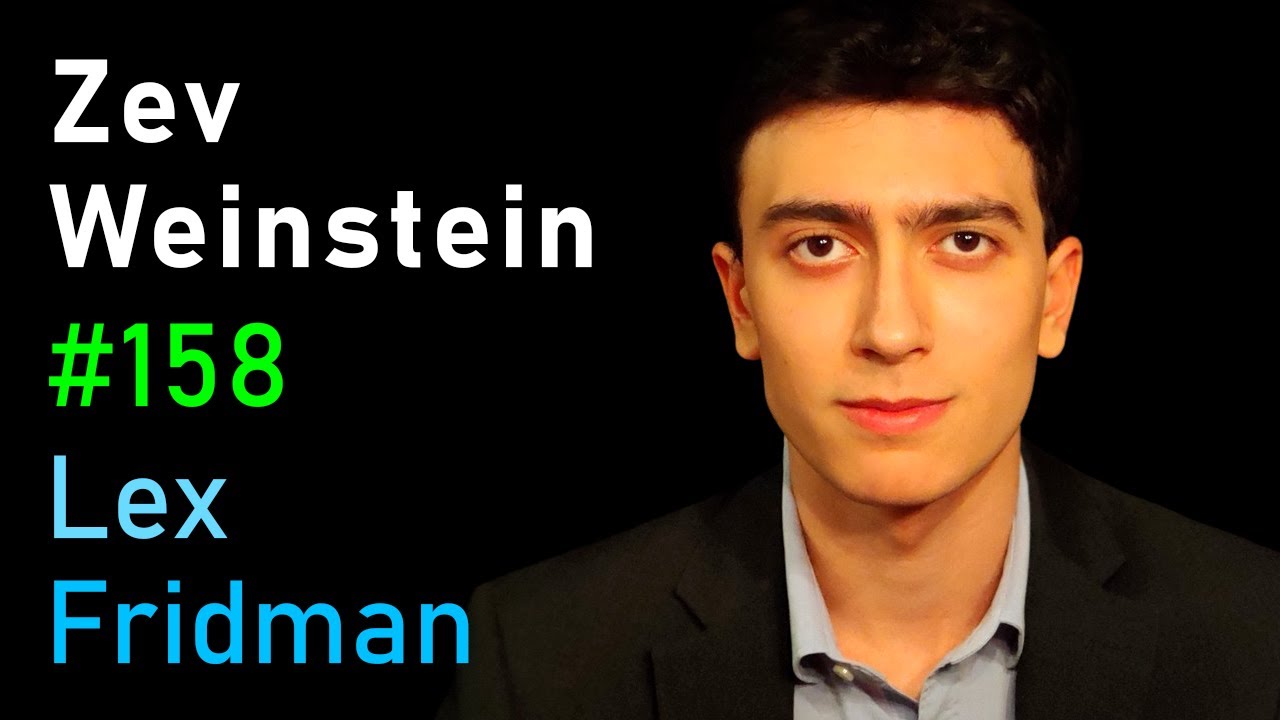
Key Insights
- Zev Weinstein argues that modern stagnation, especially in science, requires radical thinkers to break existing frameworks for growth.
- The average English vocabulary has decreased since 1960, potentially impacting critical thinking in a complex world.
- Zev believes that understanding fundamental mechanisms, like evolution, is deeper than their messy outcomes.
- Zev suggests that immersive virtual realities could offer more fulfilling lives than the current physical world.
- He asserts that both thinkers and doers are essential for a meaningful human experience.
How the conversation moved
The conversation begins with Zev Weinstein addressing the dangers of modern stagnation, particularly in scientific fields, and the necessity for radical thinkers to break existing frameworks. He argues that during times of stagnation, there is a tendency for people to cling to the status quo, which stifles innovation and leads to conflict over limited resources. Zev believes that empowering true thinkers can lead to significant growth and change, despite the inherent risks involved.
Zev's main argument revolves around the idea that understanding fundamental mechanisms, such as evolution, is more profound than the messy outcomes they produce. He suggests that mathematics is a discovered, fundamental aspect of reality, while its expression is invented. This perspective underscores the importance of deep, foundational understanding over superficial observations. Zev also expresses hope that his father, Eric Weinstein, will discover a grand unified theory in physics, highlighting the challenges of presenting such complex ideas to the world.
While Lex did not explicitly challenge Zev's views, there is an implicit tension in the discussion about the inevitability of stagnation and the potential for radical thought to break through it. Zev's assertion that mathematics is completely discovered might also face pushback from those who view mathematical exploration as an ongoing process. The conversation touches on the balance between intellectual pursuits and practical necessities, with Zev advocating for a harmonious integration of both.
The discussion concludes with reflections on the future of immersive virtual realities and the role of language in shaping thought. Zev suggests that virtual realities could offer more fulfilling lives than the current physical world, posing an engineering challenge to create such immersive experiences. The conversation also highlights the decline in English vocabulary since 1960, raising concerns about the impact on critical thinking. Zev emphasizes the importance of both thinkers and doers in achieving a meaningful human experience, leaving open questions about the future balance of these roles.
Surprising moments
In-depth
Modern Stagnation and Radical Thought
- Philosophy challenges the status quo during stagnation.
- Radical thinkers are needed to break frameworks and foster growth.
- Stagnation incentivizes conflict over resources rather than innovation.
Fundamental Understanding in Science
- Understanding mechanisms like evolution is deeper than their outcomes.
- Mathematics is seen as discovered, while its expression is invented.
Impact of Language on Thought
- The average English vocabulary has decreased since 1960.
- Evolutionary design favors conversation over written language.
Immersive Virtual Realities
- Virtual realities could offer more fulfilling lives than the physical world.
- Creating immersive worlds is an engineering challenge.
Notable Quotes
I think stagnation, modern stagnation is completely undeniable, particularly scientifically.
Still open
- Zev wonders if radical thinkers can truly break existing frameworks to foster growth in stagnant times.
- The conversation leaves open the question of how immersive virtual realities might redefine human experience.