Skip to content
TLexDR
Episodes / Niall Ferguson: History of Money, Power, War, and Truth

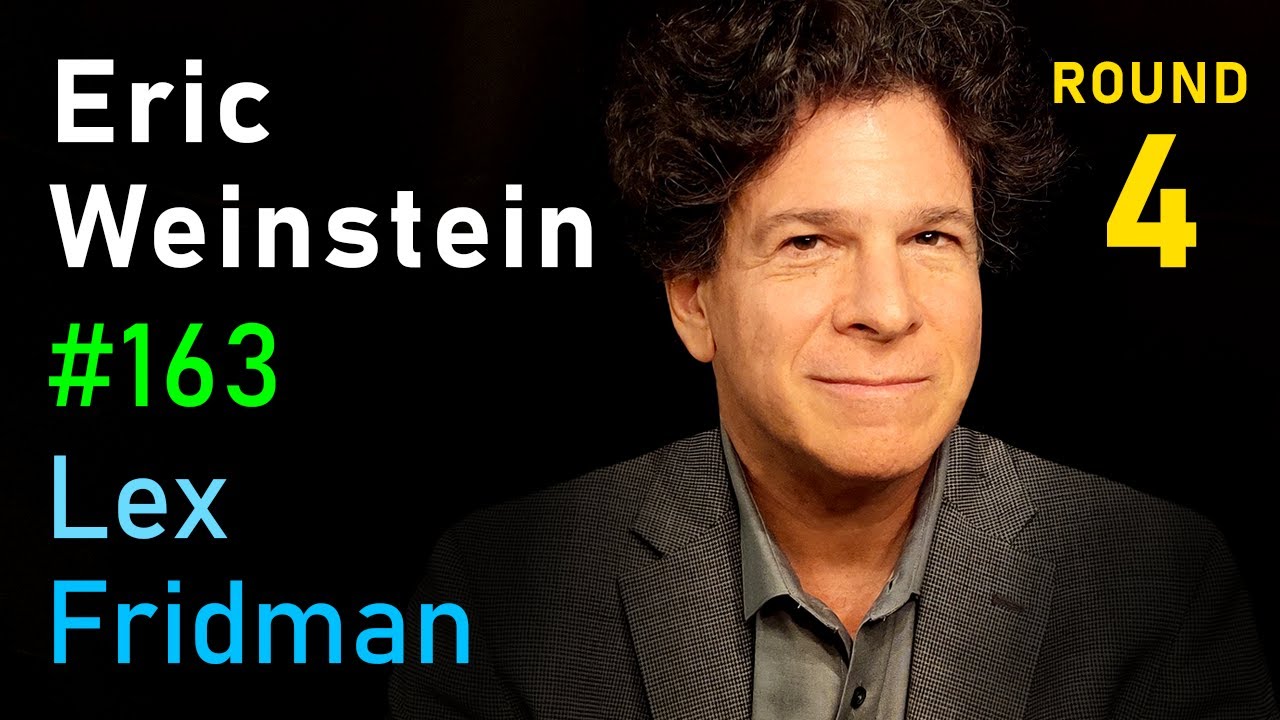
Niall Ferguson: History of Money, Power, War, and Truth

05-28-26 ▶ 2h 41m 📖 5 min read
Core Takeaways
The University of Austin aims to counteract self-censorship in academia by promoting open inquiry and free speech.
Why it matters This initiative seeks to address the chilling effect on free speech in higher education, fostering a more open academic environment.
Niall Ferguson highlights the historical role of money as a trust-based system, not reliant on intrinsic value. ▶ 1:30:00
Why it matters Understanding money as a trust-based system underscores the fragility and adaptability of financial systems.
Bitcoin is seen as an alternative to fiat currencies, potentially disrupting traditional banking systems. ▶ 2:10:00
Why it matters Bitcoin's potential to disrupt banking highlights the ongoing evolution and decentralization in finance.
The failures of public health bureaucracy, not presidential leadership, were pivotal in the U.S. COVID-19 response. ▶ 2:45:00
Why it matters This perspective shifts the focus from political blame to systemic issues in public health infrastructure.
Counterfactual historical analysis suggests different outcomes for World War I and II could have significantly altered global history. ▶ 3:15:00
Why it matters These analyses offer insights into how pivotal decisions shape historical trajectories and current geopolitical landscapes.

Detailed Insights

Academic Freedom and University of Austin
+
The University of Austin aims to counteract academic self-censorship.
85% of liberal students would report professors for offensive comments, indicating a culture of fear.
The institution will use a tutorial system similar to Oxford and Cambridge.
The Nature of Money
+
Money's value is based on trust, not intrinsic worth.
Historical hyperinflation shows the collapse of monetary trust.
Bitcoin is viewed as a digital gold alternative.
Public Health Failures During COVID-19
+
Public health bureaucracy failures were more significant than presidential leadership issues.
Operation Warp Speed was a success despite other failures.
The anti-vax movement has exacerbated public health issues.
Counterfactual History
+
Different outcomes in WWI and WWII could have drastically changed history.
Chamberlain's appeasement strategy was a critical error.
Churchill's risk-taking distinguished him from Chamberlain.

How the conversation moved

The host introduced the episode by framing the discussion around the challenges facing modern academia, particularly the issues of free speech and self-censorship that have become prevalent in universities. Niall Ferguson, a historian, responded by outlining his initiative to establish the University of Austin, an institution designed to counteract these trends by fostering an environment of open inquiry and discourse. Ferguson highlighted the alarming statistics that show a significant percentage of students are willing to report professors for offensive comments, indicating a pervasive culture of fear and self-censorship in higher education.

Ferguson's main argument was that the University of Austin would serve as a bastion of academic freedom, drawing on traditional educational models like those of Oxford and Cambridge to emphasize small group teaching and Socratic dialogue. He provided evidence of the chilling effect on free speech in current academic settings, citing surveys and anecdotes that illustrate the widespread fear of cancellation. Ferguson also discussed the broader implications of this trend, suggesting that it stifles intellectual curiosity and innovation, which are essential for societal progress.

Despite the compelling case Ferguson made, the conversation lacked significant pushback from the host, who largely agreed with the guest's assessment of the current academic climate. The tension arose more from Ferguson's critique of existing institutions and his bold claim that a new university was necessary to preserve academic freedom. This perspective challenges the conventional wisdom that existing universities can reform from within, suggesting instead that entirely new institutions are needed to address systemic issues.

The conversation eventually pivoted to broader historical themes, including the evolution of money and the role of financial systems in societal development. Ferguson drew parallels between historical monetary systems and modern cryptocurrencies like Bitcoin, emphasizing the role of trust in both. The discussion concluded with a reflection on the fragility of civilization and the importance of historical understanding in preserving it, leaving open questions about how new educational models can contribute to this preservation.

Surprising moments

Niall Ferguson
Niall Ferguson argued that the failures of public health bureaucracy, not presidential leadership, were the main issue during the COVID-19 pandemic.
Share this quote X Bluesky LinkedIn Email Download card
Niall Ferguson
Ferguson claimed that Bitcoin's finite supply makes it akin to digital gold, valuable if cryptocurrency succeeds.

Topics Covered

Academic Freedom and University of Austin The Nature of Money Public Health Failures During COVID-19 Counterfactual History

Memorable Quotes

"I feel so sorry for people like me today, people age 18, 19, 20 today, who are intellectually very curious, ambitious, but inexperienced, because the minefields today are absolutely lethal, and one wrong foot and it's cancellation." — Neil Ferguson
"Money is just a crystallization of a relationship between a debtor and a creditor." — Neil Ferguson
"Bitcoin is the option of digital gold." — said_on_episode
"What you really need is your public health bureaucracy not to fuck it up. And they really, really fucked it up." — said_on_episode
"No civilization, no matter how mighty it may appear to itself, is indestructible." — Neil Ferguson

Still open

Unresolved by the end of the conversation

  • Ferguson questioned whether the University of Austin can truly establish itself as a new model for academic freedom.
  • The potential impact of Bitcoin and cryptocurrencies on traditional financial systems remains uncertain, as discussed by Ferguson.

Jargon glossary

wokeism
A term used to describe a perceived overemphasis on social justice issues and political correctness in academia and culture.
peer-to-peer payments
A decentralized payment system that allows direct transactions between individuals without intermediaries.

References & Resources

The Ascent of Money by Neil Ferguson book
Heterodox Academy surveys by Heterodox Academy other
Die deutsche Katastrophe by Friedrich Meinecke book
Scott Gottlieb's book by Scott Gottlieb book

For the specialist

What a senior practitioner would find new

  • The University of Austin's tutorial system aims to replicate Oxford's model, focusing on small group teaching and Socratic methods.
  • Ferguson argues that Bitcoin's finite supply makes it valuable as a digital gold alternative, contingent on crypto's success.
  • The CDC's failure in testing during COVID-19 was a significant factor in excess mortality, shifting blame from presidential actions.
  • Ferguson's counterfactual analysis suggests that a German victory in 1916 would have led to a European customs union, altering post-war dynamics.

Ask this episode Deep

A preview of how Deep chat answers, grounded in this episode with citations and timestamps:

Cite this episode

For papers, blog posts, anywhere.

Copied!

Related episodes

Where to go next from this conversation.

AI-generated summary · last refreshed 2026-06-06 03:22:37 · how we make these

Quotes are matched verbatim against the source transcript; references are checked to resolve to real URLs. Even so, AI can misread structure or attribute claims imperfectly. If you spot an error, please let us know.

Report an inaccuracy →