All topics / meta learning
Topic
You are reading the free Skim layer. Read unlocks the synthesis and sources.
Meta learning
A process where neural networks learn to adapt to new tasks through prompts instead of retraining.
2
episodes
2
thinkers
4h
of conversation
10
books & papers
3
terms defined
The neighbourhood: meta learning and the ideas it travels with. Drag to roam, click a star for the episode, click a neighbour to travel.
Drag to roam · scroll to zoom · click a neighbour to travel · click a star for the episode
From foundational to frontier
Climb the spectrum. The most accessible conversations come first.
Start here
ACCESSIBLECOREFRONTIER

The lexicon
Every term the guests lean on, in plain language. Read one in full, or filter to find it.
What the corpus says
The throughline across every conversation that touches this idea.
AI models currently lack the ability to learn from real-time interactions, remaining passive observers of data.
Oriol Vinyals · Oriol Vinyals: Deep Learning and Artificial General Intelligence
Meta learning allows neural networks to adapt to new tasks through prompts, reducing the need for retraining.
Oriol Vinyals · Oriol Vinyals: Deep Learning and Artificial General Intelligence
The Gato model processes diverse data types and aims to be a general agent across multiple domains.
Oriol Vinyals · Oriol Vinyals: Deep Learning and Artificial General Intelligence
Oriol Vinyals argues that current AI models are far from achieving sentience.
Oriol Vinyals · Oriol Vinyals: Deep Learning and Artificial General Intelligence
The modularity in models like Flamingo integrates vision and language efficiently by reusing existing weights.
Oriol Vinyals · Oriol Vinyals: Deep Learning and Artificial General Intelligence
Meta learning in AI can emerge spontaneously in recurrent neural networks, creating new learning algorithms from network dynamics.
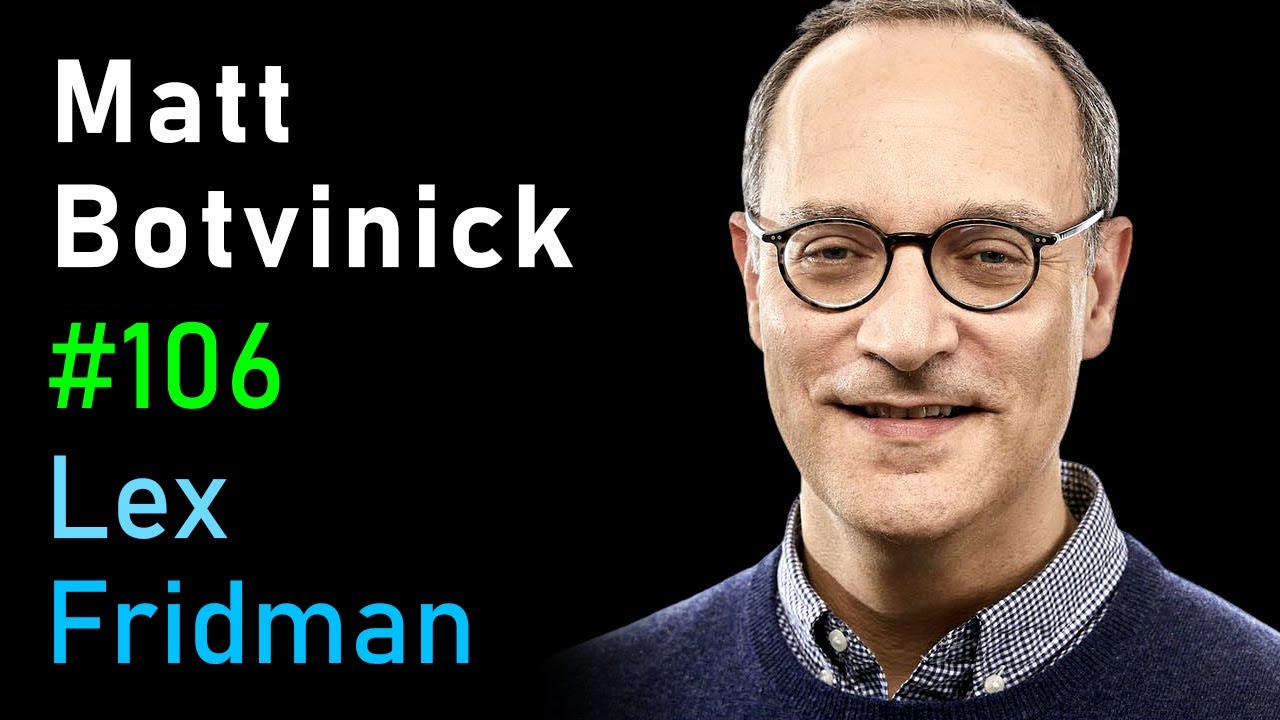
Matt Botvinick · Matt Botvinick: Neuroscience, Psychology, and AI at DeepMind
Dopamine's role in reinforcement learning mirrors temporal difference learning, suggesting a neural basis for AI techniques.
Matt Botvinick · Matt Botvinick: Neuroscience, Psychology, and AI at DeepMind
AI systems need to embody both ability and warmth to be fully accepted by humans, according to Susan Fisk's research.
Matt Botvinick · Matt Botvinick: Neuroscience, Psychology, and AI at DeepMind
The prefrontal cortex supports flexible behavior by overriding habitual actions, highlighting its role in cognitive control.
Matt Botvinick · Matt Botvinick: Neuroscience, Psychology, and AI at DeepMind
AI development should focus on enhancing human autonomy and improving quality of interactions without manipulation.
Matt Botvinick · Matt Botvinick: Neuroscience, Psychology, and AI at DeepMind
Voices on meta learning
4 standout quotes from across the corpus.
Go read
10 books and papers cited across these episodes.
For the specialist
What experts find new
4 expert-level takeaways for a specialist reader.
At the frontier
Still unresolved
4 open questions flagged across these conversations.
The thinkers
Who takes this idea on, by how often they return to it.