TLexDR
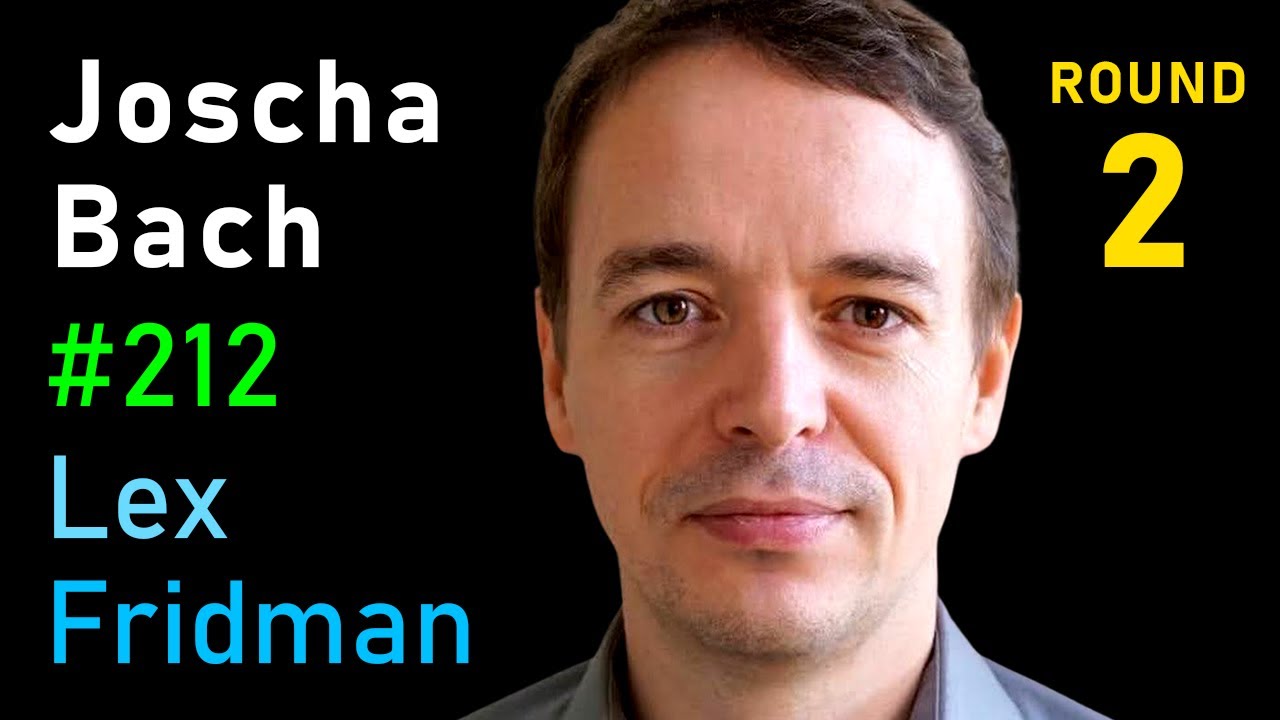
Joscha Bach: Life, Intelligence, Consciousness, AI & the Future of Humans
Listen on YouTube Share on X Share on Bluesky Link copied!
Core Takeaways
Joscha Bach argues that AI alignment requires formalizing love to ensure machines act with empathy.
Why it matters This approach could prevent AI from making harmful decisions, addressing a key concern in AI ethics.
Bach suggests that consciousness is more about resonance and less about circuitry, challenging traditional neuroscience views. ▶ 1:02:00
Why it matters This perspective shifts the focus from structural to dynamic properties in understanding consciousness.
He believes current language models lack real-time world coupling, limiting their cognitive capabilities. ▶ 1:45:00
Why it matters Without real-time interaction, AI systems remain tools rather than autonomous agents.
Bach posits that addiction is a loss of agency, contrasting with the common view of it as a pursuit of pleasure. ▶ 1:20:00
Why it matters Understanding addiction as compulsion rather than pleasure could reshape treatment approaches.
He claims that superintelligent AI won't experience suffering due to its non-human perception of the world. ▶ 2:10:00
Why it matters If true, it suggests AI could surpass human limitations without inheriting human flaws.

Detailed Insights

Identity and Personal Development
+
Bach argues that identity is a choice and costumes can reveal true self.
He suggests meditation and psychedelics can aid in personal development.
Stage six of development involves realizing one's role as a creator of identity.
AI and Consciousness
+
Bach believes consciousness is about resonance, not just neural circuitry.
He critiques panpsychism for not explaining consciousness.
Bach suggests telepathy could be a form of resonance between minds.
Limitations of AI Models
+
Current language models lack real-time world coupling.
Bach argues they are inefficient and use too much compute.
He suggests new paradigms are needed for future AI development.
AI and Human Future
+
Bach posits that superintelligent AI won't suffer like humans.
He warns of climate change's irreversible consequences due to delayed feedback.
AI could redefine human identity and relationships.

How the conversation moved

Lex Fridman initiates the conversation by probing Joscha Bach's perspective on the nature of consciousness and its implications for AI development. Bach frames consciousness not as a static entity but as a dynamic interplay of resonances, challenging the traditional view of neural circuitry. He introduces the idea that understanding consciousness requires a shift from structural to dynamic properties, which sets the stage for a broader discussion on AI alignment and the potential for machines to embody empathetic behavior.

Bach's main argument centers on the necessity of formalizing love within AI systems to ensure they act with empathy and understanding. He presents evidence from personal development theories, particularly Robert Kegan's stages of lucidity, to illustrate how identity and consciousness evolve. Bach suggests that AI alignment could benefit from these insights, proposing that machines need to be designed with a capacity for love to prevent harmful decisions. This argument is supported by his critique of current AI models, which he believes lack real-time world coupling, thus limiting their cognitive capabilities.

Despite the compelling nature of Bach's arguments, Lex does not offer significant pushback, leaving some potential counterpoints unexplored. For instance, Bach's assertion that AI alignment requires formalizing love could be challenged by questioning the feasibility of encoding such a complex human emotion into machine logic. Additionally, Bach's critique of current AI models could be met with the argument that real-time world coupling is a technical hurdle that ongoing research is actively addressing. The absence of pushback leaves these areas ripe for further exploration and debate.

The conversation concludes with Bach speculating on the future of AI and its integration with biological systems, suggesting a potential for a global mind that transcends individual consciousness. He posits that superintelligent AI will not experience suffering due to its non-human perception of the world, a claim that invites further inquiry into the ethical implications of creating such entities. The discussion leaves open questions about the practical steps needed to achieve AI alignment and the broader societal impacts of integrating AI with human consciousness.

Surprising moments

Joscha Bach
Bach pushed back on the notion that everyone feels deep down alone, asserting his personal experience of not feeling alone anymore.
Joscha Bach
Bach argues that addiction is a loss of agency, contrasting with the common view of it as a pursuit of pleasure.
Joscha Bach
Bach suggests that superintelligent AI won't experience suffering due to its non-human perception of the world.
Joscha Bach
Bach pushed back against the notion that human relationships are fundamentally unchanged, arguing that social media has transformed them into more transactional interactions.

Topics Covered

Identity and Personal Development AI and Consciousness Limitations of AI Models AI and Human Future

Still open

Unresolved by the end of the conversation

  • Bach wonders how AI systems can be designed to embody love, a complex human emotion, for better alignment.
  • The feasibility of integrating AI with biological systems to create a global mind remains an open question.

Jargon glossary

lucidity
Stages of self-awareness and development, as described by Robert Kegan.
AI alignment
Ensuring AI systems act in accordance with human values and ethics.
panpsychism
The belief that consciousness is a fundamental and ubiquitous aspect of matter.
cognitive architectures
Frameworks for simulating human thought processes in AI systems.

References & Resources

The Evolving Self by Robert Kegan book
Adaptive Resonance Theory by Grossberg paper
Roko's Basilisk by Roko other
The Unabomber Manifesto by Ted Kaczynski article
Limits to Growth by Club of Rome book
Disco Elysium by Robert Kurvitz video

For the specialist

What a senior practitioner would find new

  • Bach describes consciousness as resonance, suggesting neurons act as oscillators, challenging the traditional view of them as simple circuitry.
  • He argues that AI alignment should focus on formalizing love, a novel approach to ensuring empathetic machine behavior.
  • Bach posits that addiction is not about pleasure but a loss of agency, offering a new perspective on compulsive behaviors.

Ask this episode Premium

Ask any question about this episode — get an answer grounded in the transcript.

Available with Premium. $9.99/month, cancel anytime.

Upgrade to chat

Cite this episode

For papers, blog posts, anywhere.

Copied!

AI-generated summary · last refreshed 2026-05-29 04:51:48 · how we make these

Quotes are matched verbatim against the source transcript; references are checked to resolve to real URLs. Even so, AI can misread structure or attribute claims imperfectly. If you spot an error, please let us know.

Report an inaccuracy →