Skip to content
TLexDR
Episodes / Joscha Bach: Nature of Reality, Dreams, and Consciousness

Joscha Bach: Nature of Reality, Dreams, and Consciousness

05-28-26 ▶ 3h 12m 📖 7 min read
Core Takeaways
Joscha Bach argues that consciousness is a control model for attention, likening it to a 'monkey on top of an elephant.' ▶ 2:30
Why it matters This metaphor underscores the idea that much of human behavior is influenced by subconscious processes beyond conscious control.
Bach describes free will as a construct, suggesting that decision-making processes are deterministic but appear indeterministic due to complexity. ▶ 15:45
Why it matters Understanding decision-making as deterministic challenges the traditional view of free will, impacting philosophical and ethical discussions.
He claims that psychedelics induce states similar to lucid dreaming by altering mental connections, impacting perception and cognition. ▶ 1:10:20
Why it matters This insight into psychedelics could inform therapeutic applications and enhance understanding of consciousness.
Bach critiques the politicization of AI ethics, advocating for a deep statistical approach to decision-making in this field. ▶ 2:05:10
Why it matters A rigorous approach to AI ethics could mitigate biases and improve decision-making processes in technology.
He suggests that the US healthcare system's inefficiencies stem from misaligned incentives rather than malevolence. ▶ 2:35:45
Why it matters Recognizing systemic issues in healthcare could drive reform efforts to improve efficiency and outcomes.

Detailed Insights

Consciousness and Agency
+
Consciousness is a control model for attention, not a true agent.
Agency is a construct, similar to robots in Westworld realizing their loops.
The perception of self is a fiction, akin to software running on a brain.
Perception and Reality
+
Reality is a mental construct, not a direct experience of the physical world.
Free will is a model of behavior, not true autonomy.
Dreams are simplified models of reality, designed to predict perceptions.
AI Ethics and Societal Values
+
AI ethics is politicized, requiring a statistical approach.
Social media's resemblance to traditional media limits opinion diversity.
Love is discovering shared purpose and empathy.

How the conversation moved

The host, Lex Fridman, frames the conversation around understanding the nature of consciousness, reality, and free will, setting the stage for Joscha Bach to delve into these complex topics. Bach begins by challenging the traditional notion of a person, suggesting that our sense of self is akin to software running on a biological machine. He likens consciousness to a control model that directs attention rather than a true agent with free will. This sets the foundation for exploring how consciousness operates within the constraints of perception and reality.

Bach argues that consciousness is a construct, similar to the fictional loops experienced by robots in Westworld. He presents evidence that our decision-making processes are deterministic, but they appear indeterministic due to their complexity. Bach further elaborates on the nature of reality, describing it as a mental construct rather than a direct experience of the physical world. He suggests that dreams serve as simplified models of reality, designed to minimize surprises and predict perceptions, thus questioning the authenticity of our perceived reality.

Lex Fridman doesn't challenge Bach's framing directly, but the conversation naturally introduces tension when discussing the implications of these ideas on free will and agency. Bach's assertion that free will is merely a model rather than true autonomy could be seen as controversial, as it contradicts the common belief in personal agency. Additionally, the guest's critique of traditional mathematical concepts, like infinity, and their relevance to consciousness, invites debate on the validity of these long-held notions.

The conversation pivots to AI ethics and societal values, where Bach critiques the politicization of AI ethics, advocating for a more rigorous statistical approach. He also explores the role of love and shared purpose in human interactions, suggesting that these concepts are integral to understanding human behavior and societal dynamics. The discussion concludes with reflections on the inefficiencies of the US healthcare system, highlighting systemic issues that arise from misaligned incentives rather than intentional malevolence.

Surprising moments

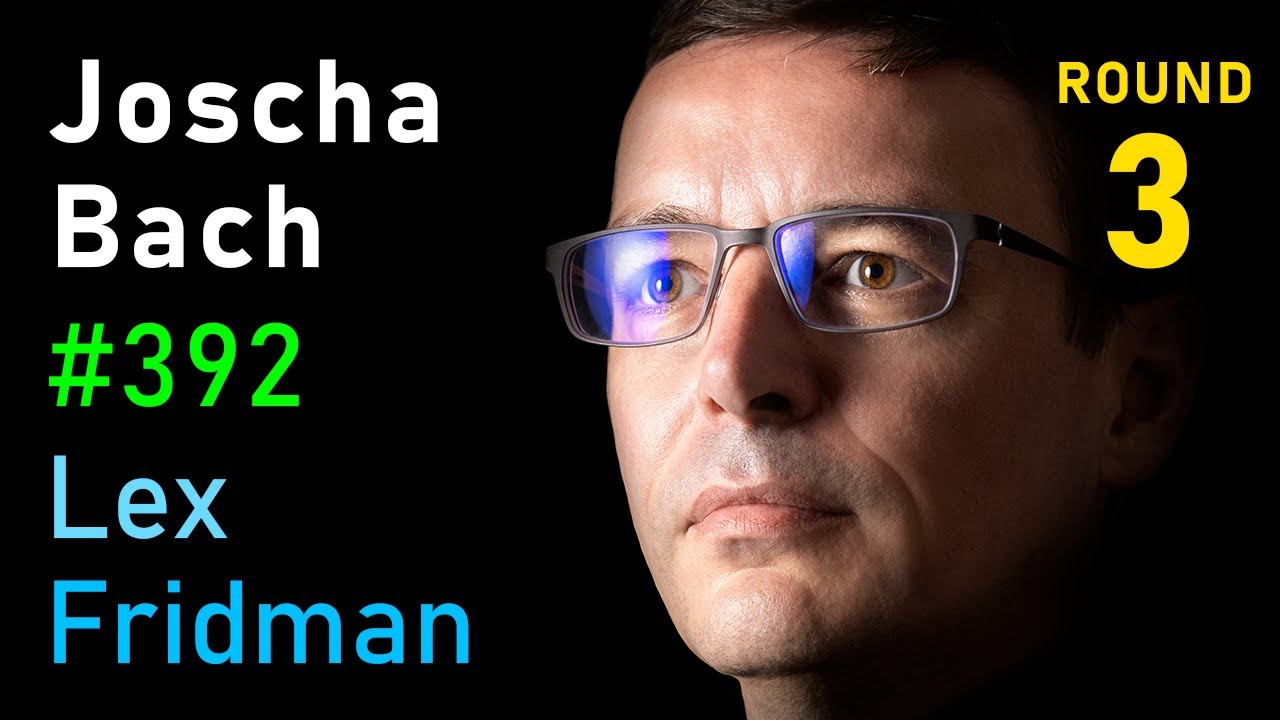
Joscha Bach
Bach claims that free will is a construct and challenges the notion of personal agency.
Share this quote X Bluesky LinkedIn Email Download card
Joscha Bach
Bach critiques the concept of infinity in mathematics, suggesting it's unnecessary and leads to contradictions.
Joscha Bach
He questions the assumption that psychedelics alone are responsible for observed effects, suggesting social dynamics play a role.

Topics Covered

Consciousness and Agency Perception and Reality AI Ethics and Societal Values

Still open

Unresolved by the end of the conversation

  • Bach questioned whether the dream world is an illusion or a form of data compression, leaving the true nature of dreams open.
  • The guest and Lex discussed whether psychedelics' effects are due to the substances themselves or the social context, remaining unresolved.

Jargon glossary

control model
A framework for directing attention and interpreting experiences, not indicative of true agency.
lucid dreaming
A state where the dreamer is aware they are dreaming and can influence the dream.
cybernetic control
A system of feedback loops managing robotic movements and maintaining balance.

References & Resources

The Interface Theory of Perception by Donald Hoffman paper
A New Kind of Science by Stephen Wolfram book
The Psychedelic Experience by Timothy Leary book
Rick Doblin's work on MDMA by Rick Doblin other
The Communist Manifesto by Karl Marx book

For the specialist

What a senior practitioner would find new

  • Bach's metaphor of consciousness as a 'monkey on top of an elephant' illustrates the limited control consciousness has over subconscious processes.
  • He argues that psychedelics induce states similar to lucid dreaming by altering neural connections, providing insights into consciousness.
  • Bach critiques the politicization of AI ethics, suggesting a need for deep statistical analysis to guide ethical decision-making.

Ask this episode Deep

A preview of how Deep chat answers, grounded in this episode with citations and timestamps:

Cite this episode

For papers, blog posts, anywhere.

Copied!

Related episodes

Where to go next from this conversation.

AI-generated summary · last refreshed 2026-06-06 07:23:52 · how we make these

Quotes are matched verbatim against the source transcript; references are checked to resolve to real URLs. Even so, AI can misread structure or attribute claims imperfectly. If you spot an error, please let us know.

Report an inaccuracy →