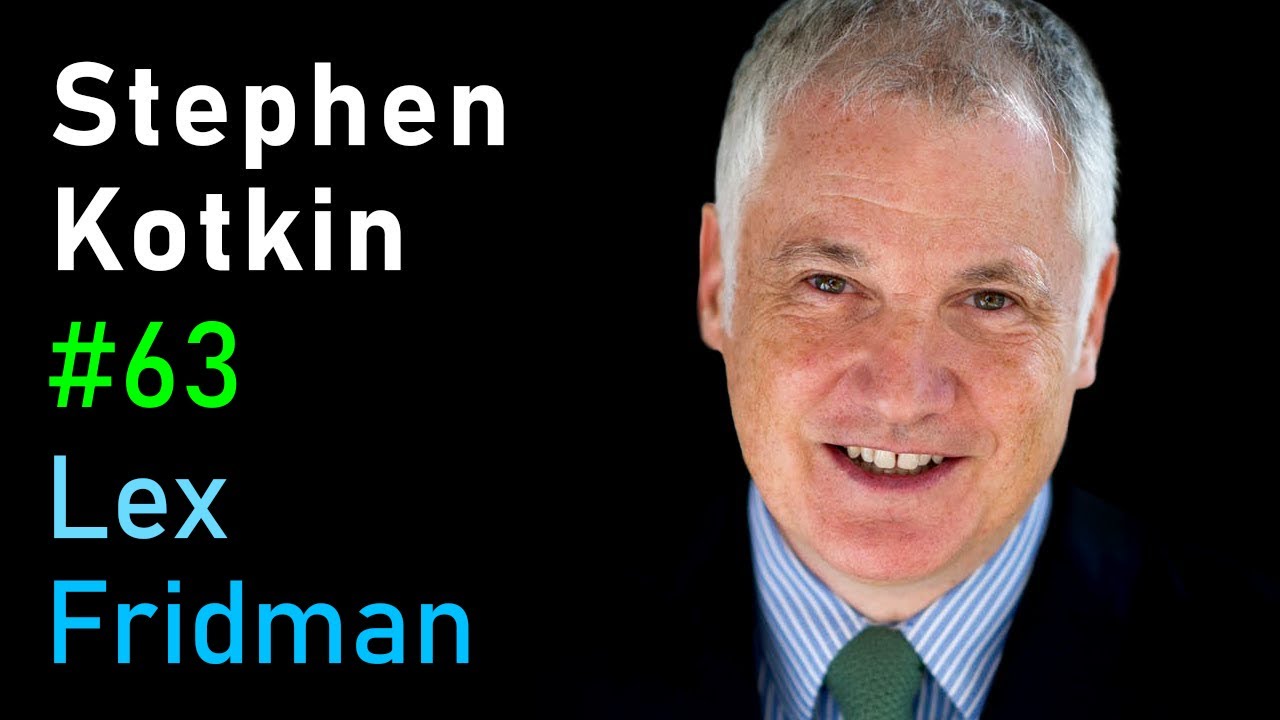
Episodes / Stephen Kotkin: Putin, Stalin, Hitler, Zelenskyy, and War in...
Stephen Kotkin: Putin, Stalin, Hitler, Zelenskyy, and War in Ukraine
05-28-26▶ 2h 41m📖 4 min read
Core Takeaways
Stephen Kotkin argues that Putin's geopolitical strategy mirrors Stalin's, focusing on maintaining Russian influence despite internal weaknesses.
▶ 10:00
Why it matters
Understanding Putin's strategy through a historical lens helps anticipate future geopolitical moves and the potential for escalation.
Zelensky's leadership during the Ukraine conflict saw his approval rating surge from 25% to over 90%, showcasing his resilience.
▶ 35:00
Why it matters
Zelensky's leadership is pivotal for Ukrainian morale and international support, influencing the conflict's trajectory.
Kotkin critiques the narrative that NATO expansion provoked Russia, highlighting historical patterns of Russian aggression predating NATO.
▶ 1:20:00
Why it matters
This critique challenges the justification for Russian aggression, impacting diplomatic narratives and policy decisions.
Russia's military struggles in Ukraine, with significant casualties and logistical issues, reflect deeper systemic weaknesses.
▶ 1:45:00
Why it matters
These struggles expose vulnerabilities in Russia's military, affecting its long-term strategic capabilities.
Ukraine's cyber capabilities, honed over years, are a crucial element in its defense against Russian aggression.
▶ 2:15:00
Why it matters
Cyber defense is increasingly vital in modern warfare, influencing both current conflicts and future military strategies.
Detailed Insights
Geopolitical Strategy
+
•
Putin's strategy is influenced by historical figures like Stalin, focusing on Russian influence despite weaknesses.
•
Russia's aggressive actions are strategic choices, not cultural tendencies.
Leadership and Public Support
+
•
Zelensky's leadership during the Ukraine conflict boosted his approval ratings significantly.
•
His decision to stay in the capital during the invasion was pivotal for Ukrainian morale.
NATO Expansion and Russian Aggression
+
•
Kotkin argues that NATO expansion is not the root cause of Russian aggression.
•
Historical patterns of Russian imperialism predate NATO's existence.
Military and Cyber Capabilities
+
•
Russia's military faces significant challenges in Ukraine, with high casualties and logistical issues.
•
Ukraine's cyber capabilities are a key element of its defense strategy.
How the conversation moved
Lex Fridman sets the stage by questioning the historical parallels between current Russian actions and past Soviet leaders, particularly Stalin. Stephen Kotkin responds by drawing direct comparisons between Putin and Stalin, highlighting the continuity in Russian geopolitical strategies despite the country's internal weaknesses. He notes that both leaders operate from the same Kremlin offices, facing similar dilemmas of managing Russian power from a position of relative weakness compared to the West.
Kotkin's main argument is that Russia's aggressive actions are not inherent cultural tendencies but rather strategic decisions made repeatedly throughout history. He emphasizes that the quest to build a strong state in Russia has resulted in personalist rule and autocracy, which in turn exacerbate its geopolitical dilemmas. Kotkin uses historical examples to illustrate how these strategic choices have consistently put Russia in a worse position, despite attempts to consolidate power.
Lex doesn't challenge Kotkin's framing directly but highlights potential counterarguments, such as the narrative that NATO expansion provoked Russian aggression. Kotkin pushes back against this notion, arguing that historical patterns of Russian imperialism predate NATO's existence and that the narrative of NATO provocation is a strategic choice rather than a necessity. This tension underscores the complexity of interpreting Russian actions and the narratives that surround them.
The conversation pivots to the current geopolitical landscape, focusing on Ukraine's resilience and the role of leadership in conflict. Kotkin discusses Zelensky's leadership during the war, noting the surge in his approval ratings as a testament to his effective crisis management. The discussion concludes with an exploration of Ukraine's cyber capabilities as a critical component of its defense strategy, emphasizing the importance of human capital and technological preparedness in modern warfare.
Surprising moments
Stephen Kotkin
Kotkin argues that Russian aggression is a strategic choice, not a cultural tendency, challenging common perceptions.
Lex highlights the narrative that NATO expansion provoked Russian aggression, which Kotkin refutes by citing historical precedents.
Topics Covered
Geopolitical StrategyLeadership and Public SupportNATO Expansion and Russian AggressionMilitary and Cyber Capabilities
Memorable Quotes
"If he's not comparable to Stalin, he still works, as I said, in those same buildings, those same offices, partly." — Stephen Kotkin
"The irony of all of that is the attempted solutions put Russia in a worse place every single time." — Stephen Kotkin
"This is the first time reality TV has been about reality instead of fake." — Lex Fridman
"A disintegration of the Russian military because there are orders that they either can't implement or don't wanna implement is also not excluded." — said_on_episode
"There's no substitute for that kind of stuff, that level of resolve, willingness to die for your country." — Lex Fridman
Still open
Unresolved by the end of the conversation
Lex questioned whether the Kremlin's leaders truly understand the dynamics of Western influence, leaving room for further exploration of Russian strategic thinking.
Jargon glossary
multipolarity
A global power structure where multiple countries hold significant influence, as opposed to a unipolar or bipolar world.
combined arms operation
A military strategy that integrates different combat arms (infantry, armor, artillery) to achieve complementary effects.
Kotkin highlights that Russia's geopolitical strategy is a series of strategic choices rather than cultural tendencies, challenging common perceptions.
Ukraine's cyber warfare capabilities, developed through years of preparation, are pivotal in its defense against Russia's aggression.
Ask this episode
Deep
A preview of how Deep chat answers, grounded in this episode with citations and timestamps:
AI-generated summary
· last refreshed
2026-06-06 19:59:27
· how we make these
Quotes are matched verbatim against the source transcript; references are checked to resolve to real URLs. Even so, AI can misread structure or attribute claims imperfectly. If you spot an error, please let us know.
Report an inaccuracy →
Free weekly summary · one Lex Fridman episode, every Friday.