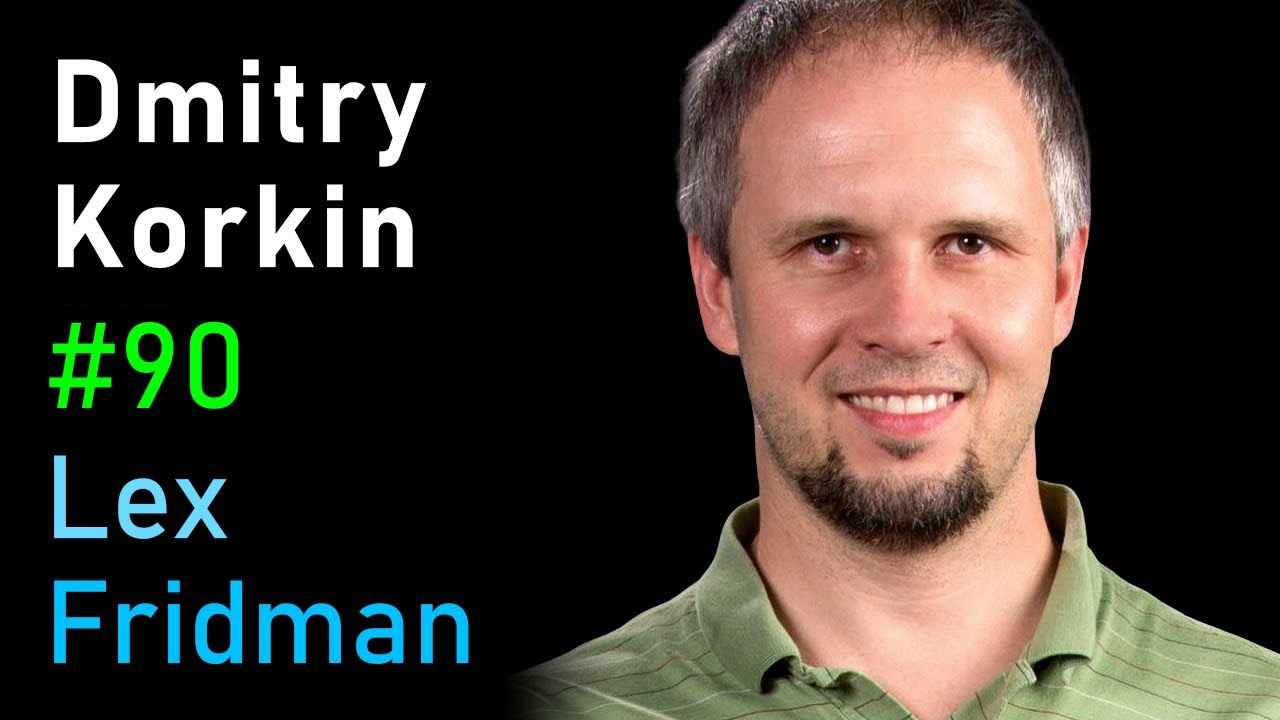
Dmitry Korkin: Evolution of Proteins, Viruses, Life, and AI
Core Takeaways
AlphaFold2's protein folding predictions are a milestone, yet struggle with multi-domain proteins.
Why it matters
AlphaFold2's limitations highlight the ongoing challenge of accurately modeling complex proteins, crucial for drug discovery.
The spike protein of SARS-CoV-2 operates as a trimer, enhancing its ability to bind to the ACE2 receptor.
▶ 5:00
Why it matters
Understanding the spike protein's structure is key to developing effective treatments and vaccines for COVID-19.
Machine learning could predict viral mutations, potentially aiding vaccine and antiviral development.
▶ 1:10:00
Why it matters
Predicting viral mutations could revolutionize how we prepare for and combat pandemics, reducing global health risks.
The scientific response to COVID-19 vastly outpaced the SARS response, highlighting improved global collaboration.
▶ 1:45:00
Why it matters
The rapid response to COVID-19 demonstrates the power of modern science and technology in addressing global crises.
Self-replicating programs and evolutionary algorithms present new possibilities for AI and robotics.
▶ 2:30:00
Why it matters
These technologies could lead to advancements in autonomous systems, impacting fields from manufacturing to space exploration.
Ask this episode Deep
A preview of how Deep chat answers, grounded in this episode with citations and timestamps:
Cite this episode
For papers, blog posts, anywhere.
Related episodes
Where to go next from this conversation.
More from Dmitry Korkin
More on these ideas
 Daphne Koller: Biomedicine and Machine Learning
Shares machine learning
1h 12m
Daphne Koller: Biomedicine and Machine Learning
Shares machine learning
1h 12m
 Peter Norvig: Artificial Intelligence: A Modern Approach
More like this
1h 3m
Peter Norvig: Artificial Intelligence: A Modern Approach
More like this
1h 3m
 François Chollet: Keras, Deep Learning, and the Progress of AI
More like this
1h 59m
François Chollet: Keras, Deep Learning, and the Progress of AI
More like this
1h 59m
 Risto Miikkulainen: Neuroevolution and Evolutionary Computation
More like this
1h 56m
Risto Miikkulainen: Neuroevolution and Evolutionary Computation
More like this
1h 56m
AI-generated summary · last refreshed 2026-06-06 21:37:28 · how we make these
Quotes are matched verbatim against the source transcript; references are checked to resolve to real URLs. Even so, AI can misread structure or attribute claims imperfectly. If you spot an error, please let us know.