All topics / self-play
Topic
You are reading the free Skim layer. Read unlocks the synthesis and sources.
Self-play
A method where AI systems learn by playing against themselves, improving through iterative self-competition.
3
episodes
3
thinkers
4h
of conversation
17
books & papers
4
terms defined
The neighbourhood: self-play and the ideas it travels with. Drag to roam, click a star for the episode, click a neighbour to travel.
Drag to roam · scroll to zoom · click a neighbour to travel · click a star for the episode
From foundational to frontier
Climb the spectrum. The most accessible conversations come first.
Start here
ACCESSIBLECOREFRONTIER
The lexicon
Every term the guests lean on, in plain language. Read one in full, or filter to find it.
What the corpus says
The throughline across every conversation that touches this idea.
AlphaGo's victory in Go marked a significant advancement in AI, showcasing the power of reinforcement learning and self-play.
Michael Littman · Michael Littman: Reinforcement Learning and the Future of AI
Reinforcement learning systems struggle with human interaction due to high costs and low bandwidth, limiting their development.
Michael Littman · Michael Littman: Reinforcement Learning and the Future of AI
Rich Sutton's 'Bitter Lesson' highlights that simple algorithms leveraging computation have driven major AI advancements.
Michael Littman · Michael Littman: Reinforcement Learning and the Future of AI
Self-driving cars face challenges in understanding social cues, which are crucial for safe driving.
Michael Littman · Michael Littman: Reinforcement Learning and the Future of AI
The exponential growth of technology may reach a limit, leading to diminishing returns rather than endless improvement.
Michael Littman · Michael Littman: Reinforcement Learning and the Future of AI
David Silver's AlphaGo used reinforcement learning to defeat a human Go champion, a game with 10^170 possible positions, highlighting AI's potential in complex domains.
AlphaZero surpassed AlphaGo by learning solely through self-play, eliminating the need for human expert input, demonstrating a new paradigm for AI learning.
MuZero extends AlphaZero's principles by learning without explicit rules, achieving superhuman performance in Go, chess, and Atari games.
Reinforcement learning, combined with deep learning, is seen as the core mechanism for future AI systems to achieve human-level intelligence.
AlphaGo's victory over Lee Sedol was a pivotal moment in AI, showcasing the unpredictability of human intuition against machine learning.
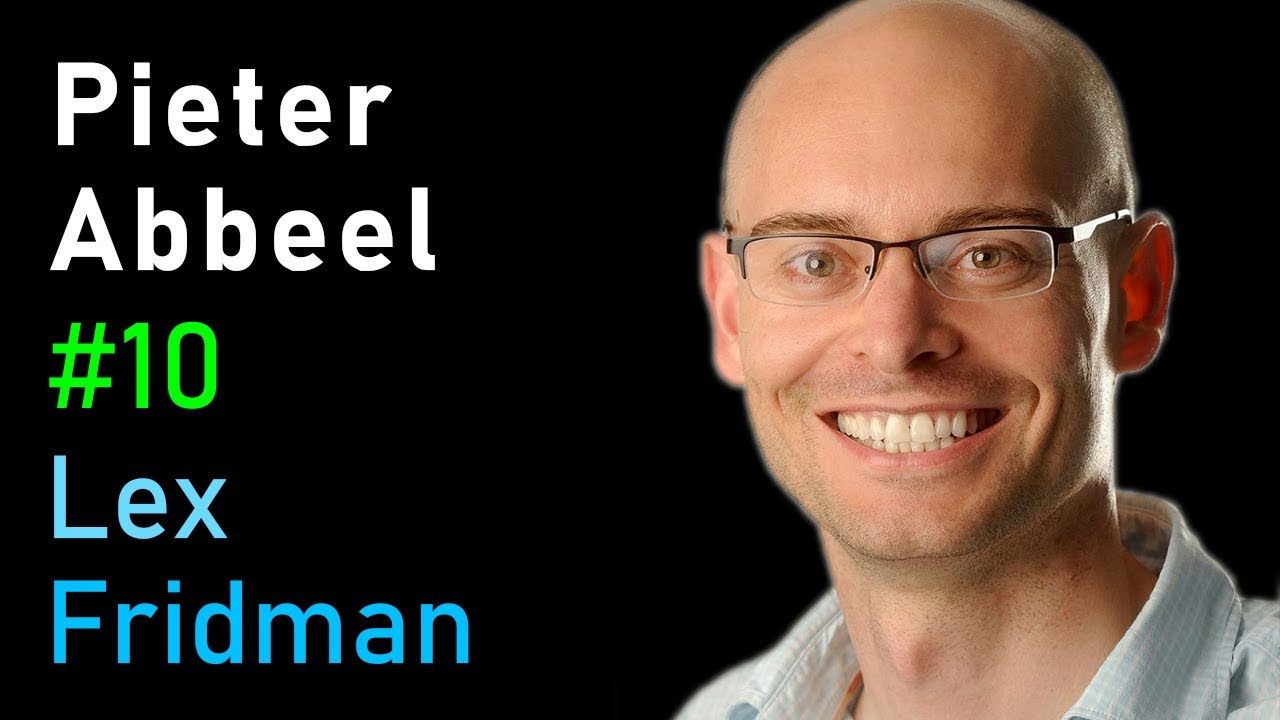
Pieter Abbeel estimates it will take 10-15 years for robots to achieve human-level tennis performance on clay courts.
Pieter Abbeel · Pieter Abbeel: Deep Reinforcement Learning
Reinforcement learning enables robots to learn complex tasks like swinging a racket through trial and error, requiring extensive training.
Pieter Abbeel · Pieter Abbeel: Deep Reinforcement Learning
Voices on self-play
9 standout quotes from across the corpus.
Go read
17 books and papers cited across these episodes.
For the specialist
What experts find new
6 expert-level takeaways for a specialist reader.
At the frontier
Still unresolved
3 open questions flagged across these conversations.
The thinkers
Who takes this idea on, by how often they return to it.