Islam's rapid growth in the US is driven by genuine interest post-negative media portrayals, not just birth rates.
Why it matters
This challenges the stereotype that Islam's growth is merely demographic, suggesting a deeper cultural shift.
Media disproportionately highlights Muslim-perpetrated violence, skewing public perception and fueling Islamophobia.
▶ 1:23:45
Why it matters
This media bias exacerbates discrimination and violence against Muslim communities worldwide.
The Quran's unique preservation through oral and written means ensures its uniformity across the globe.
▶ 1:23:45
Why it matters
This uniformity strengthens the global Muslim community's cohesion and faith consistency.
Prayer in Islam, performed five times daily, serves as a spiritual anchor and has proven health benefits.
▶ 1:23:45
Why it matters
Regular prayer contributes to both spiritual well-being and physical health, highlighting Islam's holistic approach.
The US's unconditional support for Israel is criticized for undermining its global freedom advocacy.
▶ 1:23:45
Why it matters
The contradiction between US policy and its stated values affects its international credibility and moral authority.
Detailed Insights
Nature of God and Submission
+
•
Islam requires complete submission to God, which can be challenging for those with negative authority experiences.
•
Malcolm X's experience with submission highlights its humbling nature.
•
Experiential barriers can lead to anger and denial of belief in God.
•
Islam offers clarity on existence and peace through submission.
Media and Islamophobia
+
•
The media gives 300% more attention to Muslim-perpetrated violence.
•
The association of Islam with terrorism is historically ignorant.
•
Muslims are disproportionately depicted as terrorists, fueling Islamophobia.
Prayer in Islam
+
•
Prayer is central in Islam, performed five times daily.
•
Prostration is the most intimate prayer moment, closest to God.
•
Prayer offers spiritual and health benefits, evidenced by a 108-year-old scholar.
•
The last third of the night is a special prayer time, believed to be when God responds to supplications.
U.S. and Israel-Palestine Conflict
+
•
U.S. support for Israel undermines its global freedom advocacy.
•
Nelson Mandela and Desmond Tutu liken Palestinian conditions to apartheid.
•
Criticism of Israel's policies should be separated from anti-Semitism.
•
The Abraham Accords are criticized for disenfranchising Palestinians.
How the conversation moved
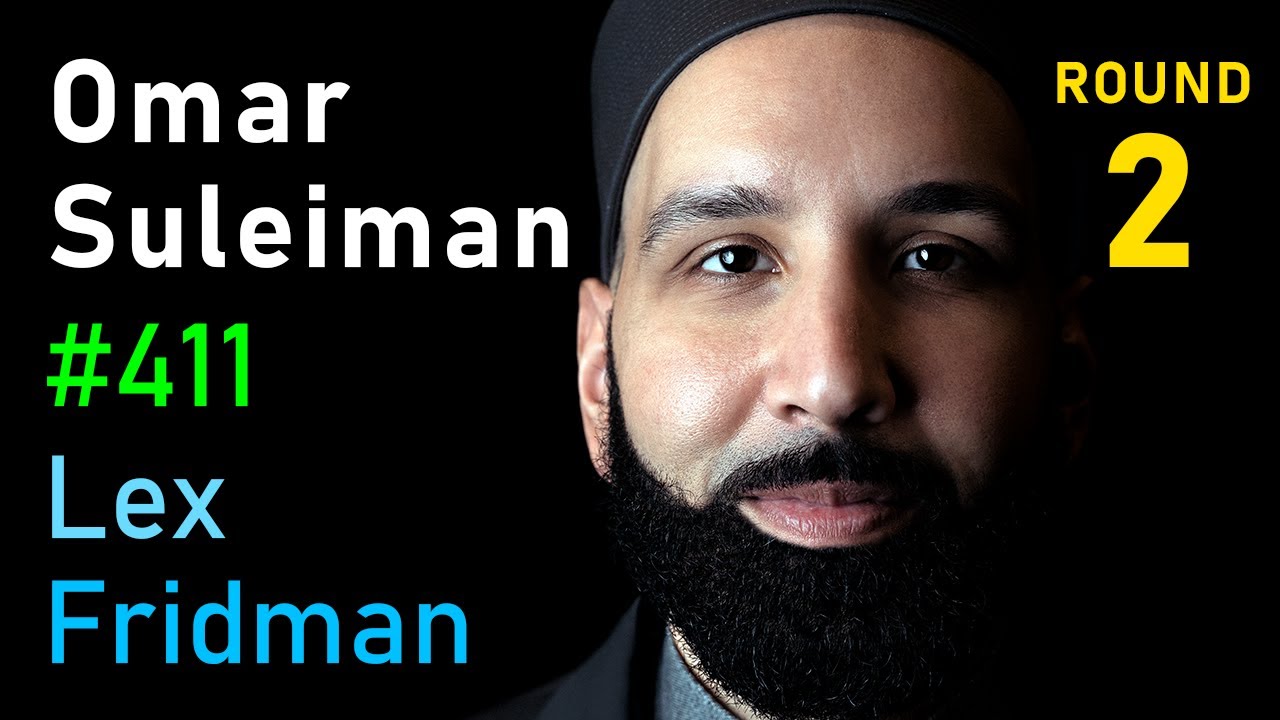
The host, Lex Fridman, frames the conversation by exploring the essence of Islam, particularly the concept of submission to God. Omar Suleiman, the guest, introduces the idea that submission in Islam is not merely about obedience but a personal journey towards spiritual liberation. He emphasizes that many struggle with submission due to past negative experiences with authority, but Islam provides clarity and peace through understanding one's existence and purpose. Suleiman shares how figures like Malcolm X found liberation in submission, despite the challenges it posed.
Suleiman's main argument is that Islam, contrary to its negative portrayal in media, offers a profound spiritual framework that addresses human suffering and existence. He supports this by highlighting Islam's rapid growth in the US, driven by genuine interest rather than birth rates alone. He discusses the Quran's unique preservation and the significance of prayer in Islam, which serves as both a spiritual anchor and a practice with health benefits. Suleiman also points out the media's disproportionate focus on Muslim-perpetrated violence, which contributes to Islamophobia.
Despite the compelling arguments, Lex doesn't challenge Suleiman's framing directly. However, the conversation implicitly raises the tension between Islam's peaceful teachings and the public perception shaped by media bias. Suleiman's critique of the US's unconditional support for Israel and its impact on global freedom advocacy could have been an area for deeper exploration, but it remains unchallenged. The lack of direct pushback leaves some questions about the complexities of these issues unaddressed, such as the nuanced dynamics of political and religious intersections.
The conversation concludes with Suleiman emphasizing the importance of empathy and listening to marginalized voices, particularly in the context of the Israeli-Palestinian conflict. He argues that understanding and action are crucial in addressing the misrepresentations and injustices faced by Muslims globally. While the discussion covers a broad range of topics, from personal spirituality to geopolitical issues, it leaves open questions about how these narratives can be reconciled with the prevailing global discourse. The episode ends on a note of hope for greater understanding and justice.
Surprising moments
Omar Suleiman
Suleiman highlights that Islam's growth in the US is driven by genuine interest post-negative media portrayals, not just birth rates.
Suleiman criticizes the media for giving 300% more attention to Muslim-perpetrated violence, skewing public perception.
Omar Suleiman
Suleiman argues that the US's unconditional support for Israel undermines its global freedom advocacy.
Topics Covered
Nature of God and SubmissionMedia and IslamophobiaPrayer in IslamU.S. and Israel-Palestine Conflict
Memorable Quotes
"God is the most compassionate, the most merciful, the creator of the heavens and the earth. He is one God. He begets not, nor is he begotten. He is unique. He is omnipotent." — Omar Suleiman
"The beauty of Islam is that as perfect as God is described, he's also so accessible to the imperfect." — Omar Suleiman
"Submitting your will to him, submitting your desires, submitting your own fate to him, becomes actually an experience of liberation, because you trust the one that you're submitting to." — Omar Suleiman
"The truth has consequences. So don't seek out the truth unless you're willing to abide by what you find." — said_on_episode
"The association of violence with Islam is one that is used to actually carry out acts of violence against Muslims worldwide." — said_on_episode
"You do not deprive yourself of anything for the sake of God, except that he gives you something greater in return." — said_on_episode
"The threshold of apartheid has been crossed according to multiple, the most respectable human rights organizations in the world." — said_on_episode
"The name of Abraham should not be used to justify arms deals that only further disenfranchise the abused population of the Palestinians." — said_on_episode
Still open
Unresolved by the end of the conversation
Suleiman questions how the narrative surrounding the Abraham Accords often overlooks the voices of the people affected.
The conversation leaves open the question of how Islam's peaceful teachings can be reconciled with media-driven perceptions of violence.
Jargon glossary
salah
The five daily prayers in Islam, obligatory for Muslims.
sujud
Prostration during prayer, considered the most intimate moment with God.
References & Resources
The Allure of Narcissistic Spiritualityby Rabbiarticle
AI-generated summary
· last refreshed
2026-06-07 20:58:08
· how we make these
Quotes are matched verbatim against the source transcript; references are checked to resolve to real URLs. Even so, AI can misread structure or attribute claims imperfectly. If you spot an error, please let us know.
Report an inaccuracy →
Free weekly summary · one Lex Fridman episode, every Friday.