Skip to content
TLexDR
Episodes / Lisa Feldman Barrett: Love, Evolution, and the Human Brain

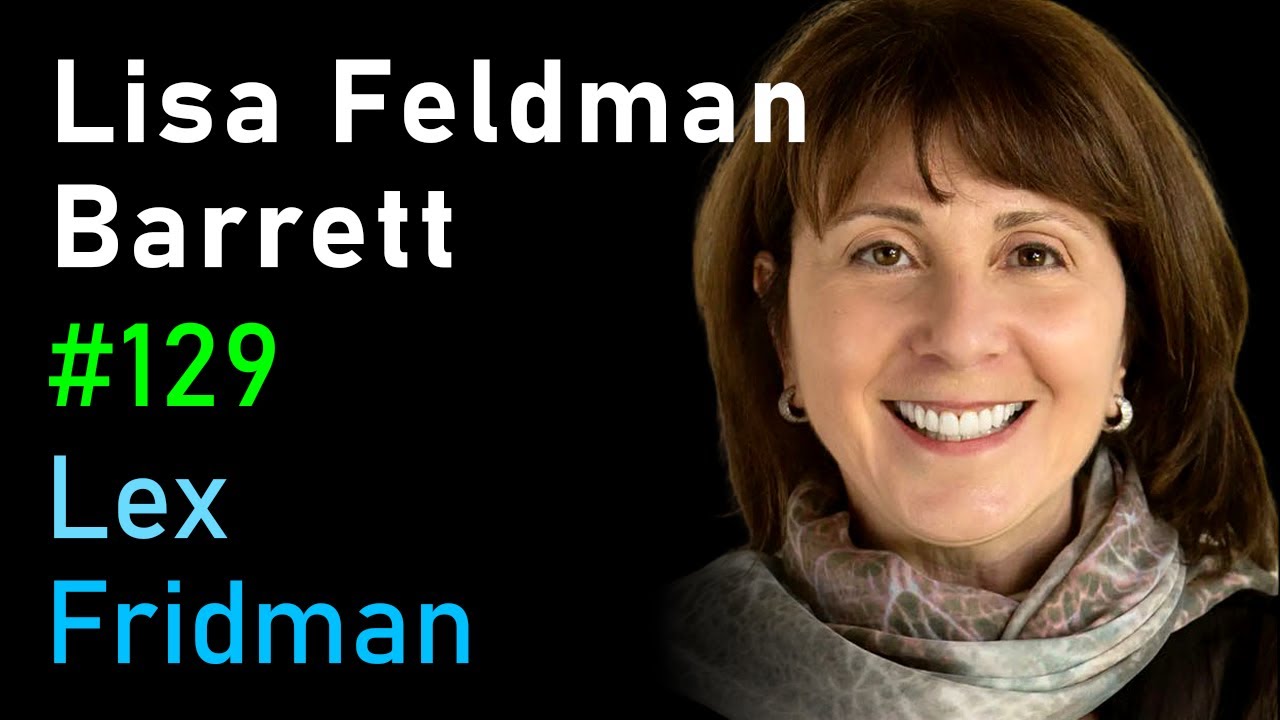
Lisa Feldman Barrett: Love, Evolution, and the Human Brain

05-28-26 ▶ 2h 15m 📖 4 min read
Core Takeaways
Lisa Feldman Barrett met her husband through personal ads, receiving over 80 responses in 24 hours, showcasing early internet dating dynamics.
Why it matters This illustrates the gender imbalance and academic dominance in early digital dating, reflecting societal norms of the time.
Human brains are not uniquely large relative to body size; their distinctiveness lies in the cerebral cortex's complexity, not size. ▶ 1:02:30
Why it matters This challenges the common belief that brain size alone accounts for human cognitive superiority, focusing on functional complexity.
Barrett argues that cultural constructs, not universal truths, shape our perception of distinct thoughts and feelings. ▶ 2:10:45
Why it matters This suggests that emotional experiences are deeply influenced by cultural context, challenging the idea of universal emotional experiences.
The evolution of brains and senses in animals was driven by predation pressures during the Cambrian period. ▶ 2:45:00
Why it matters This highlights the role of environmental pressures in shaping biological evolution, providing insight into the development of complex organisms.
Barrett challenges the notion of love at first sight, emphasizing that true love involves understanding and accepting flaws. ▶ 1:55:30
Why it matters This pushes back against romanticized notions of love, advocating for a more realistic understanding of relationships.

Detailed Insights

Human Relationships
+
Lisa Feldman Barrett met her husband through personal ads, receiving over 80 responses in 24 hours.
The imbalance in gender and professions in early internet dating reflects societal norms.
Barrett and her husband exchanged 100 emails in two days before speaking on the phone.
Human Brain and Evolution
+
Human brains are not uniquely large; their complexity lies in the cerebral cortex.
Evolutionary pressures during the Cambrian period drove the development of brains and senses.
The probability of evolution leading to the same set of creatures if Earth were reset is low.
Cultural Constructs and Emotions
+
Cultural constructs, not universal truths, shape our perception of distinct thoughts and feelings.
Cultural norms influence societal responses to challenges like pandemics.
The idea of being oneself can be problematic, serving as an excuse for unproductive behavior.
Love and Consciousness
+
Barrett challenges the notion of love at first sight, emphasizing understanding and acceptance.
Research indicates that true love involves accepting faults rather than idealizing partners.
Understanding consciousness requires different scientific questions and approaches.

How the conversation moved

The conversation began with Lisa Feldman Barrett sharing a personal story about how she met her husband through personal ads, which set the stage for a broader discussion on human relationships and the dynamics of early internet dating. This anecdote highlighted the gender imbalance and academic dominance in such platforms, reflecting societal norms of the early 90s. The host framed this as a segue into exploring the complexities of human nature and relationships, setting up Barrett's insights into the duality of human behavior, capable of both kindness and violence.

Barrett's main argument centered on the idea that human nature is inherently complex, with cultural constructs significantly influencing our perception of emotions and behaviors. She provided evidence from historical and contemporary examples, such as the varied societal responses to pandemics, to illustrate how cultural norms shape behaviors. Barrett also discussed the evolution of the human brain, noting that while human brains are not uniquely large, their complexity lies in the cerebral cortex, challenging common assumptions about brain size and cognitive superiority.

The host did not explicitly challenge Barrett's views, but there was a notable moment of tension when Barrett pushed back against the romanticized notion of love at first sight. She argued that true love involves understanding and accepting a partner's flaws, which contradicts popular cultural narratives. This pushback highlighted a critical examination of societal beliefs about love, urging listeners to reconsider their perceptions of romantic relationships.

The conversation concluded with Barrett discussing the evolution of brains and senses in animals, emphasizing the role of predation pressures during the Cambrian period in shaping biological development. This segment underscored the importance of environmental factors in evolutionary processes, providing a broader context for understanding human and animal evolution. The discussion left open questions about the future of scientific inquiry into consciousness and the impact of cultural constructs on human behavior, inviting further exploration into these complex topics.

Surprising moments

Lisa Feldman Barrett
Barrett challenged the notion of love at first sight, arguing that true love involves deeper understanding and acceptance of flaws.
Share this quote X Bluesky LinkedIn Email Download card
Lisa Feldman Barrett
Barrett pushed back on the idea that evolution has a clear direction, suggesting that outcomes are not predetermined despite constraints.

Topics Covered

Human Relationships Human Brain and Evolution Cultural Constructs and Emotions Love and Consciousness

Memorable Quotes

"I was spending probably 16 hours a day in the lab because it was my first year as an assistant professor and there's a lot to do." — Lisa Feldman Barrett
"I don't think anybody could become Hitler, but I think the majority of people can be, can do, are capable of doing very bad things." — Lisa Feldman Barrett
"I don't believe in love at first sight. So this can't really be happening, but it sort of feels like it is." — Lisa Feldman Barrett
"The idea that you have thoughts and feelings and they're very distinct is definitely a cultural construct." — Lisa Feldman Barrett
"A really good storyteller knows what to leave out." — Lisa Feldman Barrett
"Size isn't everything." — Lisa Feldman Barrett

Still open

Unresolved by the end of the conversation

  • Barrett questioned whether current scientific approaches are adequate for understanding complex phenomena like consciousness.

Jargon glossary

body budgeting
The brain's management of energy and resources, likened to financial budgeting.
tight cultures
Societies with strict norms and low tolerance for deviant behavior, often showing better public health outcomes.

References & Resources

The Social Animal by Elliot Aronson book
The Triple Helix by Richard Lewontin book
Biology as Ideology by Richard Lewontin book
How Emotions Are Made by Lisa Feldman Barrett book
Seven and a Half Lessons About the Brain by Lisa Feldman Barrett book
Naming the Mind by Kurt Danziger book
The Beak of the Finch by Jonathan Weiner book
At Large and At Small by Anne Fadiman book

For the specialist

What a senior practitioner would find new

  • Barrett's notion of 'body budgeting' likens the brain's management of energy and resources to financial budgeting, highlighting a unique perspective on brain function.
  • The concept of 'tight cultures' having better survival rates during pandemics suggests a link between cultural rigidity and public health outcomes.
  • Barrett's view that the cerebral cortex's complexity, not size, distinguishes human brains challenges common assumptions about brain evolution.

Ask this episode Deep

A preview of how Deep chat answers, grounded in this episode with citations and timestamps:

Cite this episode

For papers, blog posts, anywhere.

Copied!

Related episodes

Where to go next from this conversation.

AI-generated summary · last refreshed 2026-06-06 21:53:36 · how we make these

Quotes are matched verbatim against the source transcript; references are checked to resolve to real URLs. Even so, AI can misread structure or attribute claims imperfectly. If you spot an error, please let us know.

Report an inaccuracy →